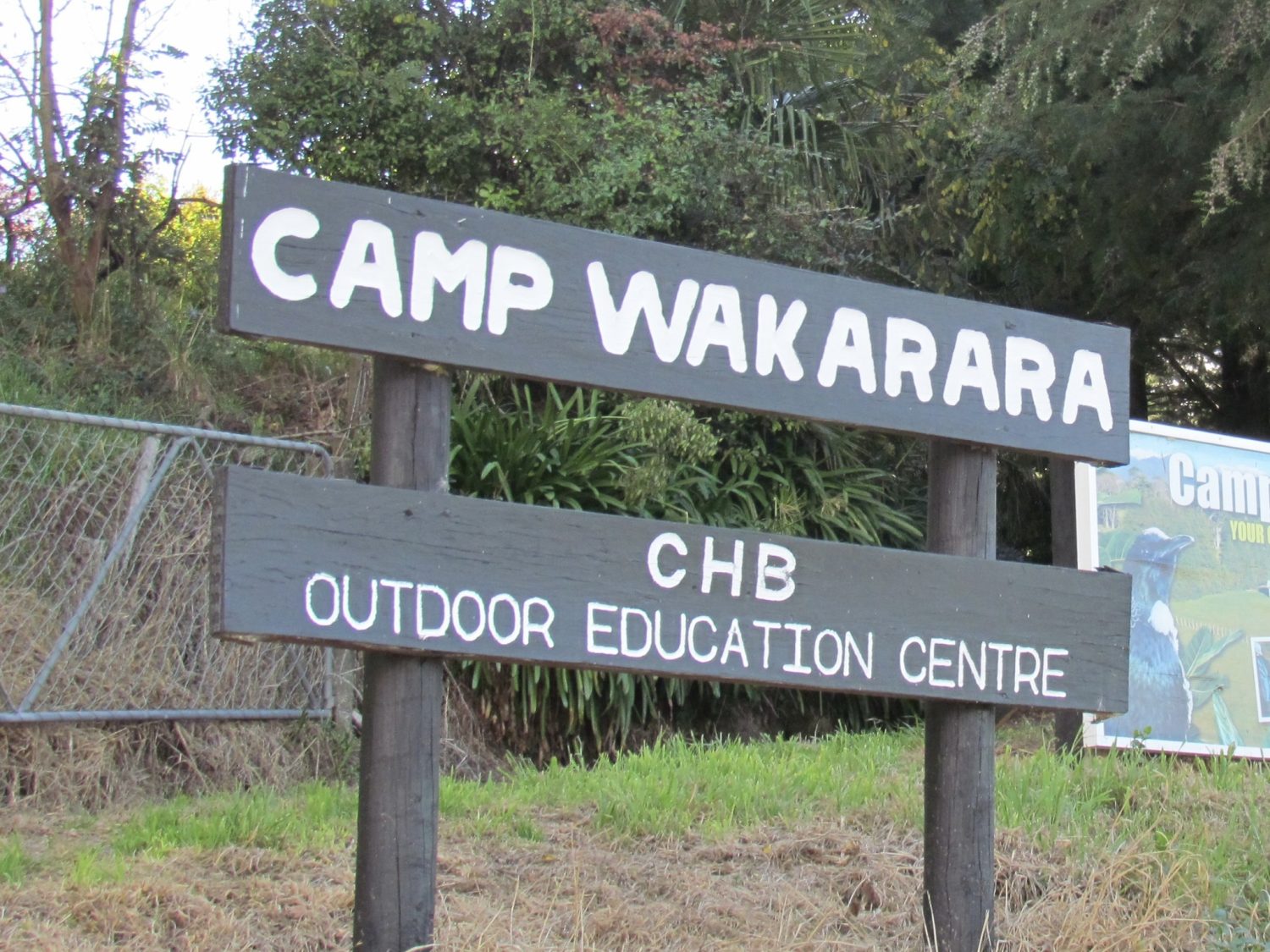
Camp Wakarara is a self-catering outdoor education camp near Tikokino in Central Hawke’s Bay, on the edge of farmland below the Ruahine Range. Originally established for school outdoor education, it offers a Hawke’s Bay school camp right on the doorstep of Ruahine Forest Park, with the Sunrise Track car park only 5 km away. Bunkrooms sleep about 48, with a separate leader’s room and a shed of tents for groups who want to camp out in the grounds.
Why schools choose Camp Wakarara
- A seven-acre rural site close to Ruahine Forest Park and the Waipawa and Makaroro rivers
- Bunkroom accommodation for about 48, plus a private room for a bus driver or group leader
- Easy and moderate tramps nearby, including the Swamp Track and the climb to Sunrise Hut
- On-site gear for orienteering and navigation: maps, compasses and handheld GPS units
- A commando and confidence course, horizontal bungy and table tennis
- Covered outdoor cooking area with eight wood-fired barbecues, and 13 tents for nights under canvas
- Sample risk analysis forms and a local study resource to help teachers with planning
School camp accommodation
Many of the camp’s rooms carry the names of people who helped build it up over the years, which gives the site a strong community feel.
Old School bunkrooms
The Old School building (known as “Dave Fletcher’s Boars Nest”) has two bunkrooms, each sleeping 16 on shelf bunks. The building also includes the old classroom, “Rachel Smith’s Sanctuary”.
Rooms for adults
- Lynn Shannon’s Laboratory – shelf bunks for 12
- Ralph Sanderson’s Treasury – two bunks sleeping 4
- The Priory – a single bedroom with its own toilet, set aside for a bus driver or group leader
Tents
The camp keeps 13 tents with flies in its tent shed (“Dale Prebble’s Ballroom”). Groups can pitch them in the grounds for a camping night as part of their stay.
Bring sleeping bags and pillows, tea towels, towels and liquid soap or sanitiser for the toilet block, and bin liners. School and youth groups also supply their own toilet paper.
Facilities for school groups
- Classroom block (“Rod Appleton-Seymour’s Vision”) with a combined classroom and dining room heated by a wood fire
- Kitchen with three electric ranges, three fridge-freezers, crockery, cutlery, utensils and a commercial toaster
- Three toilets, and separate showers for boys and girls
- Covered barbecue area with eight wood-fired barbecues and a sink bench whose water is heated by the barbecues
- Gas barbecue (bring your own gas bottle)
- Commando and confidence course
- Orienteering maps, compasses, handheld GPS units and trampers’ walking poles
- Outdoor cooking equipment
- Seven acres of grounds, with room to pitch tents
Catering
Camp Wakarara is self-catering. Groups plan and cook their own meals in the kitchen or on the wood-fired barbecues, and outdoor cooking can easily become part of the programme.
Learning opportunities
Camp Wakarara is a venue rather than an instructor-led centre, so teachers run their own programme. The camp backs this up with resources:
- Insights to Wakarara Area – a book covering local history, geology, maps and scientific information, with teaching plans and student worksheet templates (available to buy)
- Thinkers’ Keys activities and New Zealand Curriculum links
- Sample risk analysis forms (RAMs) for the overall camp, a night trail, a compass traverse, river crossings and cooking, which schools can adapt for their own planning
A stay here can support:
- Science, through creek study, bush study and the forest types of the Ruahine foothills
- Social sciences, through local settler history and visits to nearby museums and historic villages
- Mathematics and geography skills, through orienteering, compass work and GPS navigation
- Health and physical education, through tramping, the confidence course and outdoor cooking
- Education outside the classroom (EOTC) and key competencies such as managing self, relating to others, and participating and contributing
Activities on site
Adventure and challenge
- Commando and confidence course
- Horizontal bungy
- Climbing wall
Navigation and the outdoors
- Orienteering with maps and compasses
- Handheld GPS activities
- Creek study (bring your own sampling equipment)
- Bush study
- Fishing and eeling
- Creek swimming
Cooking and evenings
- Outdoor cooking on the wood-fired barbecues, with utensils supplied
- Night trail
- Table tennis
Tramping in the Ruahine Range
The forest park is the big drawcard. These tracks start a short drive from camp:
- Swamp Track – an easy loop of about an hour from Triplex Hut through beech, rimu and kahikatea forest, with the option of coming out at the Waipawa River. Expect mud.
- Sunrise Track – a well-graded climb from the North Block Road car park to Sunrise Hut on the bushline, about three hours for a large group. The camp rates it as moderate fitness. Avoid Armstrong Saddle above the hut in wind or poor weather.
- Waipawa River circuit – roughly three hours along a braided river, with several crossings. Stay out of the river if it is above knee height.
- Yeoman’s Track – an easy walk of about two hours from the end of Wakarara Road through regenerating forest, returning on forestry roads. The river can rise quickly and logging trucks use the roads.
Run by the community
Camp Wakarara began life as a base for school outdoor education. A committee runs it today, with a custodian looking after the site. Past visitors include local schools such as Argyll East and Waipawa, and some parents who now come as camp helpers first stayed here as pupils themselves.
School camp rates
Charges are per person per day, with a lower rate for school and youth groups (up to Year 13) than for other groups. A daily group minimum applies, there’s a cheaper casual day rate, and stays of five days or more get a discounted daily rate. A deposit secures your booking. Ask the camp for current rates and cancellation terms.
Example three-day camp
This is an example only. Teachers plan their own programme to suit their class.
Day 1
- Arrive, settle into the bunkrooms and run the fire drill
- Commando and confidence course
- Barbecue dinner, then a night trail
Day 2
- Tramp to Sunrise Hut and back
- Evening: table tennis and reflections by the wood fire
Day 3
- Orienteering and GPS challenge in the grounds
- Creek study
- Clean up and depart
Getting there
The camp is near Tikokino in Central Hawke’s Bay, about 15 minutes along Wakarara Road, and can be reached on sealed roads from State Highways 2 and 50. That keeps it within easy reach of schools in Central Hawke’s Bay, Hastings and Napier. The Sunrise Track car park at the end of North Block Road is 5 km from camp. The last stretch to the car park crosses private farmland, so leave gates as you find them.
Nearby attractions for school groups
- Ruahine Forest Park – tramping tracks, huts and river valleys managed by DOC
- Sunrise Hut and Armstrong Saddle – views over the Hawke’s Bay plains and, on fine days, to Ruapehu
- Ongaonga Historic Village – a cluster of early settler buildings, including the original schoolhouse, a jail and the restored Coles Brothers building
- Tikokino – a small historic village close to camp
- CHB Settlers Museum, Waipawa – local settler history in Central Hawke’s Bay
- Norsewood Pioneer Museum – the story of the area’s Scandinavian settlers
- Buddy school visits – a day of country school hospitality at Sherwood School or Ongaonga School can be arranged
Other groups and events
Although it started as a school camp, Camp Wakarara now hosts a wide range of groups, including:
- Community and interest groups
- Church and faith groups
- Youth groups
- Private hire for gatherings in a rural setting
Good to know
- A committee member meets your group on arrival to go through the camp checklist
- Every group runs a fire drill when it arrives
- The camp is to be left by 4 pm on departure day unless arranged otherwise
- Cleaning products are supplied; groups clean before leaving and go through a final check with the custodian
- Take all rubbish and recycling away with you
- Count tent pegs before you pack up
- Dogs only by prior arrangement
- Rivers in the area can rise quickly, and the tops near Sunrise Hut are exposed, so check the forecast
- Cellphone coverage is limited on the Sunrise Track
Frequently asked questions
How many people can stay at Camp Wakarara?
The bunkrooms sleep about 48, there’s a separate room for a bus driver or group leader, and 13 tents are available for camping in the grounds.
Where is Camp Wakarara?
It is near Tikokino in Central Hawke’s Bay, about 15 minutes along Wakarara Road, close to Ruahine Forest Park.
Is the camp catered?
No. Camp Wakarara is self-catering, with a kitchen and eight covered wood-fired barbecues.
Does the camp provide instructors?
No. Teachers run their own programme, using the camp’s equipment, sample risk analysis forms and local study resource.
What activities can students do?
Options include a commando and confidence course, horizontal bungy, orienteering, GPS navigation, creek and bush study, creek swimming, outdoor cooking and tramping in the Ruahine Range.
Which walks are close to camp?
The Swamp Track, Sunrise Track, Waipawa River circuit and Yeoman’s Track all start a short drive away, and the Sunrise Track car park is 5 km from camp.
What do groups need to bring?
Bring bedding, tea towels, towels, liquid soap or sanitiser, bin liners and, for school and youth groups, toilet paper.
Is there a discount for longer stays?
Yes. A discounted daily rate applies to stays of five days or more.