
Rangimārie Bush Centre is a residential outdoor education centre on 12 hectares of native bush and farmland in the Ōtorohanga District, a Waikato school camp built around bushcraft, primitive crafts and resilience. Camps are fully inclusive: instructors guide the group from dawn until dusk, all food is supplied and students learn to cook it themselves on wood-fired stoves. With room for up to 36 people, groups stay small and the pace is unhurried.
Why schools choose Rangimārie
- Everything included: programme design, instructors, menu planning, all food and consumables are part of the camp.
- Students cook for themselves: teams split firewood, manage the fire and prepare meals on rocket stoves with an instructor.
- Crafts from first principles: clay dug on site and fired in a wood kiln, forged tools, hand-made bows and arrows.
- Bush on the doorstep: direct access to bush tracks, a clear stream and the chance to sleep out in shelters students build.
- Small groups: a maximum of 36, with no other group booked on your arrival or departure day.
- A structured programme: a tested mix of crafts, games and adventure designed to build independence and resilience.
- NCEA options: instruction can be delivered against a range of NZQA outdoor education and technology standards.
School camp accommodation
The centre sleeps up to 36 people in bunk rooms, with a separate accessible option and the choice of nights out in the bush.
Cabins
Three new cabins, each divided into two six-bed bunk rooms, giving 36 beds in total. The cabins are warm and have good natural light.
Accessible bunk area
A separate bunk area suited to wheelchair users, close to a wheel-in accessible shower.
Bush shelters
Groups can build their own shelters in the bush and sleep out for one or more nights, with tarpaulins available. Instructors stay with students for nights in the bush.
Tent camping
A large camping area beside the stream, a short walk from the main facilities along a path lit at night, for groups bringing their own tents.
For the cabins, students bring a single fitted sheet and a sleeping bag. For activities, they need sturdy footwear and outdoor clothing.
Facilities for school groups
- Covered communal kitchen in an open double-bay shed, with wood-fired rocket stoves, a wood-fired water heater, large preparation areas and sinks.
- Pots and pans for the whole stay, plus outdoor fires for slow cooking and Dutch oven bread.
- Hot showers, including a wheel-in accessible shower.
- Flush toilets on a worm-digesting waste system.
- Open fields for games and team challenges.
- Bush tracks leading straight from the site into native bush.
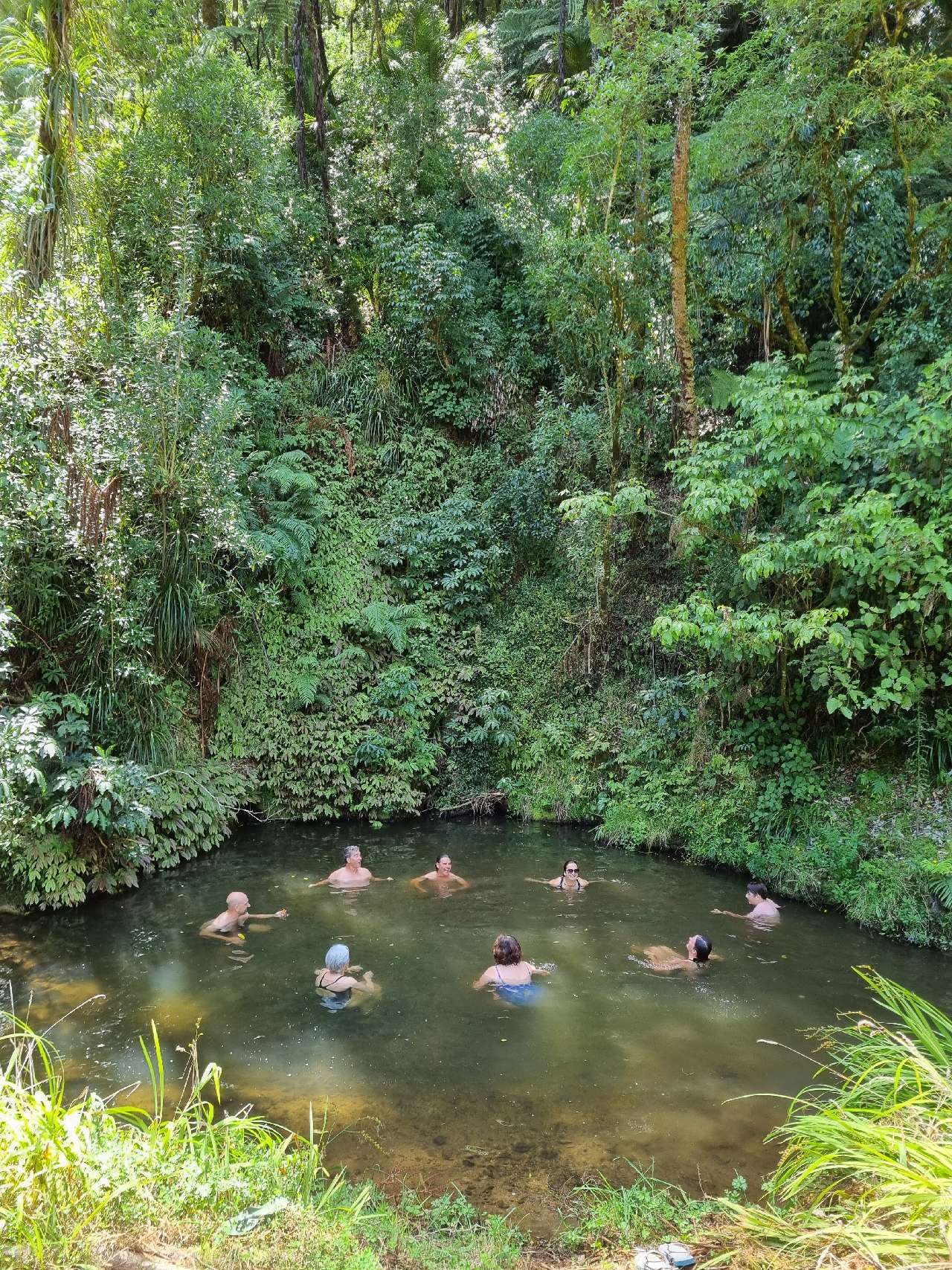
- Stream for swimming and stream ecology.
- Wood-fired kiln and outdoor forge for clay and blacksmithing activities.
- Garden with fresh produce for students to harvest when in season.
Catering
All food is supplied. The centre plans menus suited to open-fire cooking, and students cook in teams under instruction, learning practical kitchen and fire skills as part of camp. Dietary requirements can be catered for if confirmed before arrival, and toilet paper, tea towels and cleaning products are provided.
Outdoor education programmes
Rangimārie Bush Centre exists to make outdoor education and bush skills safe and accessible for young people. Skilled, passionate instructors lead groups through hands-on activities in a natural setting, with an emphasis on deep, experiential learning that builds independence and resilience. Every activity is designed to help students think carefully about how they interact with the whenua.
Two and three-day camps follow a proven blend of crafts, games and adventure. Longer stays can combine more activities, and the centre can work with a school to build a camp around a particular journey, such as primitive technology, craft, bush skills, tree planting or ecology. Alongside primitive crafts, bush skills and team-building challenges, programmes include environmental studies, time for group reflection and a chance to slow down and reconnect with nature. Students come away with practical life skills and greater resilience, cooperation and self-confidence.
Curriculum connections
A camp at Rangimārie fits education outside the classroom (EOTC) and the programme can be tailored to structured, curriculum-linked study. The setting makes it easy to bring science, sustainability and outdoor recreation into classroom learning, with studies in areas such as ecology, PE and technology. It can support learning in:
- Science: native plant identification, pest species and control, stream ecology and local ecology.
- Health and Physical Education: archery, swimming, team challenges, navigation and outdoor survival skills.
- Technology: pioneering structures, forging, clay work and bow making from raw materials.
- Sustainability: tree planting, foraging and living simply on the land.
- Key competencies: managing self, relating to others and participating and contributing through cooking, camp duties and team challenges.
Instruction can be given against NZQA standards so students can gain NCEA credits, including Level 1 and 2 outdoor education unit standards and a Level 2 technology achievement standard. These fall within the Base Scope of Assessment for Schools and are assessed internally by the school. A few further standards are available to schools holding an extension of consent.
Activities on site and nearby
Bush skills
- Shelter building: basic structures, fire lighting and navigation, leading to a bush stay of at least two nights with team challenges and camp duties.
- Pioneering: knots and lashings, from a simple drying rack to a stream bridge, ending in a free-design team structure.
- Foraging: identifying native trees and plants, learning about pests, and gathering edible plants such as kawakawa fruit, kareao tips and tawa and kahikatea berries for the pot.
Primitive crafts
- Clay: digging and processing clay on site, shaping thin-walled pieces, drying them by the fire and firing in a wood-fired kiln.
- Forging: making charcoal, then forging, shaping, tempering, handling and sharpening a blade or tool at a bellows-fed outdoor forge.
- Archery: a one to two-day project making arrowheads, choosing saplings and feathers, shaping a bow with a draw-knife and finishing with target practice.
Games and the stream
- Team games: lateral-thinking challenges woven through every activity, plus games on the open fields.
- Stream swimming: swimming, feeding tame eels and trout, looking for kōura and learning about stream ecology.
- Tree planting: helping with planting on the property between May and August each year.
About Rangimārie Bush Centre
The centre is owned and run by David and Kate Le Pelley. David, the director, spent 15 years supervising undergraduate design projects in mechanical engineering at the University of Auckland, is a registered secondary technology teacher, has been a Scout leader since 2013 and set up two Duke of Edinburgh’s Award units. His skills include primitive technology, building structures, navigation, bush survival and EOTC risk management. Kate is a former design and technology teacher and graphic designer who runs the centre’s artisan workshop programme.
The centre is managed with a focus on a safe and supportive environment for young people. Teachers and leaders are supported with facilities that make structured programmes easier to run, and the centre also offers professional development for school staff. Its safety management plan, activity safety action plans and child protection policy are available to schools.
School camp rates
Camps are charged per day rather than per night, with one daily rate for students and a lower daily rate for supporting adults. A minimum daily charge applies, roughly equal to a group of eight students and three adults. Groups of more than 30 students receive two adult places free. Rates include GST and cover programme design and delivery, cabin accommodation, instructors, menu planning, all food and consumables. Transport is not included. Schools new to the centre can come for a free overnight visit with no obligation to book, and schools that help plant trees on a three to four-day camp between May and August receive a free day, an offer that continues for the foreseeable future. Contact Rangimārie Bush Centre for current rates.
Example three-day camp
An example of how a school camp at Rangimārie Bush Centre could look (every camp is planned by the school):
- Day 1: arrive and settle into the cabins, learn knots and lashings in a pioneering session, play team games on the field, then split firewood and cook dinner as teams on the rocket stoves.
- Day 2: a foraging walk through the bush, dig and shape clay pieces to dry by the fire, then swim in the stream and look for kōura before an evening of group reflection.
- Day 3: work in teams on a free-design pioneering structure, fire the clay pieces in the wood kiln, cook a final meal and pack up.
Getting there
The centre is on State Highway 31 (Kawhia Road) in the Ōtorohanga District of central Waikato, between Ōtorohanga and Kāwhia. It is around 20 to 25 minutes’ drive from Ōtorohanga and roughly an hour and a quarter from Hamilton. Schools arrange their own transport, and the centre can suggest options.
Nearby attractions for school groups
- Ōtorohanga Kiwi House: native bird park with kiwi, a large walk-through aviary and other native species.
- Waitomo Glowworm Caves: guided cave tours and a boat ride under glowworms.
- Ruakurī Bush Walk: a short walk near Waitomo through limestone tunnels, natural bridges and bush.
- Kāwhia Harbour: a historic harbour linked to the arrival of the Tainui waka.
- Te Puia Springs, Kāwhia: a beach where hot water can be dug out of the sand around low tide.
- Pirongia Forest Park: native forest and tramping tracks around Mount Pirongia.
Other groups and events
Alongside school camps, Rangimārie Bush Centre runs retreats and artisan workshops, including blacksmithing and drawing in nature, as well as parent and child weekends and open weekends for teachers and facilitators. Groups can also enquire about running their own workshop at the centre.
Good to know
- Supervision: instructors run all activities, cooking and nights in the bush, but schools supervise students overnight in the cabins and handle discipline and contact with parents.
- Arrival and departure: schools choose their own times, and no other group arrives or leaves on the same day.
- What to bring: a single fitted sheet and a sleeping bag for the cabins, plus sturdy footwear and outdoor clothing.
- Tree planting offer: a free day for schools that help plant trees on a three to four-day camp between May and August each year.
- Dietary needs: confirm these with the centre before arrival.
- Safety documents: the safety management plan, activity safety action plans and child protection policy can be downloaded from the centre’s website for EOTC planning.
- Accessibility: an accessible bunk area and wheel-in shower are available.
- Bush stays: the shelter-building programme includes at least two nights in the bush.
Frequently asked questions
How many students can stay at Rangimārie Bush Centre?
The centre takes up to 36 people, sleeping in six-bed bunk rooms across three cabins, with an accessible bunk area and the option of nights in student-built bush shelters.
Is food included?
Yes. All food is supplied and menus are planned around open-fire cooking. Students cook as teams with an instructor, and dietary needs can be catered for if confirmed beforehand.
Are instructors provided?
Yes. Instructors run all activities from dawn until dusk, including cooking and nights in the bush. Schools look after overnight supervision in the cabins.
What activities do students do?
Bush skills and primitive crafts, including shelter building, pioneering, foraging, clay work and kiln firing, forging, bow and arrow making, team games and stream swimming with kōura and eels.
Can students gain NCEA credits on camp?
Yes. Instruction can be given against a set of NZQA outdoor education and technology standards, which the school assesses internally.
How are camps charged?
Camps are charged per day, with separate daily rates for students and supporting adults and a minimum daily charge. Rates include GST, accommodation, instructors and food. Contact the centre for current rates.
Can teachers visit before booking?
Yes. Schools new to the centre can come for a free overnight stay with no obligation, and the centre also holds open weekends for teachers.
What should students bring?
A single fitted sheet and a sleeping bag for the cabins, plus sturdy footwear and outdoor clothing for activities.