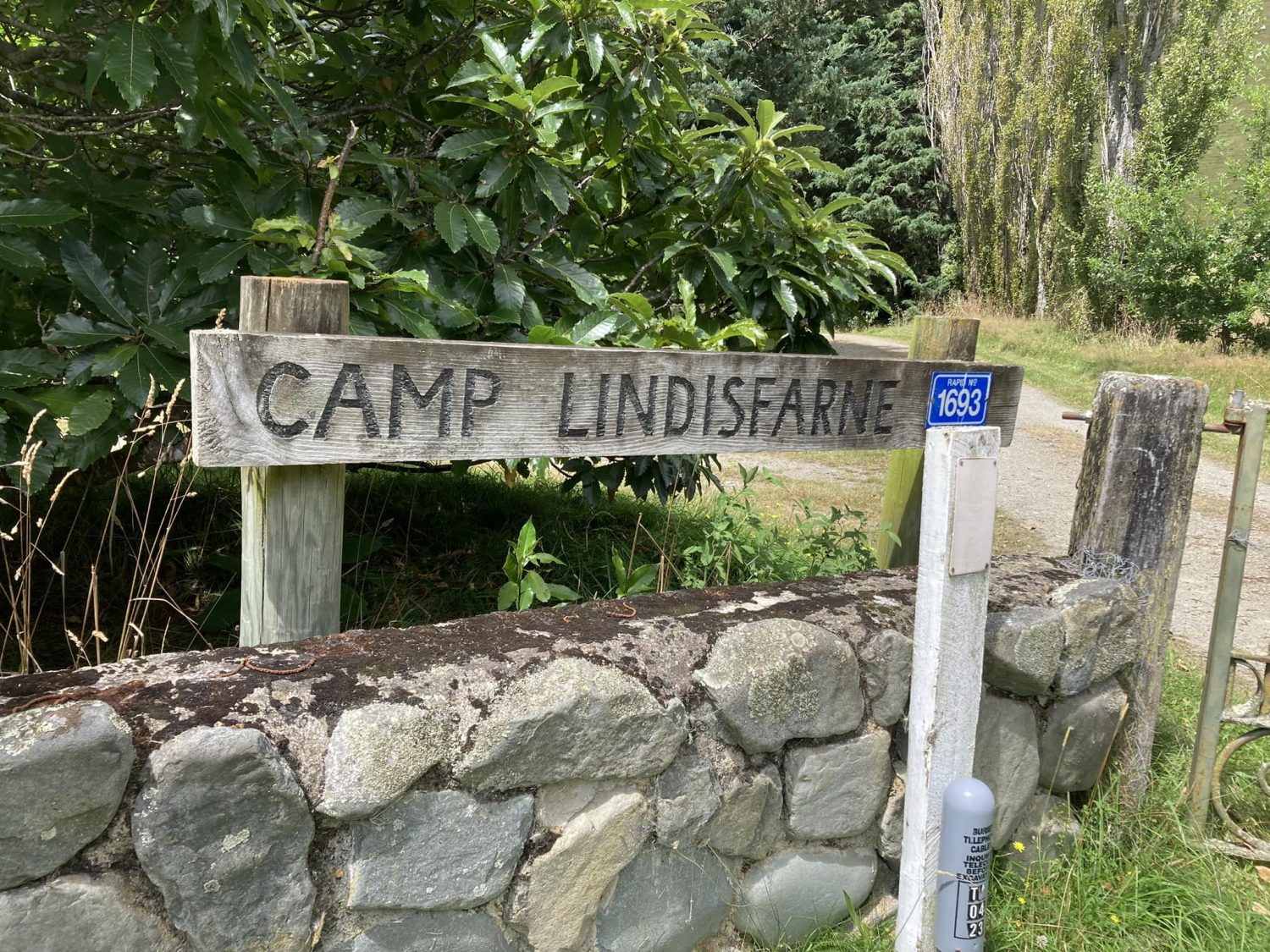
Lindisfarne Camp is a self-catered school camp in the Upper Pareora Gorge, South Canterbury, about 40 km inland from Timaru at the foot of the Hunters Hills. Run by a charitable trust for school and community groups, it offers bunk accommodation for 60, a modern hall, a well-equipped kitchen and spacious tree-lined grounds on terraces above the Pareora River. It suits schools that want an affordable, quiet rural base where they can run their own camp programme.
Why schools choose Lindisfarne Camp
- Affordable and not-for-profit: run by the Camp Lindisfarne Trust to give schools and community groups an accessible place for learning and recreation.
- Your camp, your programme: a self-catered, self-run venue, so teachers have full control of the timetable, menu and activities.
- Room for a whole class or syndicate: 60 beds across seven bunkrooms, plus space for tents and caravans.
- A big hall for any weather: room for whole-group sessions, games, performances and shared meals.
- River and hill country on the doorstep: the Pareora River and the slopes of the Hunters Hills make a natural outdoor classroom.
- Peaceful and private: the camp sits at the very end of Cannington Road, away from traffic and distractions.
- Close to Timaru: an easy coach trip from across South Canterbury and within reach of Christchurch, Ashburton and Oamaru schools.
School camp accommodation
Overnight accommodation sits next to the hall and provides beds for 60 in seven bunkrooms. The layout makes it simple to group students by class, cohort or gender, and to set aside a room for teachers and parent helpers.
Groups needing extra space can use the camp’s tent and caravan areas, a good option for older students wanting a night under canvas or for larger groups.
Facilities for school groups
- Hall: a newer hall with seating for 80, (large enough for 100) or 200 for a dance. It’s used for assemblies, indoor games, wet-weather activities, concerts and group dining.
- Kitchen: a modern kitchen with commercial-style appliances, suited to parent helpers cooking for large groups.
- Food storage: a dry store and a walk-in cool store, making it easier to plan and store food for a multi-day camp.
- Accessible facilities for students or adults with mobility needs.
- Caravan and tent areas for extra accommodation.
- Extensive grounds: terraced lawns under established trees, with space for field games, team challenges and outdoor sessions.
- Camp paperwork: an application form, fact sheet and end-of-camp checklist are provided to help with planning and handover.
Self-catering
Lindisfarne Camp is fully self-catered. Schools bring their own food and cooks, and the kitchen, dry store and walk-in cool store make it practical to feed up to 60 people over several days. Many schools run catering with a parent roster, which keeps costs down and gives students a chance to help with meal preparation and clean-up.
Activities and learning
Lindisfarne Camp provides the space and setting, and schools plan their own programme. The camp’s location gives plenty to work with:
River exploration
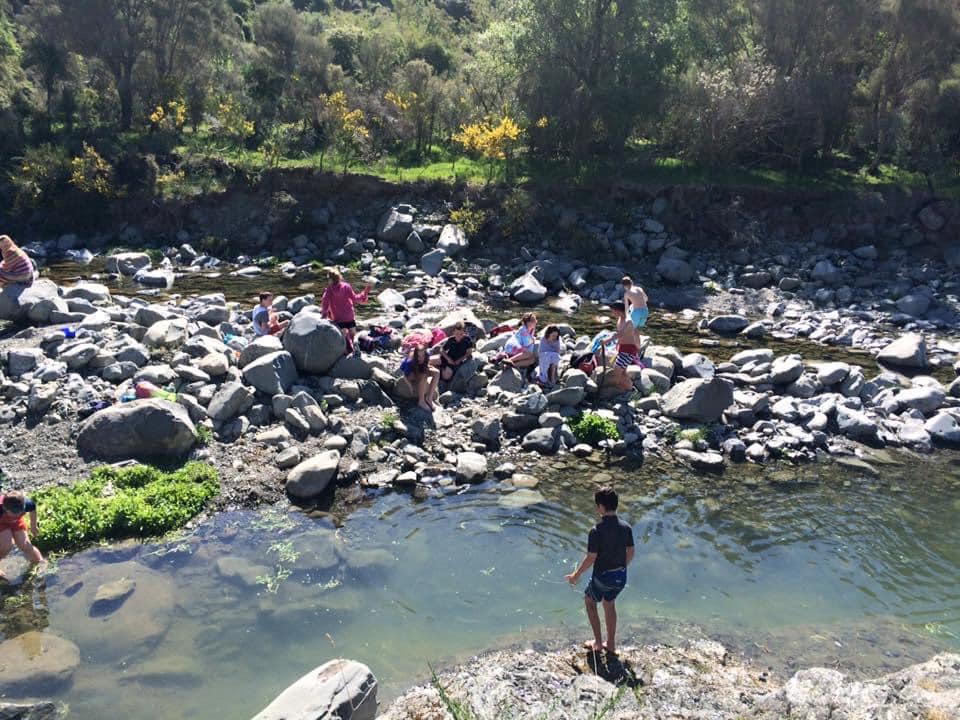
The Pareora River is just a two-minute walk from camp. With appropriate supervision and safety planning, groups can explore the rocky riverbed, study freshwater life and water quality, and enjoy paddling on warm days. River levels can change quickly after rain, so check conditions on the day.
Walks and tramping
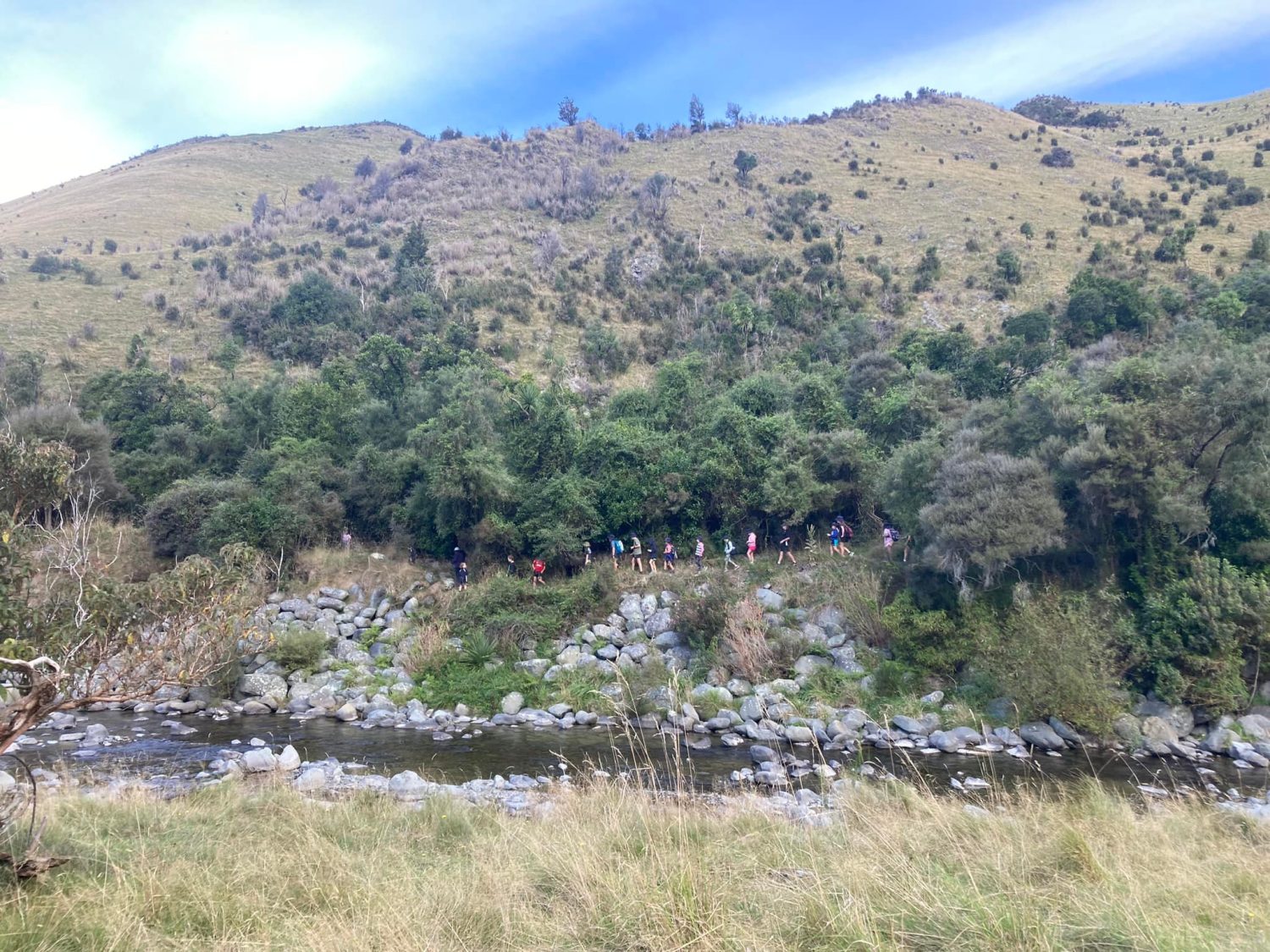
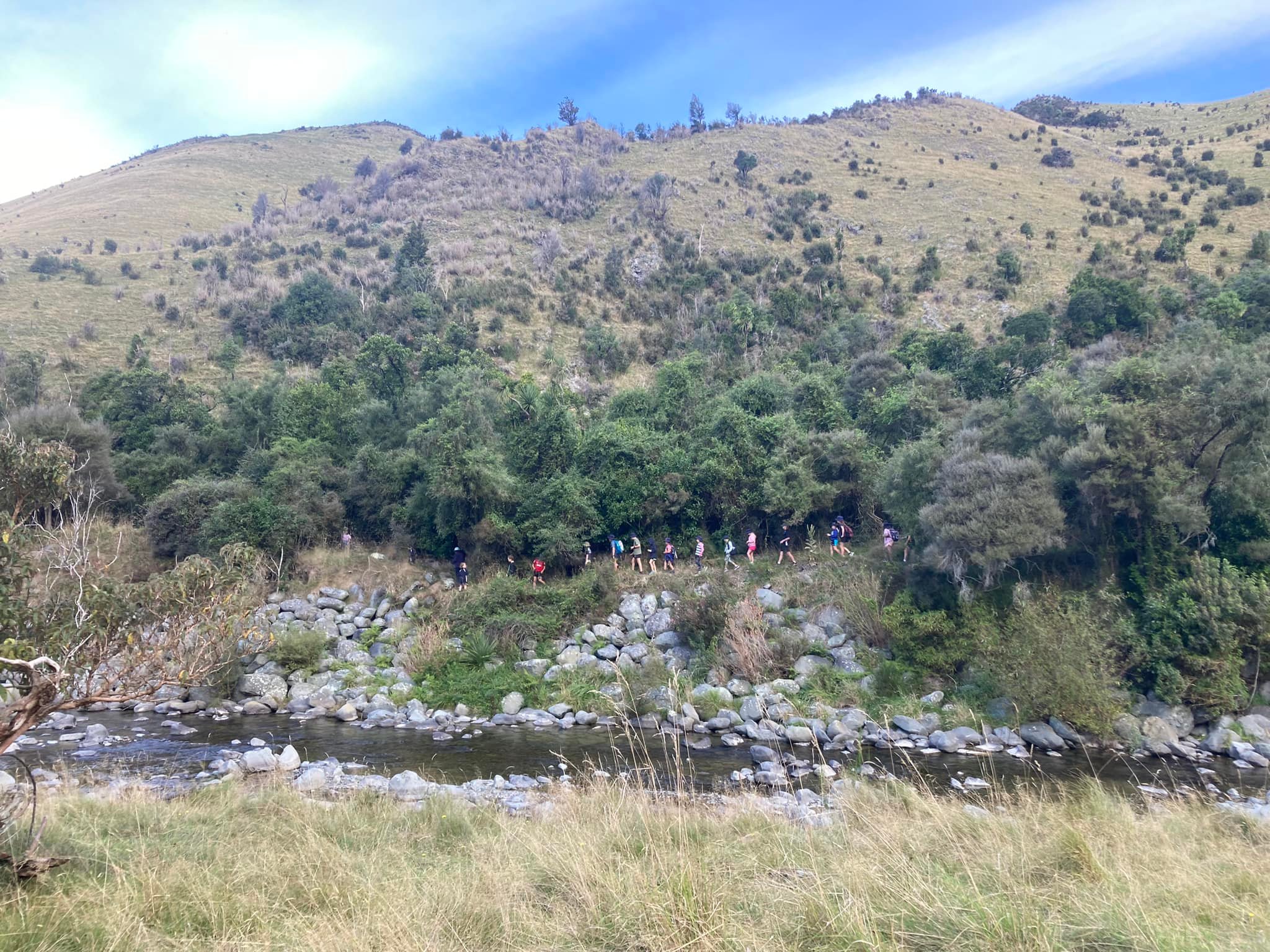
- Water intake track: a 40-minute walking track from camp to the water intake.
- Gorge walks along the river and surrounding hill country, ideal for building fitness and outdoor skills.
- Mt Nimrod Scenic Reserve: further into the Hunters Hills, with a loop track to a lookout and a waterfall (a steep, advanced track best suited to older students).
On-site activities
- Field games, ball sports and team-building challenges on the grounds.
- Indoor games, drama, performances and group sessions in the hall.
- Orienteering and navigation practice around the camp and grounds.
- Night-time activities such as star gazing, well away from town lights.
- Cooking and life skills through the self-catered kitchen.
Curriculum connections
A camp at Lindisfarne fits well with education outside the classroom (EOTC) and can support learning in:
- Science: freshwater ecosystems, river geology and native and introduced plants of the Canterbury foothills.
- Health and Physical Education: outdoor skills, walking and tramping, teamwork, resilience and safety around water.
- Social Sciences: rural South Canterbury life, farming and the history of the Pareora area.
- Key competencies: managing self, relating to others and participating and contributing, through shared living and helping with meals.
Example three-day camp
An example of how a school camp at Lindisfarne could look (every camp is planned by the school):
- Day 1: Arrive and settle in, team-building games on the grounds, student cooking teams prepare dinner, evening hall activities.
- Day 2: River study and exploration session, picnic lunch, afternoon walk to the water intake, evening star gazing.
- Day 3: Orienteering challenge around camp, group clean-up using the end-of-camp checklist, depart for home.
Getting there
Lindisfarne Camp is at the end of Cannington Road in the Upper Pareora Gorge, about 40 km from Timaru. The camp is signposted from State Highway 1 north of St Andrews, and the recommended approach is via Cave. The final stretch is a rural road, so allow extra time for buses and check the route with your transport provider.
Nearby attractions for school groups
- Mt Nimrod Scenic Reserve: native bush, a waterfall and coastal views in the Hunters Hills.
- Te Ana Māori Rock Art Centre, Timaru: the story of Ngāi Tahu rock art in South Canterbury and North Otago.
- South Canterbury Museum, Timaru: regional natural and social history, including early aviation pioneer Richard Pearse.
- Caroline Bay, Timaru: a large beach and park with playgrounds, ideal for a stop on the way home.
- Pleasant Point Railway: heritage rail rides and displays in nearby Pleasant Point.
- Cave: a small rural settlement on the approach to camp, known for St David’s Memorial Church, built from local fieldstone.
Other groups and events
Outside school camps, Lindisfarne Camp welcomes a wide range of groups:
- Community, church and youth groups: affordable group accommodation with a hall and kitchen for programmes and retreats.
- Clubs and sports teams: a quiet base for training weekends, club camps and social gatherings.
- Weddings and celebrations: the hall holds 100 for a seated meal or 200 for a dance (seating for 80 is provided, and extra can be hired), with accommodation for guests on site.
- Family reunions and birthdays: room for extended families to stay, cook and celebrate together.
- Weekends away: girls’ weekends, stag dos and groups of friends.
- Work functions and business meetings: a relaxed rural setting for team days and planning sessions.
Good to know
- The camp is self-catered and self-run, so groups bring their own food, cooks and programme.
- The camp isn’t staffed full-time, so arrange arrival, keys and handover in advance.
- An end-of-camp checklist helps groups leave the camp ready for the next booking.
- River conditions can change quickly; include water safety in your risk management plan.
Frequently asked questions
How many students can Lindisfarne Camp accommodate?
The camp has beds for 60 in seven bunkrooms, with tent and caravan areas for extra space.
Is Lindisfarne Camp catered?
No. It is self-catered, with a modern kitchen, commercial-style appliances, a dry store and a walk-in cool store for groups bringing their own food and cooks.
Where is Lindisfarne Camp?
It is at the end of Cannington Road in the Upper Pareora Gorge, South Canterbury, about 40 km from Timaru. The recommended approach is via Cave.
Is there an indoor space for wet weather?
Yes. The hall has seating for 80 and room for 100 at a seated meal or 200 for a dance, with plenty of space for indoor games and group sessions.
Do we need to bring our own activities?
Yes. Schools plan and run their own programme, using the grounds, hall, the river two minutes’ walk away and nearby walking tracks.
Can other groups book the camp?
Yes. Community groups, clubs, families and businesses can book the camp for retreats, reunions, weddings, celebrations and meetings.