Motutapu Outdoor Education Camp sits at Administration Bay on the northern shore of Motutapu Island in the Hauraki Gulf, a ferry trip from downtown Auckland. Run by a charitable trust and operating as an outdoor education camp since 1966, it’s a residential Auckland school camp with a difference: a pest-free island joined to Rangitoto, with native bush, coastline and open farmland all around. Groups stay in a former World War II army camp that sleeps up to 184 in the Main Camp, with a 34-bed beachfront Lodge and a 10-bed Cottage alongside.
Why schools choose Motutapu
- A genuine island camp: students arrive by boat and spend their stay on a pest-free island with takahē, tīekē (saddleback) and kiwi.
- Room for big groups: four 45-bed dormitories in the Main Camp, plus the Lodge and Cottage for smaller groups or staff.
- Instructor-led or self-led: the camp’s senior instructors help plan a programme, or schools run their own activities from a long self-led list.
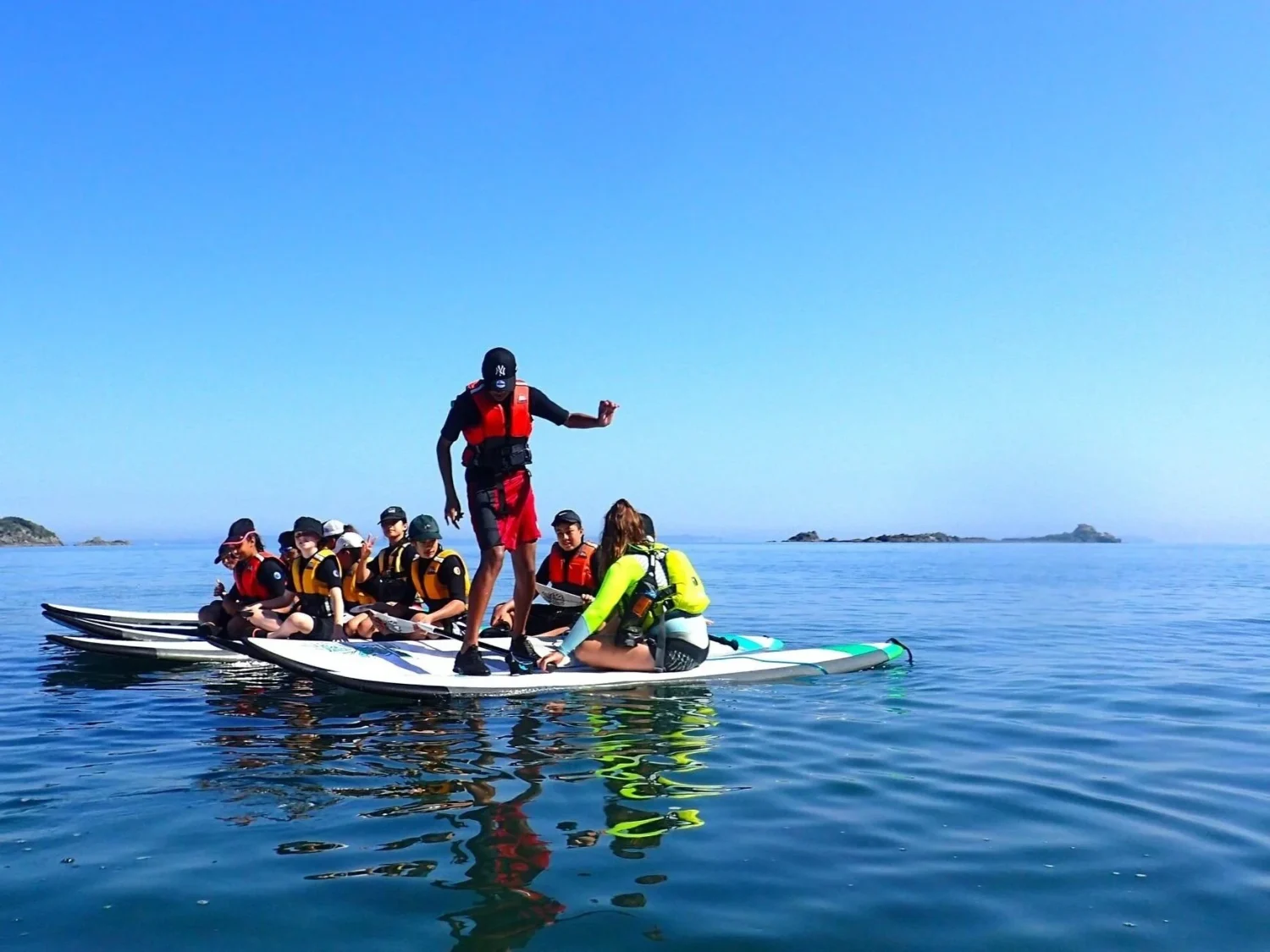
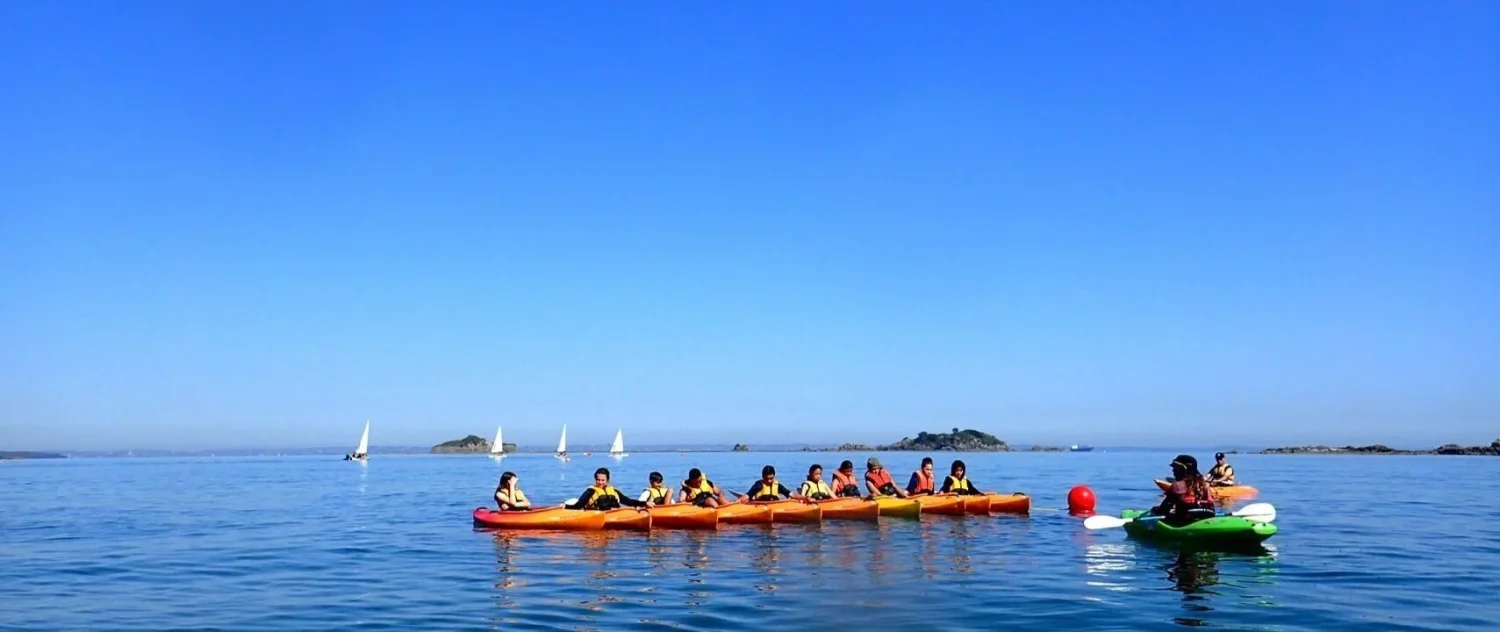
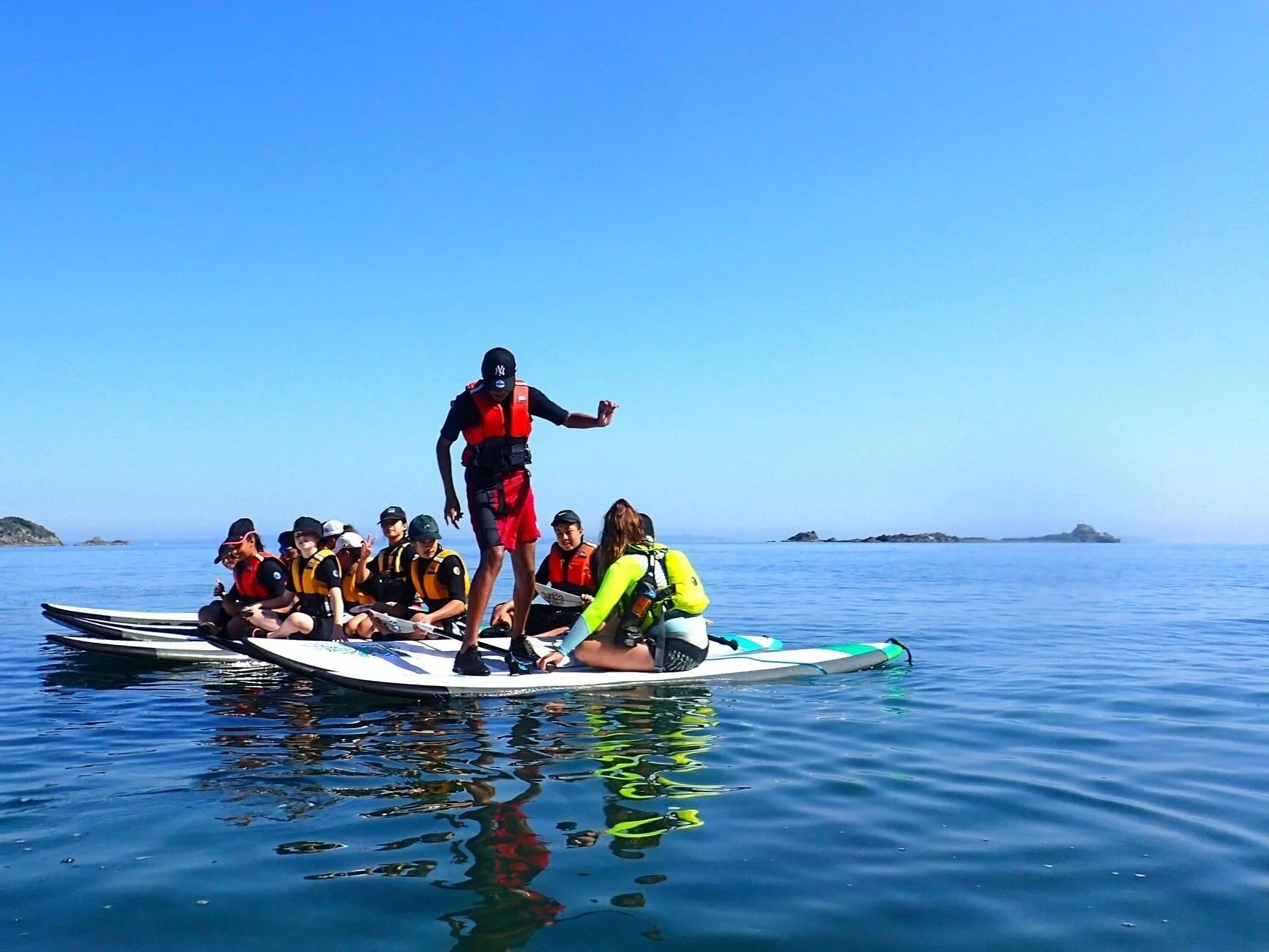
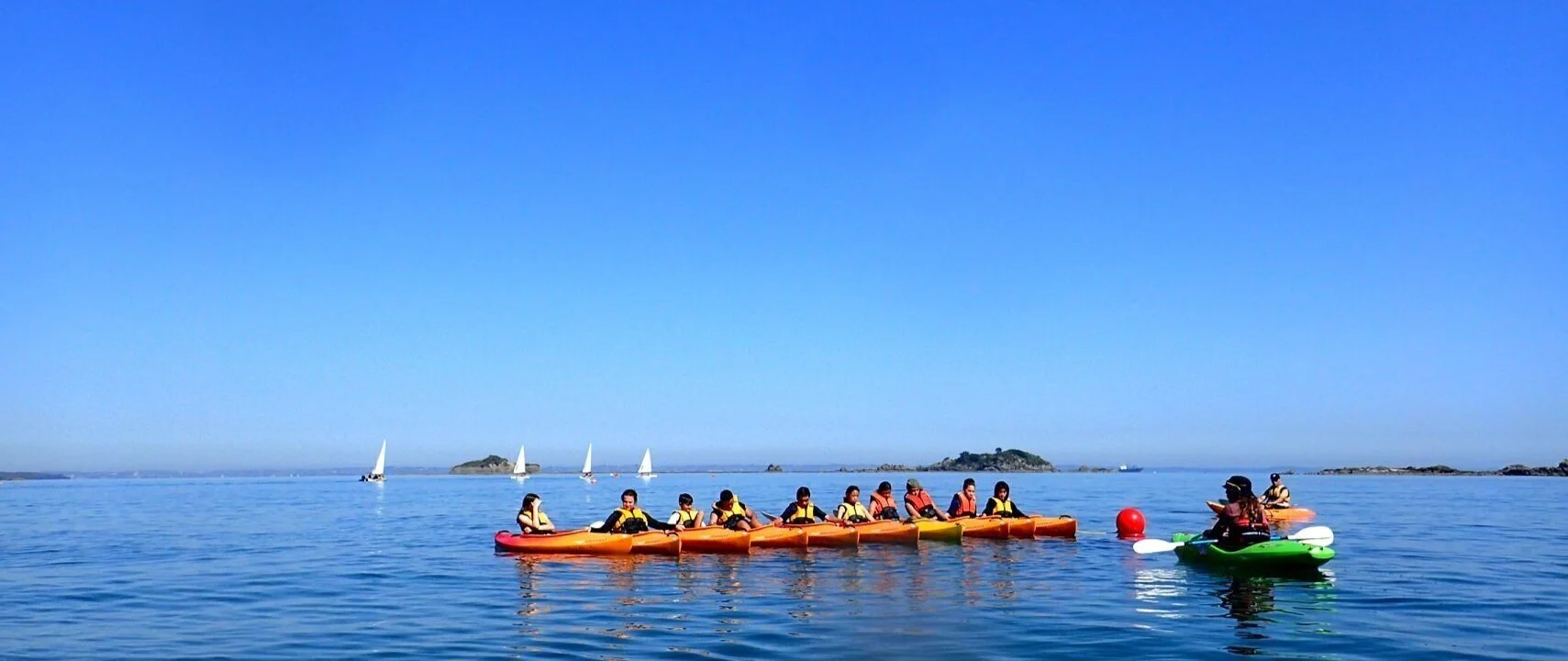
- Sea, land and sky activities: sailing, kayaking, snorkelling, high ropes, climbing wall, abseiling, archery and more.
- Living history: the camp buildings date from 1936 to 1944 and are a listed historic site, with WWII and Māori heritage across the island.
- Outdoors Mark accredited: the camp holds Outdoors Mark accreditation for its safety systems.
- Space to explore: about 5 ha of camp grounds and more than 3,800 ha of recreation reserve across Motutapu and Rangitoto.
School camp accommodation
There are three accommodation options, which can be used separately or together depending on group size.
The Main Camp
The original army barracks hold four large dormitories of 45 beds each, sleeping 180 in total. A separate building, the Cooks Quarters, has two bedrooms for four people, bringing the Main Camp to 184. Separate ablution blocks with showers, a guest laundry and a drying room serve the dorms.
The Lodge
A beachfront lodge sleeping 34, with bunkrooms, an open-plan kitchen, dining and living area, a fireplace, a large wraparound deck, outdoor showers and a barbecue. Sit-on-top kayaks are stored under the deck.
The Cottage
Originally the Commanding Officers Quarters, the beachfront Cottage has three bedrooms sleeping 10, a full kitchen, a fireplace and an outdoor barbecue. It suits a small group or teachers and parent helpers.
Use the camp’s student packing list and leader gear list, and check sleeping bags and all gear for pests and seeds before leaving home, as every visitor goes through biosecurity checks.
Facilities for school groups
- Mess Hall: a large dining hall with tables and bench seating.
- Commercial kitchen with a walk-in chiller, pantry, twin commercial tray ovens, an 8-burner hob, an extra oven and hobs, and a microwave.
- Covered outdoor wash-up with stainless steel sinks.
- Breakout and recreational spaces, including a resource room, an AV room next to the museum, and a gym with a projector and large screen.
- Museum on site.
- Log burners in the accommodation.
- Guest laundry and drying room.
- Troop vehicles and luggage truck for luggage and equipment, with one pickup on arrival and one drop-off on departure.
- WiFi for a small fee, arranged during the stay.
Catering
The camp kitchens are set up for self-catering. Most school groups bring a caterer, and the camp recommends several caterers who know the island and travel over with the group. There are no shops on Motutapu, so food needs to be planned carefully and packed in sealed, rodent-proof containers.
Outdoor education programmes
Programmes are designed and delivered by the camp team to build teamwork, leadership, personal growth and self-awareness in a safe, supportive setting. Senior instructors work with each school to put a programme together, mixing instructor-led sessions with self-led activities. Requests for instructor-led activities are due at least four weeks before the camp, and instructors adjust or swap activities on the day if the weather turns.
Curriculum connections
A camp at Motutapu fits well with education outside the classroom (EOTC) and can support learning in:
- Science: pest-free island conservation, native birds, coastal study walks and the volcanic landscape shared with Rangitoto.
- Health and Physical Education: sailing, kayaking, high ropes, abseiling, orienteering and challenge courses.
- Social Sciences: Māori settlement of the island, European farming history and the WWII coastal defences.
- Key competencies: managing self, relating to others and participating and contributing through island camp life.
Activities on site and nearby
Instructor-led: sea
- Sailing, kayaking and stand-up paddleboarding.
- Snorkelling.
- Waka ama.
- Coastal study walks.
Instructor-led: land and sky
- Archery and low ropes.
- Motutapu Challenge.
- Sustainable Coastlines and pest-free education.
- High ropes, climbing wall, abseiling and the Flying Kiwi.
Self-led
- Raft building and Litter Intelligence beach surveys.
- Orienteering, Burma trail, confidence course and Survivor Challenge.
- Frisbee golf, bouldering wall and the duck pond.
- Flying fox.
- Historical walks and coastal and bush walks.
- Indoor and outdoor sports equipment.
About Motutapu Outdoor Education Camp
The camp was built between 1936 and 1944 as an artillery camp, housing the gun battery personnel and serving as the island’s headquarters. After the military left, the site was handed over for the use of New Zealand’s young people and has run as an outdoor education camp since 1966. The buildings are listed as a historic site and have been kept to their original design. The camp is run by the Motutapu Outdoor Education Trust on land administered by the Department of Conservation, and holds a Pest-Free Warranted concession.
School camp rates
Rates aren’t published and depend on the accommodation used and the programme chosen, with instructor-led activities tailored to each group’s needs and budget. Some items are charged separately, including WiFi, cleaning packs for self-clean stays, general rubbish disposal and taking recycling off the island. Ferry transport and catering are booked directly with the operators. Contact Motutapu Outdoor Education Camp for current rates.
Example three-day camp
An example of how a school camp at Motutapu could look (every camp is planned by the school):
- Day 1: Ferry from Auckland, troop vehicle transfer to camp, settle into the dorms, orienteering, evening Burma trail.
- Day 2: Morning kayaking and snorkelling, afternoon high ropes and climbing wall, evening by the log burner.
- Day 3: Historical walk and raft building, clean up, ferry back to Auckland.
Getting there
Motutapu is in the inner Hauraki Gulf, joined to Rangitoto Island by a land bridge. Groups reach the island by boat and land at one of several wharves: Home Bay (groups up to 100, tidal), Islington Bay (about 1.5 hours’ walk to camp), Yankee Wharf (suited to large groups, about 2 hours’ walk) or Rangitoto Wharf (groups up to 20, about 3 hours’ walk). The camp’s troop vehicles and luggage truck can meet groups. Fullers runs passenger ferries from downtown Auckland, and SeaLink, Red Boats, Riverhead Ferry and Auckland Sea Shuttles offer group and charter options. Ferry times must be sent to the camp at least two weeks before the stay for biosecurity checks.
Nearby attractions for school groups
- Rangitoto Island: New Zealand’s youngest volcano, reached across the land bridge.
- Rangitoto Summit Track: a climb over lava fields to the crater rim, with views over the Gulf and Auckland.
- Rangitoto lava caves: short lava tubes near the summit track.
- WWII battery and observation post: the counter-bombardment battery that the camp was built to serve.
- Reid Homestead: the island’s last farmhouse, built around 1901 near Home Bay.
- Raupoiti Marine Reserve: a no-take area near camp where marine life is protected.
- Islington Bay: a sheltered bay between Rangitoto and Motutapu.
Other groups and events
- Corporate groups: team building and retreats.
- Family and friends: holidays in the Lodge or Cottage.
- Youth and community groups: camps and outdoor programmes.
Good to know
- Motutapu is pest-free. Every visitor checks bags, footwear, clothing and sleeping bags for rats, mice, Argentine ants, rainbow skinks, soil and seeds, and uses the cleaning stations at the wharves.
- Pack food in sealed, rodent-proof containers.
- Each student needs a medical form completed before arriving on the island.
- On-island first aid supplies are for emergencies only, so bring your own group first aid kit.
- The site is staffed around the clock, with an on-call number posted in every building.
- Fires are limited to the log burners in the accommodation.
- Flying a drone needs a Department of Conservation concession.
- Cellphone reception varies by provider.
- Glass is discouraged on the island.
Frequently asked questions
How many students can Motutapu accommodate?
The Main Camp sleeps up to 184 in four 45-bed dormitories and the Cooks Quarters. The Lodge sleeps 34 and the Cottage sleeps 10.
How do we get to Motutapu Island?
By boat from Auckland. Fullers runs passenger ferries from downtown Auckland, and several operators offer group charters. The camp’s troop vehicles and luggage truck meet groups at the wharf.
Is the camp catered?
The kitchens are set up for self-catering, and most school groups bring one of the caterers the camp recommends, who travel over with the group.
Do instructors run the activities?
Both options are available. Senior instructors can plan and deliver an instructor-led programme, and there’s a long list of self-led activities groups can run themselves.
What activities are on offer?
Sailing, kayaking, snorkelling, stand-up paddleboarding, high ropes, climbing wall, abseiling, archery, raft building, orienteering, a flying fox and more.
What biosecurity rules apply?
Motutapu is pest-free, so all bags, clothing, footwear and sleeping bags must be checked before leaving, and food packed in sealed containers.
What happens in bad weather?
Instructors watch the conditions and arrange alternative activities on the day if something isn’t safe.