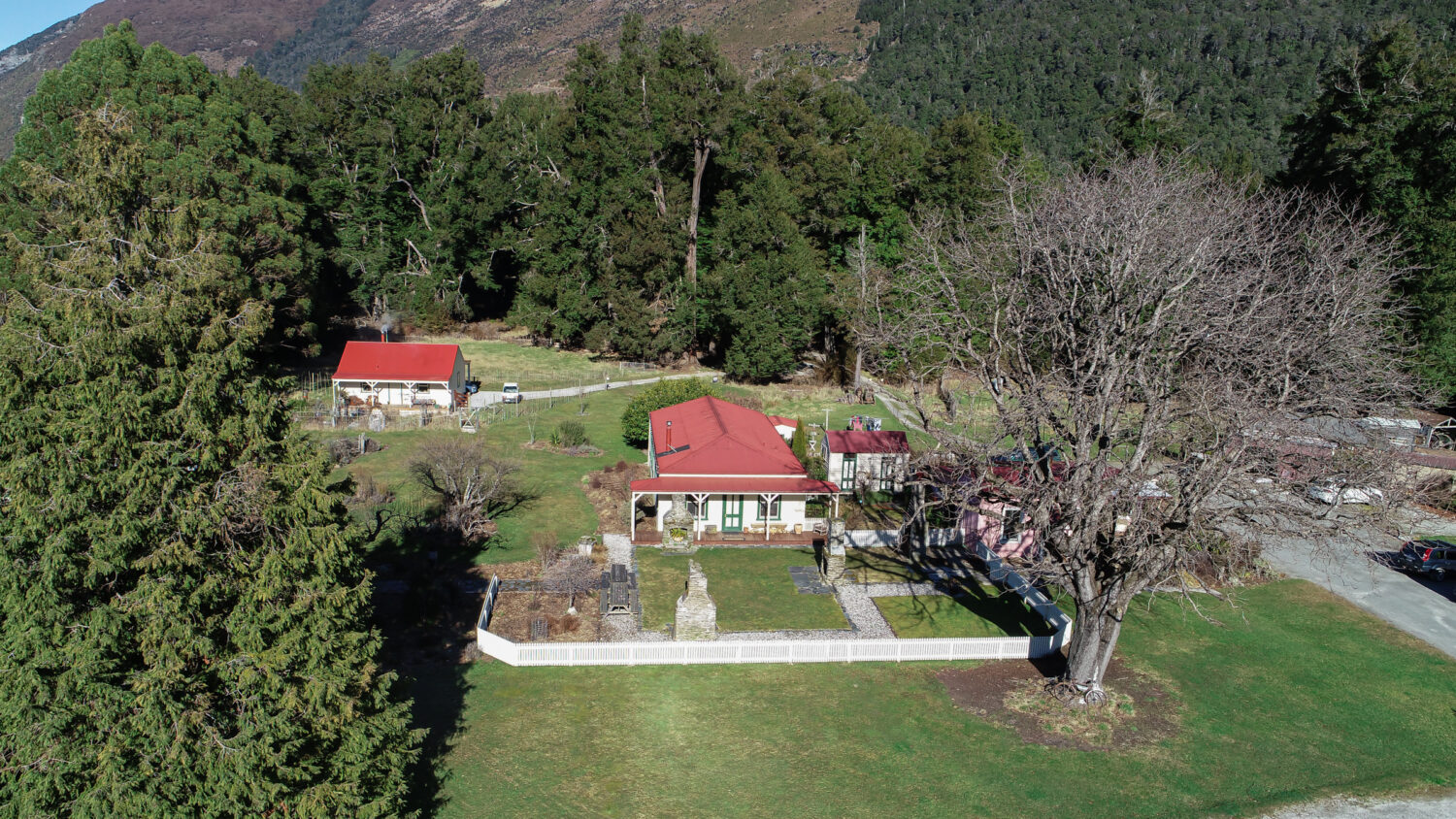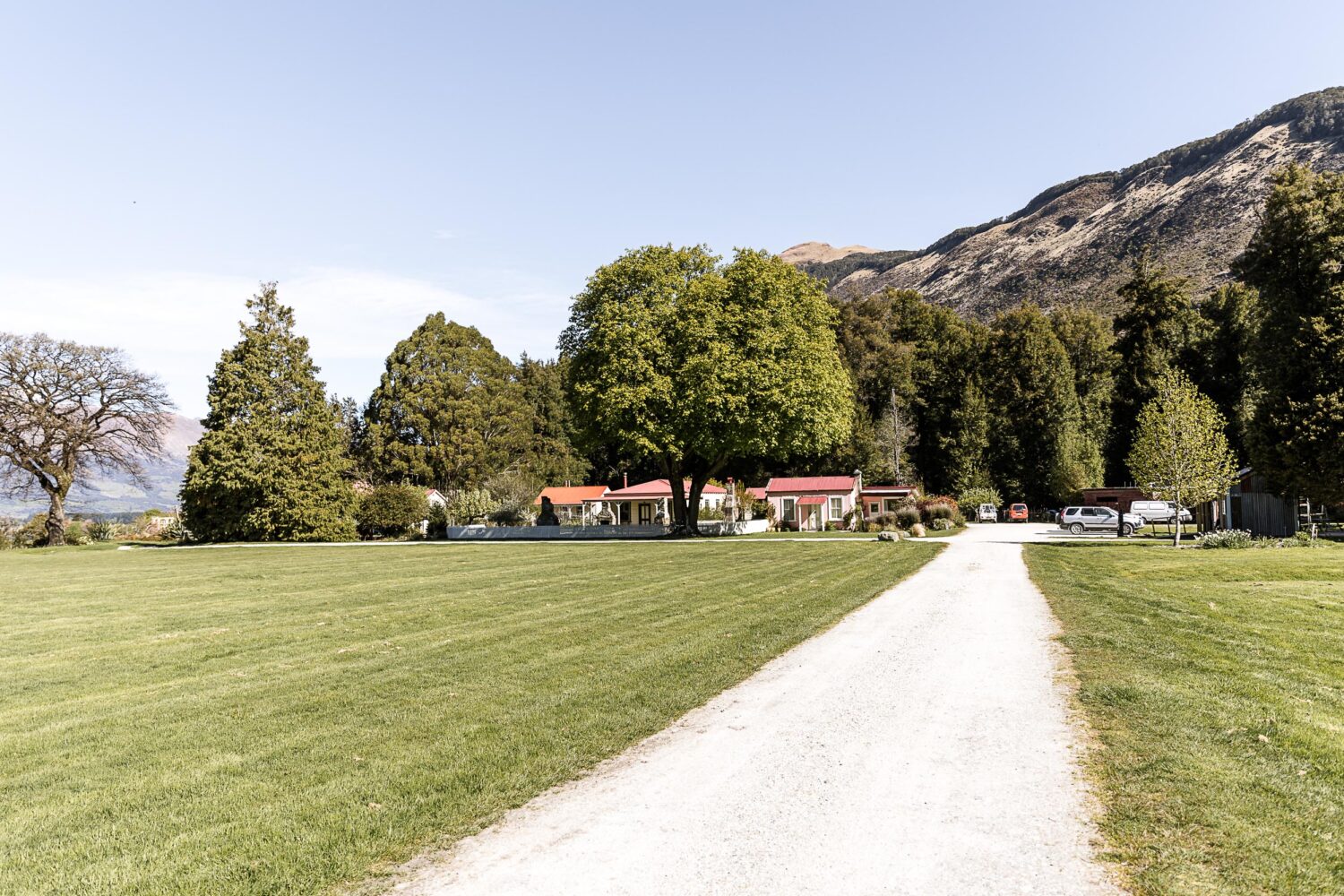
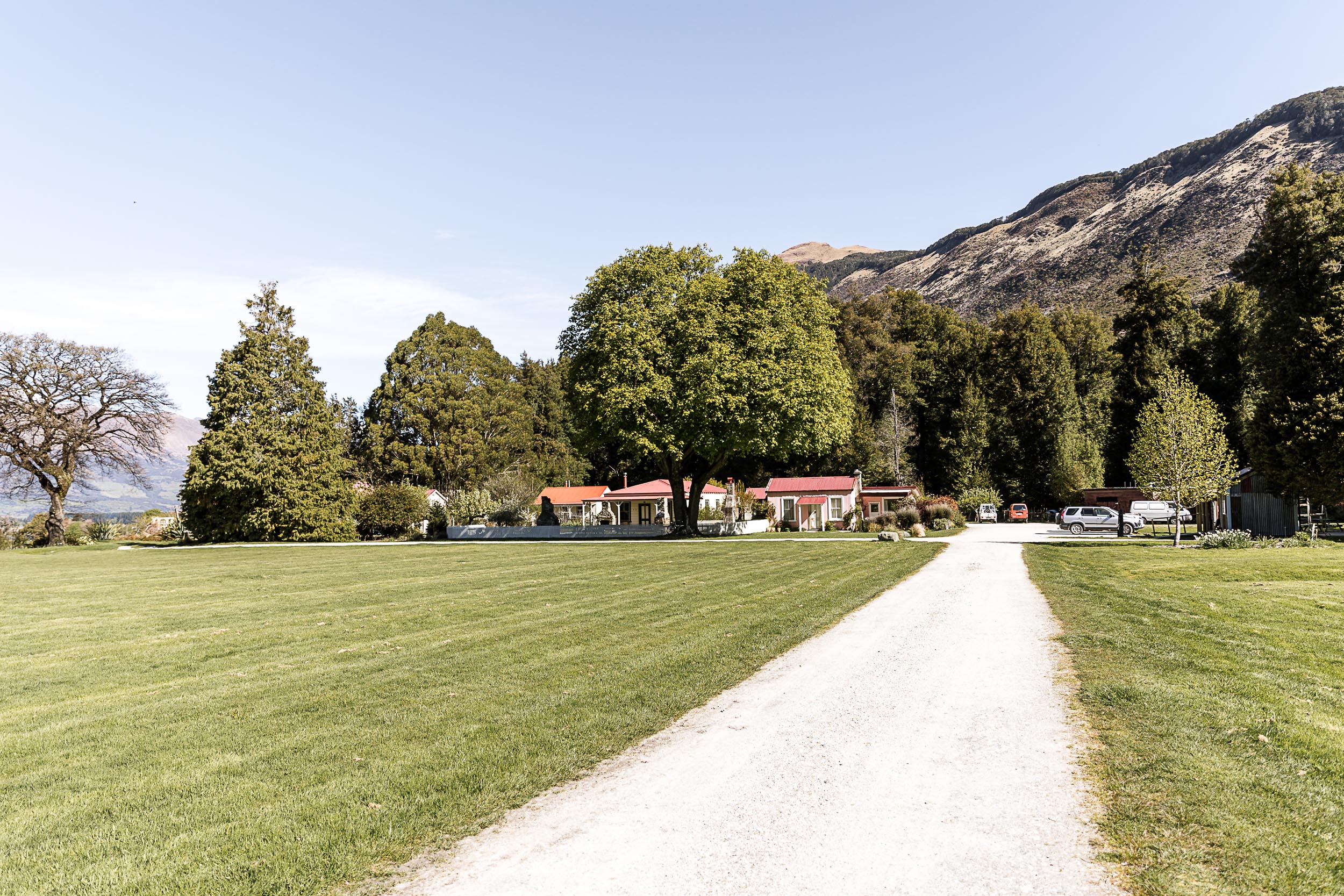
Paradise Trust looks after Paradise, a historic high-country property in the Dart Valley, 19 km beyond Glenorchy at the head of Lake Wakatipu in Otago. Run by a not-for-profit charitable trust, it offers a Queenstown Lakes school camp where students live off the grid in historic cottages and back-country style huts, surrounded by beech forest, mountains and Diamond Lake. Its 11 cottages, huts and houses sleep up to 54 people in total, and school groups are the only visitors allowed to camp on the property, so larger groups can combine tents with cabin bookings.
Why schools choose Paradise
- A genuine off-grid stay: most cottages and huts have no electricity, so students cook on gas rings and wood or coal ranges and light their own way at night
- Camping on the open grassy areas is reserved for school groups, and the trust lets the old Glenorchy school building, Paradise Hall, to school groups free of charge as a meal and gathering space
- Exclusive use of the whole property, or just part of the grounds, can be arranged
- Walking and bike tracks through native bush, with glow-worms and long-tailed bats on the property
- Diamond Lake a short walk away for swimming and kayaking
- Hands-on conservation: the trust runs predator trapping, pest plant control and kōwhai planting, and school groups have helped with this work
- Over 130 years of history, from the 1883 homestead to the remains of the Paradise scheelite mine
School camp accommodation
Accommodation falls into three groups: back-country style huts, historic cottages and boutique accommodation. Across all three, Paradise sleeps up to 54 people (12 in the boutique houses, 21 in the cottages and 21 in the huts). Schools can book cabins on their own or combine one or more cabins with camping.
Camping for school groups
Camping is only permitted at Paradise for organised school groups, and a camping booking needs to include at least one cabin. The open grassy areas near Garden of Eden and Big Cottage are the spots schools usually choose. Paradise Hall can be used as the group’s base for meals and activities.
Historic cottages
The three cottages are off the grid, with no power or device charging. Each has a kitchen with cutlery, plates and cookware, and hot water heated by a wetback on the range.
- Big Cottage (sleeps 8): the largest cottage, built in 1912, with a five-bed bunk room, a main bedroom with a queen and a single, a coal range, an open fire, a claw-foot bath and an outdoor pizza oven. It is listed as wheelchair accessible, with a wet-area shower.
- Garden of Eden (sleeps 6): a queen bed and fold-out sofa in the main room, plus a bedroom with a bunk and a single, with a fireplace, a wood range and a hot shower
- Bushveldt (sleeps 7 from October to April, 3 from May to September): a main cabin for three plus two small sleeping huts for two each, set in a clearing in beech forest about 10 minutes’ walk from Diamond Lake. It has a shower room and an outside long-drop. The two small huts are unheated and close over winter.
Back-country style huts
The six huts are simple and rustic, with no electricity, gas cooking and long-drop or outdoor toilets. Several are walk-in only.
- Prydes Camp (sleeps 6): three small cabins linked by a covered veranda, with a double room and a second room with a double bunk and two singles, a kitchen, a barbecue, a long-drop and an outdoor solar shower. Vehicle access is limited, with a maximum of two vehicles.
- The Boiler Room (sleeps 4–6): one room of three double bunks beside the beech forest above Diamond Lake, with an indoor fire. A 4WD is recommended for access.
- Dolans (sleeps 3): a double bed and sofa bed on an elevated clearing, reached by a walk of about 1 km through beech forest
- Dart and Nox (sleep 2 each): small walk-in huts about 1 km from the office car park, each with a double bed and a small fireplace
- Old School House (sleeps 2): the early-1900s school once used by children of the scheelite mine families, with a double bed, an outdoor gas cooker and an open fire
For the walk-in huts, gear can be carried in for a small extra charge if it’s arranged before arrival.
Boutique accommodation
Two restored buildings have power, central heating, wood burners, full kitchens, and linen and towels supplied. Both are listed as wheelchair accessible and suit staff, parent helpers or groups that need more comfort.
- Miller House (sleeps 8): the 1883 homestead, a Category 1 historic place restored after a fire in 2014, with five bedrooms and two bathrooms
- The Annexe (sleeps 4): the former staff quarters, with a queen room and a twin room
For cottages, huts and camping, bring sleeping bags or duvets, towels, toilet paper, a torch or lantern, matches and all your food. Pillows and mattress protectors are supplied in the cottages and huts.
Facilities for school groups
- Camping areas for school groups
- Paradise Hall, the 1911 Glenorchy school building, free for school groups to use for meals and group activities
- Hall dining table for up to 16, crockery and cutlery for 20, a kitchenette with a sink, a hot water unit and a food warmer, plus a fireplace and piano
- 11 cottages, huts and houses, each with its own cooking facilities
- Walking and bike tracks across the property
- Two electric golf carts available to hire
- Running water throughout (boil before drinking)
Catering
Paradise is fully self-catering and there’s no food for sale on the property. Glenorchy has basic supplies, so most groups shop in Queenstown before heading out. Paradise Hall and the cottage kitchens give groups space to prepare and share meals together.
Learning opportunities
Paradise Trust provides the setting rather than instructor-led programmes, so teachers plan and run their own camp. The trust highlights learning about biodiversity, pest control and trapping, off-grid living and wilderness experience. A stay at Paradise can support:
- Science (living world and ecology), through the beech forest, long-tailed bats, glow-worms and native birds, and the trust’s trapping and pest plant work
- Education for sustainability, through off-grid living, water and fuel use, and conservation projects such as kōwhai planting with DOC’s Project Gold
- Social sciences, through the story of the homestead, the guest-house era, the scheelite mine and the relocated Glenorchy school
- Health and physical education, through tramping, biking and outdoor living
- Education outside the classroom (EOTC) and key competencies such as managing self, relating to others, and participating and contributing
- Learning about Te Wāhipounamu – South West New Zealand World Heritage Area, which takes in nearby Mt Aspiring and Fiordland National Parks
Activities on site
Walks, bikes and nature
- Short, easy walks through to more demanding tracks around the property
- Bike tracks, and bikes are a practical way to get between huts
- Glow-worm spotting after dark
- Birdwatching and wildlife, including long-tailed bats, native birds and white-tail deer
- Photography among the beech forest, wetland and open valley country
On the water
- Swimming and kayaking at Diamond Lake
- Trout fishing (a Fish & Game licence is needed)
Conservation and history
- Predator trapping and pest plant removal alongside the trust’s biodiversity work
- The 1883 homestead (Miller House), the remains of the Paradise scheelite mine and a small collection of old farm tractors
- Paradise Hall, the old Glenorchy school, cut into 18 pieces and moved about 20 km up the valley in 2014
Local operators
The trust lists several Glenorchy operators that work in and around the valley, including Dart River jet boating and Funyaks, Paradise Ziplines, High Country Horses, Rippled Earth Kayaking, packrafting in the Rees Valley, Delta Discovery, the Glenorchy Animal Experience, Routeburn canyoning and scenic helicopter flights. Book these directly and check age limits and group sizes with each operator.
The Paradise story
The homestead, first called Eden Grove, was designed in 1883 by architect William Mason as a country retreat. The Aitken family then ran Paradise as a tourist guest house for around 60 years, and in the 1880s visitors came out from Glenorchy by horse and buggy. The Veint family took over in the 1940s, and in 1949 the Miller family bought the property, living there while still welcoming visitors to the cottages and huts. After David Miller died in 1998, the Paradise Charitable Trust was set up to protect the property’s special character for visitors, especially children and families. The trust is not-for-profit, and anything beyond running costs goes back into caring for Paradise.
School camp rates
School camping is charged per student and per adult, and a camping booking must include at least one cabin. Cottages and huts have a minimum nightly charge covering two people, with additional charges for extra adults and a lower rate for children aged 5–15 (under-5s stay free). The boutique houses are priced per night for a set number of guests plus extra people, with a two-night minimum. Use of Paradise Hall is free for school groups. Contact the trust for current rates.
Example three-day camp
This is an example only. Paradise Trust doesn’t run programmes, so teachers plan the camp around their own learning goals.
Day 1
- Travel from Queenstown, shopping for supplies on the way
- Sign in at the office, pitch tents and settle into the cabins
- Walk to Diamond Lake for a swim
- Evening: shared meal in Paradise Hall, then a glow-worm walk
Day 2
- Bush walk and biodiversity study in the beech forest
- Pest plant removal or trap checking, if arranged with the trust
- Kayaking on Diamond Lake
- Evening: groups cook dinner on the cottage ranges and gas rings
Day 3
- History trail: the homestead, the Old School House and the scheelite mine remains
- Pack up, remove all rubbish and leave the site as found
- Optional stop at the Glenorchy Walkway on the way home
Getting there
Glenorchy is about 45 km from Queenstown along the lake, and Paradise is a further 19 km up the Dart Valley. Some huts are walk-in only and others need a 4WD or have limited parking, so talk to the trust about vehicle and bus access before you book. Official road closures are covered by a full refund under the trust’s terms.
Nearby attractions for school groups
- Glenorchy Walkway – a family-friendly boardwalk loop around the Glenorchy lagoon, about 1–2 hours
- Diamond Creek Walk – an easy walk of about 45 minutes one way to Lake Reid, with waterfowl and views up towards Paradise
- Routeburn Nature Walk – a short walk from the Routeburn Shelter into the start of the Routeburn Track, one of New Zealand’s Great Walks
- Lake Sylvan Track – a forest walk of under two hours return
- Dart River – jet boat and Funyak trips run through the valley past Paradise
- Glenorchy township – a small lakeside settlement with history linked to gold and pounamu
- Mt Aspiring National Park – the Rees–Dart and Earnslaw Burn tracks start nearby, suited to experienced senior groups
Other groups and events
Paradise also welcomes:
- Families and groups of friends staying in the cottages, huts and houses
- Weddings and elopements, with three outdoor ceremony sites and room for a marquee
- Film shoots and events, by arrangement
- Group dinners and gatherings in Paradise Hall
- Volunteers supporting the trust’s conservation work
- Day visitors, who can walk the property for a small fee
Good to know
- Check-in is at a pre-arranged time between 3pm and 6.30pm, and all guests sign in at the office. Check-out is by 10.30am.
- Cottages and huts have no power or device charging, and drinking water should be boiled
- Candles, drones, motorbikes, quad bikes, fireworks and firearms are not allowed, and the property is smokefree
- Take all rubbish away with you
- Quiet hours run from 10pm to 8am, and all vehicles and bikes travel at walking pace
- Dogs can come by prior arrangement and must stay on a lead, as deer live on the property
- Fire restrictions may apply to outdoor fires and fire baths
- Weather in the valley can change quickly. The trust doesn’t refund weather cancellations, so travel insurance is worth considering.
Frequently asked questions
How many people can stay at Paradise?
The cottages, huts and houses sleep up to 54 people in total, and school groups can also camp on the property as long as at least one cabin is booked.
Where is Paradise Trust?
Paradise is in the Dart Valley at the head of Lake Wakatipu, 19 km past Glenorchy, which is about 45 km from Queenstown.
Can school groups camp at Paradise?
Yes. Camping is only allowed for organised school groups, and the booking must include at least one cabin.
Is there power at Paradise?
The historic cottages and back-country style huts are off the grid with no power or charging. Miller House and The Annexe have power and central heating.
Does Paradise Trust provide catering or activity programmes?
No. Groups are fully self-catering and teachers run their own programme, using the tracks, Diamond Lake and Paradise Hall.
Can school groups use Paradise Hall?
Yes. School groups can use the hall free of charge as a gathering place for meals and group activities.
Is any accommodation wheelchair accessible?
Big Cottage, Miller House and The Annexe are listed as wheelchair accessible. Check access details with the trust before booking.
What do students need to bring?
Bring sleeping bags or duvets, towels, toilet paper, a torch or lantern, matches and all food. Pillows and mattress protectors are supplied in the cottages and huts.