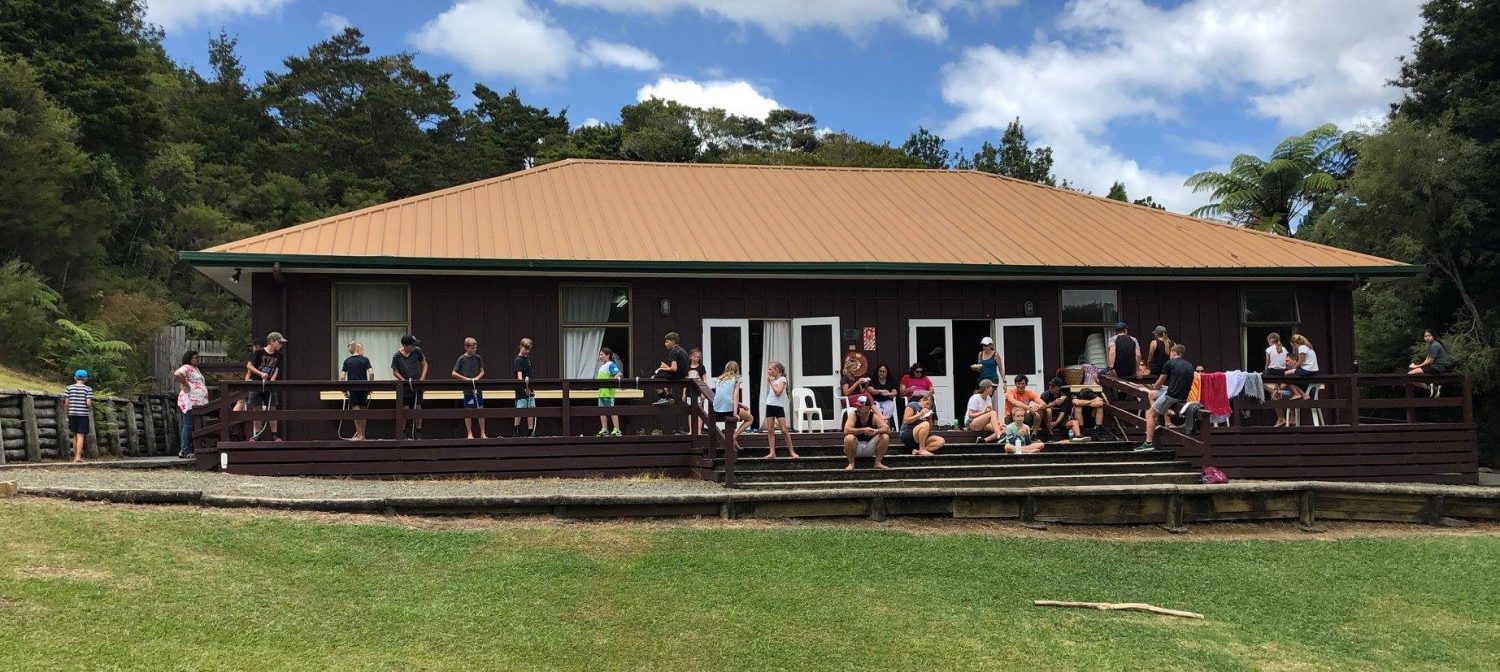
Tangihua Lions Lodge is a self-catered bush lodge in Tangihua Forest, a DOC reserve in the Tangihua Ranges roughly halfway between Whangārei and Dargaville in Northland. Owned by a non-profit trust and built by local Lions volunteers in the 1980s, it has been a Northland school camp venue for decades, offering a forest base where students can tramp, explore streams and take part in real pest-control work. The main lodge sleeps 50 in bunkrooms, a second building sleeps 7, and there is room for tents on the grass.
Why schools choose Tangihua Lions Lodge
- Set right inside Tangihua Forest, with DOC walking tracks starting at the lodge
- Bunkrooms for 50, with adult rooms placed so staff can keep an eye on students
- A separate small lodge that works well as a staffroom, sick bay or quiet space
- Hands-on conservation, including possum trap lines and pest monitoring lines students can use
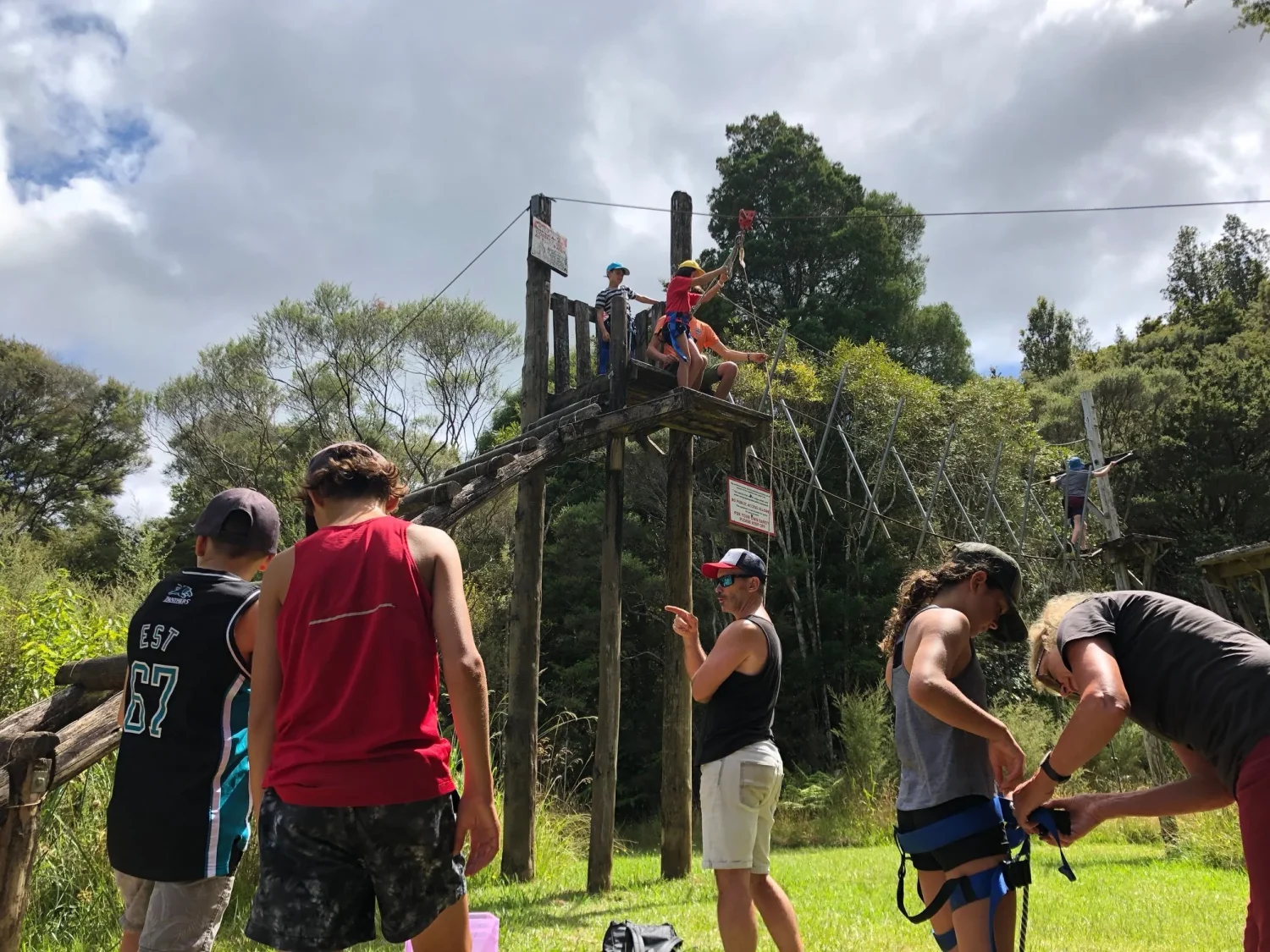
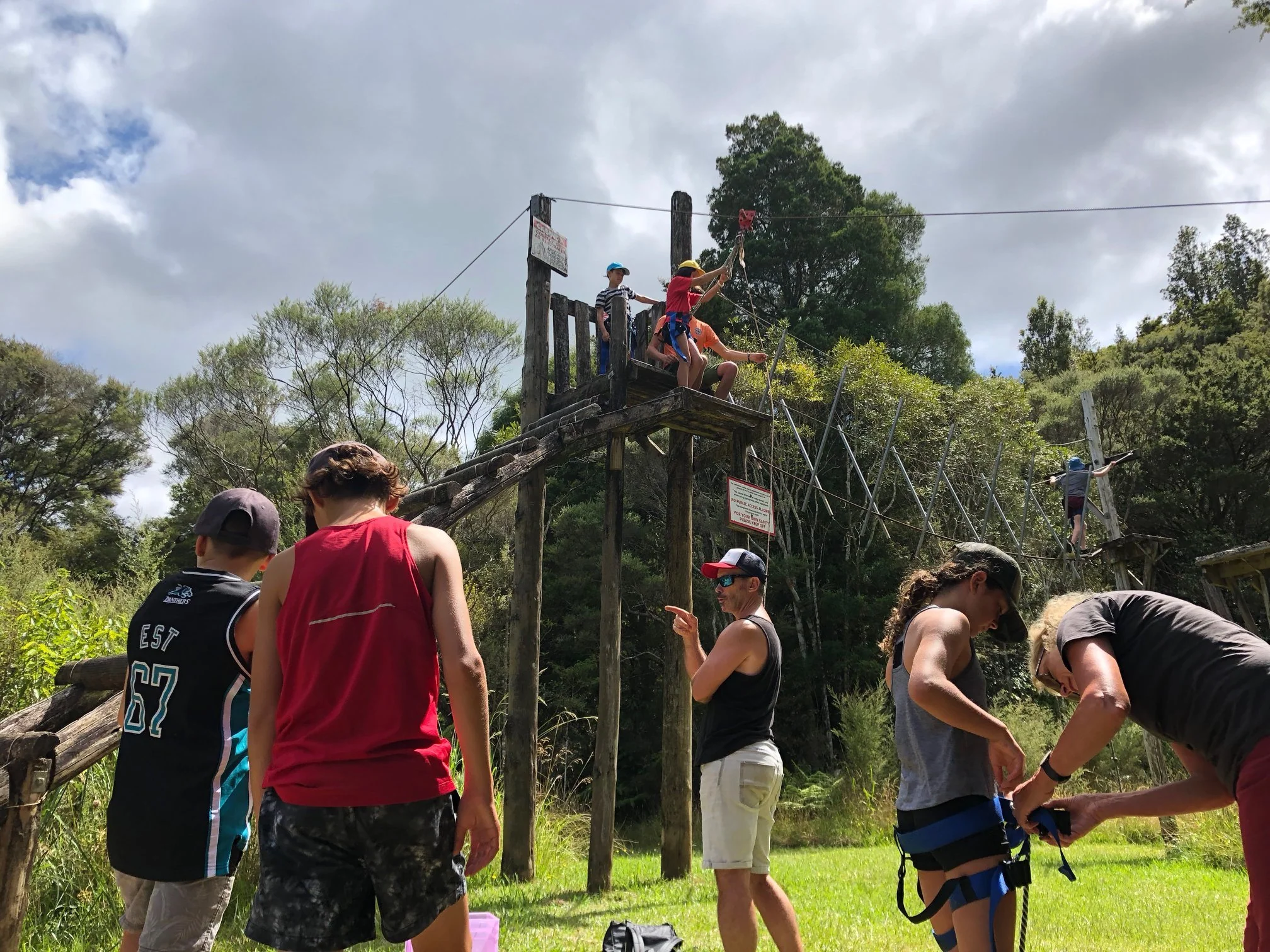
- A confidence course built with help from the New Zealand Navy, with harnesses provided
- Run by a non-profit trust that puts all income back into the lodge to keep camp costs down
- Groups get sole use of the lodge for their booking
School camp accommodation
Main lodge
The main lodge has 50 beds across four rooms on either side of the dining area: two 20-bunk rooms for students and two 5-bed rooms for teachers and parent helpers. Each adult room is divided from the neighbouring student room by a part-height wall, which makes night-time supervision easier. Many schools put boys on one side and girls on the other. One bathroom is wheelchair accessible.
Small lodge
The second building, funded through a Lions Clubs International Foundation grant, is a self-contained unit with its own bedroom, bathroom, kitchenette and living area. It sleeps 7 using single and double beds plus fold-out couches. Schools often use it for staff, as a sick bay, or as a place for adults to take a break.
Camping
Larger groups can add tents. There is a flat area on the upper grass beside the lodge and a bigger clearing along the track, about five minutes’ walk away.
Mattresses and pillows are supplied. Bring sheets, sleeping bags or other bedding, and your own pillowcases. Pack for bush walking, stream crossings and wet weather.
Facilities for school groups
- Dining room of about 100 m² that seats 80 and doubles as a classroom, with tables, seating and whiteboards
- Commercial-grade kitchen with oven, stovetop, large hotplate, toaster, microwave and dishwasher
- Large pantry, fridge-freezer and a chiller on the covered back deck
- Crockery and cutlery for large groups
- Bathrooms with 9 showers and 7 toilets plus a urinal, including one accessible bathroom
- Drying room with a heater and dehumidifier for boots, packs and wet clothing
- Front deck of about 60 m² looking over the grass, and a fully covered back deck of about 100 m²
- Covered concrete area out the back where groups can set up their own gas barbecue
- Sloping grass areas and a larger clearing for games and camping
- Kauri dieback cleaning stations at the gate and at the lodge
Catering
Tangihua is fully self-catered. Groups bring all their own food, cleaning products, toilet paper and rubbish bags, and the nearest supermarket is close to 40 km away, so plan your shopping before you arrive. The lodge water is treated and safe to drink. To help with planning, the lodge shares a tested school camp menu and recipes put together by an experienced camp organiser from Tauraroa Area School.
Learning opportunities
Camps at Tangihua are run by the school, so teachers plan their own programme. Instructors aren’t supplied. The lodge provides planning information, downloadable resources (a sample programme, a guide for parent helpers and a what-to-bring list) and online pages about the forest’s trees, birds, insects, geology and kauri logging history. It is also developing resources linked to the New Zealand Curriculum for Years 5–13 and to Te Marautanga o Aotearoa.
The forest and lodge setting can support:
- Science (living world and nature of science), through habitat study, native tree identification, bird watching and pest monitoring
- Social sciences, through the story of kauri logging in the ranges and the remains of an early 1900s timber dam
- Health and physical education, through tramping, orienteering and the confidence course
- Education outside the classroom (EOTC) and key competencies such as managing self, relating to others, and participating and contributing
- Te ao Māori learning, with the lodge describing its setting as suited to marae-style teaching and noting the kaitiaki of the forest
- Career awareness, through the lodge’s material on jobs in conservation and the environment
Conservation in action
The lodge trust runs a predator-control project targeting possums, rats, mustelids and feral cats. It works alongside DOC and a community pest control area that takes in neighbouring farmland. Students from Hikurangi School helped set up trap lines that visiting schools now use. Groups can work a possum trap line, check permanent monitoring lines and learn why the forest needs protecting.
Activities on site
Adventure and challenge
- Confidence course with rope walks, swings, climbing walls and a flying fox, usually a half-day session depending on age
- Orienteering, with a beginner course and more courses being developed
- Burma Trail, a rope trail of roughly 300 m through the bush, used at night with adult help
- Bivouac building, using materials stocked near the main clearing
- Camping out in tents on the grass or in the clearing
Walks and tramps
- Kauri Dam Walk – an easy 20-minute return walk from near the lodge to a viewing area above an old timber dam
- Kauri Grove – a walk along the stream to a stand of large kauri with a viewing platform
- Tangihua Forest Nature Walk – an easy, family-friendly walk past old logging tracks and kauri stumps, with an online nature trail students can follow on a phone
- Whakapono and Tumanako tracks – an easy loop of around two and a half hours that climbs a spur to the ridge and returns to the lodge
- Horokaka Track – a popular full-day tramp for older or fitter groups
- Te Haua Uru Track and Tangihua Main Ridge – advanced routes for experienced, well-equipped trampers only
Streams and wildlife
- Swimming hole in a shaded, clear stream below the clearing
- Habitat study in the bush, streams and grassland around the lodge, looking at snails, insects and birds
- Bird watching and drawing – pīwakawaka, tūī and kererū are among the birds to look for
After dark
- Night walks to spot kōura, eels, native fish and glow-worms
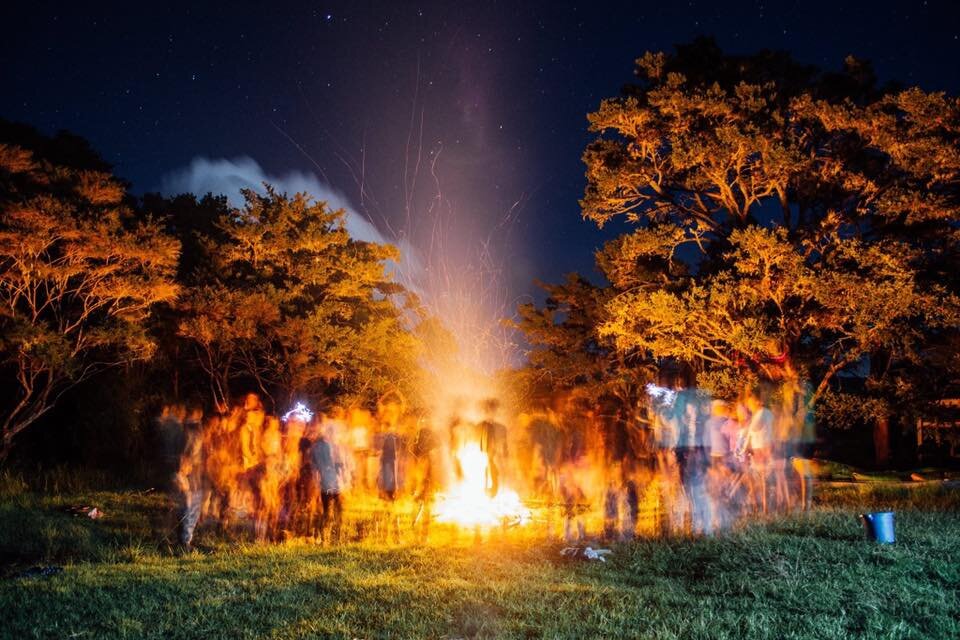
- Stargazing and finding the Southern Cross
- The Burma Trail by torchlight
The Lions Lodge story
The idea for a bush lodge came from the Whangārei Mid-Western Lions Club, a small club made up mostly of local farmers. After several years of planning, a core team of volunteers spent around three years and some 7,000 hours building the lodge and its access road, using a recreation building relocated from the Marsden Point refinery accommodation site. The lodge opened in February 1988 and was handed to a trust free of debt. Volunteers still do much of the maintenance, track work and conservation, and the lodge has hosted more than 15,000 guests.
School camp rates
Schools and student groups pay a per-person, per-night rate, with children under 5 free. A minimum charge per night applies, which works out at around two dozen students, so small groups pay the minimum. A refundable bond secures the booking and is returned if the lodge is left in good order. Social groups pay a higher adult rate with a lower rate for under-18s. Contact the lodge for current rates.
Example three-day camp
This is an example only. Schools plan and run their own programme at Tangihua.
Day 1
- Walk in, clean footwear at the kauri dieback station and settle into the bunkrooms
- Kauri Dam Walk and habitat study around the lodge
- Evening: night walk to look for glow-worms and kōura
Day 2
- Confidence course in small groups
- Possum trap line and pest monitoring with the rest of the class
- Evening: Burma Trail and stargazing
Day 3
- Orienteering or bivouac building
- Walk to Kauri Grove
- Clean up, pack and depart
Getting there
The lodge is off Omana Road in Whangārei District, about 35 minutes’ drive from Whangārei, and is reached by an access road of about 3 km into the forest. There is gravel parking by the small lodge, but buses and large caravans shouldn’t drive all the way in. A turning bay and grassed area sit about 400 m from the lodge. The public car park on Omana Road is a walk of about 45 minutes from the lodge, and the access road has a gate that can be locked, so confirm access arrangements when you book.
Nearby attractions for school groups
- Kiwi North – a nocturnal kiwi house plus the Whangārei Museum and Heritage Park, in Maunu on the western side of Whangārei
- Whangārei Falls – a 26 m waterfall a few kilometres from the city centre, with short walks around the falls
- A.H. Reed Memorial Kauri Park – a boardwalk through mature kauri forest, linked to the falls by the Hātea River walk
- Abbey Caves – a loop walk past three limestone caves known for glow-worms
- Hātea Loop – a 4.2 km walking and cycling loop from the Town Basin with Māori sculpture and heritage panels
- Hundertwasser Art Centre with Wairau Māori Art Gallery – art and architecture at the Whangārei Town Basin
- Parihaka – a historic pā site above Whangārei with summit walks and city views
Other groups and events
Anyone can hire the lodge, and each booking gets the place to itself. Groups that use Tangihua include:
- Families and family reunions
- Weddings, with a weekend package and the bush as a backdrop for photos
- Sports teams staying for local tournaments
- Leadership and team-building groups
- University and tertiary groups
- Conservation volunteers
Good to know
- The lodge sits inside a DOC reserve, so fires are not allowed anywhere, and barbecues must stay off the decks
- Kauri dieback hasn’t been found in the ranges. Everyone must clean and disinfect footwear and gear at the cleaning stations and stay on marked tracks.
- Dogs aren’t allowed on the access road or in the forest without a DOC permit
- There’s no water source in the forest, so carry enough on walks
- Stream crossings to the clearing and Kauri Grove can be dangerous after heavy rain
- The ridge tracks are exposed to bad weather, so have a wet-weather plan ready. The dining room and covered deck suit indoor activities.
- The lodge’s first aid kit stays at the lodge, so take your own kit on walks
- Bring cleaning supplies, as groups clean the lodge before leaving
Frequently asked questions
How many people can stay at Tangihua Lions Lodge?
The main lodge sleeps 50 in bunkrooms and the small lodge sleeps 7, giving 57 beds. Larger groups can camp on the grass nearby.
Where is Tangihua Lions Lodge?
It is in Tangihua Forest off Omana Road in Whangārei District, Northland, about 35 minutes’ drive from Whangārei.
Is Tangihua Lions Lodge catered?
No. Groups bring and cook their own food in the commercial-grade kitchen, and the lodge shares a tested school camp menu to help with planning.
Are instructors provided?
No. Schools run their own programme, using the lodge’s planning information, activity ideas and online learning resources.
What activities can students do?
Options include a confidence course, orienteering, the Burma Trail, bivouac building, bush walks and tramps, stream study, night walks and possum trapping.
What year levels does the lodge suit?
The lodge has hosted groups from Year 3 through to university students.
Can buses drive to the lodge?
Buses and large caravans are advised not to drive all the way in. There is a turning bay and grassed area about 400 m from the lodge.
Can other groups book the lodge?
Yes. Families, reunions, wedding parties, sports teams and other groups can hire it, and each booking has sole use.