The Coach House Museum in Feilding, Manawatū, tells the rural story of the district across more than 140 years, from the forest and Māori landscape through European settlement, bush clearance and farming. Its large indoor collection of horse-drawn vehicles, tractors, stationary engines and farm machinery makes it a hands-on Manawatū school trip, and an easy history stop on a Feilding school camp activity programme. Guided tours for groups can be arranged with notice, and the museum is open seven days.
Why schools choose the Coach House
- Big objects, real history: horse-drawn wagons, buggies, drays and historic farm machinery that students can see up close.
- Rare tractors: the Spall Collection of restored vehicles and stationary engines includes a rare Fitch Four tractor, and the Crawshaw collection features restored John Deere machines.
- A local settlement story: displays on Māori and the early Manawatū landscape, the Manchester Block, bush clearance and early town life.
- Guided tours by arrangement: tours can be tailored to a group with enough notice, subject to volunteer availability.
- Changing exhibitions: temporary exhibits give a reason for a return visit.
- Coach-friendly site: plenty of on-site parking suited to tour buses, with accessible parking and wheelchair access.
- Catering available: group catering can be arranged, with a commercial registered kitchen on site.
School programmes and activities
The Coach House doesn’t publish a set schools programme. Group visits and guided tours are arranged directly with the museum, so the content and length of a visit can be shaped around what a class is studying.
Guided group tour
A volunteer-led tour of the collection, tailored to the group when enough notice is given. Availability depends on the museum’s volunteer team, so book early.
Self-guided visit
Visitor hosts are on hand during opening hours, and teachers can lead students through the galleries themselves.
Permanent displays
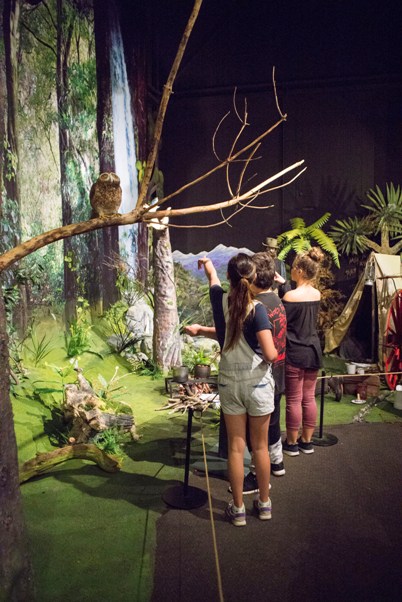
- Native birdsong: visitors are greeted by the calls of native birds that once lived in the local forest, including kōkako, huia, kererū and tūī.
- Horse-drawn era vehicles: heavy vehicles used to open up the district, along with the social and commercial vehicles of settlers, traders and farmers.
- Farm machinery: historic agricultural equipment used in the region.
- Settler life: displays on daily life in the horse-drawn era and beyond, including a blacksmith’s shop, the Reilly Cottage of the Kawhatau Valley and a 1909 replica façade.
- Surveyors Camp: a display linked to Kitchener Park.
Temporary exhibitions
The museum hosts changing exhibitions. From 11/11/2026 to 26/01/2027 it is showing Rūaumoko: Restless Land, a touring exhibition from Te Papa and the Natural Hazards Commission Toka Tū Ake about volcanoes, earthquakes and being prepared, which blends science with mātauranga Māori and includes a digital earthquake tracker and a preparedness game.
Learning opportunities
A visit gives students a direct look at how the Manawatū was settled and farmed, using the vehicles, tools and household objects of earlier generations.
Curriculum connections
A visit to the Coach House Museum fits education outside the classroom (EOTC) and can support learning in:
- Social Sciences: Māori and the early Manawatū landscape, European settlement, land development and how communities change over time.
- Technology: how transport and farm machinery developed, from horse-drawn vehicles to tractors and stationary engines.
- Science: native birds and forest, and natural hazards during the Rūaumoko exhibition.
- English: recording observations and writing about local history.
- Key competencies: thinking, using language, symbols and texts, and relating to others.
Safety and instruction
Tours are led by the museum’s volunteers, and visitor hosts are available whenever the museum is open. Teachers remain responsible for supervising their students during the visit.
Adding the Coach House to a school camp
Feilding sits in the heart of the Manawatū, so the museum works well as a half-day history stop for schools staying at camps in the Manawatū and Rangitīkei, or as a stop on the way through the region. It pairs easily with a forest walk at Kitchener Park or a museum visit in Palmerston North on the same day.
About the Coach House Museum
The Coach House Museum is home to a rural New Zealand collection built up with the help of many hundreds of volunteers and supporters over the years. It shares its site with the Feilding and Districts Community Archive, which holds local records, photographs and papers. The museum also runs venue hire and catering for functions, and supports a Friends of the Coach House membership.
School group rates
General admission is charged per adult and per child aged 5 to 17, with preschoolers free and a family pass available. Group bookings and guided tours are arranged in advance, with special group rates. Contact the Coach House Museum for current rates.
Example school visit
An example of how a school visit to the Coach House Museum could look (every visit is planned with the provider):
- Arrival: bus parks on site and the class is welcomed by museum hosts.
- Guided tour: volunteers take groups through the horse-drawn vehicles, settler displays and farm machinery.
- Tractor collections: time with the Spall and Crawshaw John Deere collections.
- Temporary exhibition: explore the current exhibition, such as Rūaumoko: Restless Land in summer 2026–27.
- Lunch: catered lunch by prior arrangement, or a packed lunch.
Getting there
The museum is in Feilding, near the town’s stock yards, about 20 minutes’ drive from Palmerston North and roughly an hour from Whanganui. There is plenty of on-site parking for buses.
Nearby attractions for school groups
- Awahuri Forest – Kitchener Park: a lowland kahikatea forest remnant on the edge of Feilding with walking tracks.
- Te Manawa: Palmerston North’s museum, art gallery and science centre.
- New Zealand Rugby Museum: rugby history, housed at Te Manawa in Palmerston North.
- Totara Reserve Regional Park: native bush, river swimming and walks in the Pohangina Valley.
- Manawatū Gorge (Te Āpiti): well-known bush walking tracks near Ashhurst.
- Feilding Farmers’ Market: a weekly local produce market in the town centre.
Other groups and events
The Coach House welcomes tour groups and offers venue hire in the foyer, theatrette and Hunter Room for functions, meetings, lectures, film screenings and private events, with after-hours use by arrangement. It is motorhome friendly, with Park Over Property parking available.
Good to know
- Hours: open seven days, 10am to 4pm. Closed Good Friday, Christmas Day and the morning of Anzac Day.
- Bookings: group visits, guided tours and catering are by prior arrangement.
- Access: wheelchair friendly, with accessible parking, a wheelchair and mobility scooter available, and toilets on site.
- Shop: a gift shop sells postcards, gifts and heritage books.
- Payment: eftpos, credit card and cash.
- Supervision: teachers supervise students throughout the visit.
Frequently asked questions
Does the Coach House Museum take school groups?
Yes. Group bookings and guided tours are available by prior arrangement, and tours can be tailored to the group with enough notice.
What will students see?
Horse-drawn vehicles, historic farm machinery, rare tractors and stationary engines, settler life displays and a changing programme of temporary exhibitions.
Is there a cost for school visits?
Admission is charged per adult and per child, and group bookings attract special rates. Contact the museum for current school group pricing.
When is the museum open?
Seven days, 10am to 4pm, except Good Friday, Christmas Day and the morning of Anzac Day.
Can we get lunch at the museum?
Group catering can be arranged in advance. The museum has a commercial registered kitchen.
Is there parking for a bus?
Yes. There is plenty of on-site parking suited to tour buses.
Is the museum accessible?
Yes. It is wheelchair friendly, with accessible parking and toilets, and a wheelchair and mobility scooter for visitors to use.