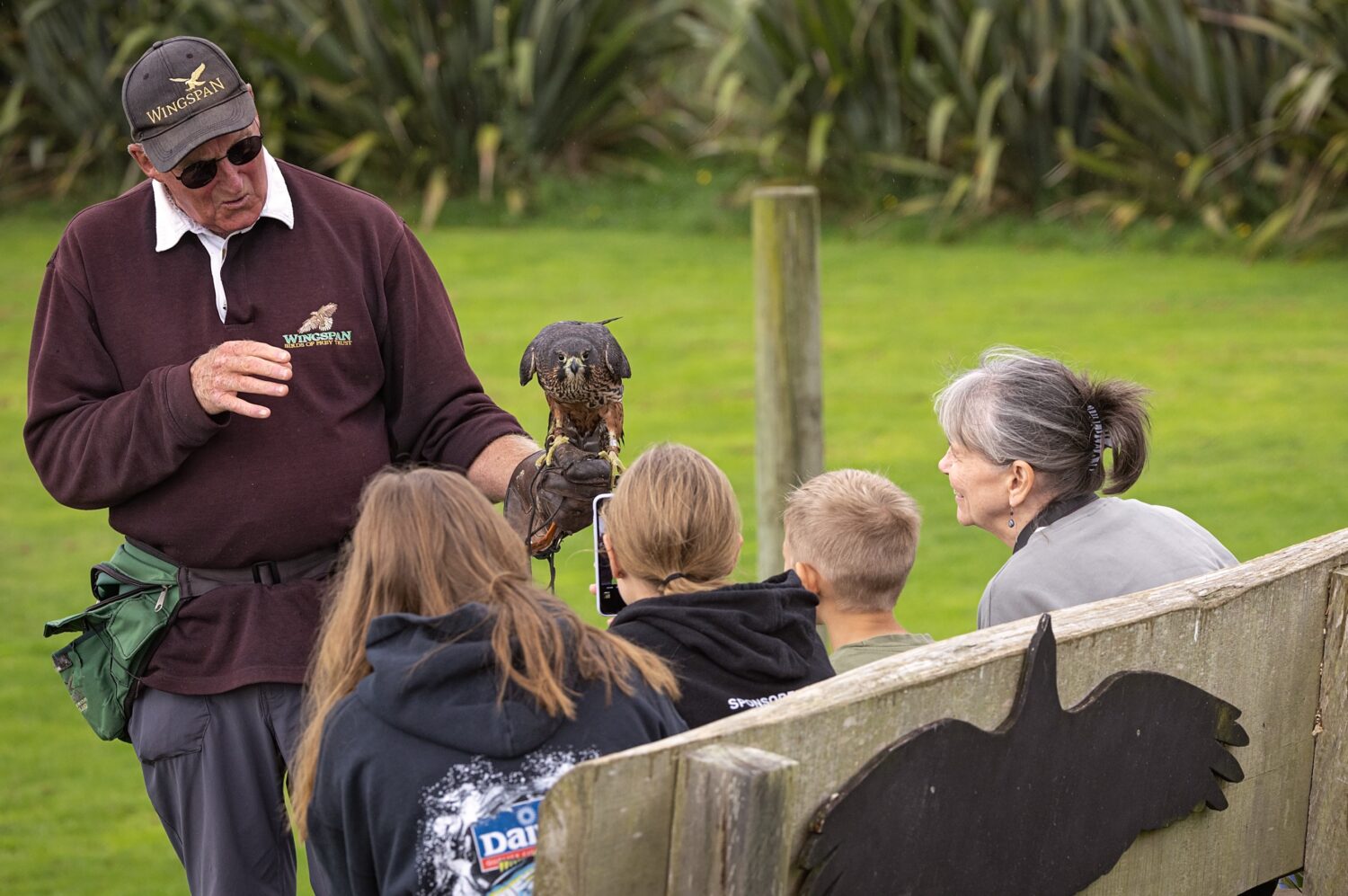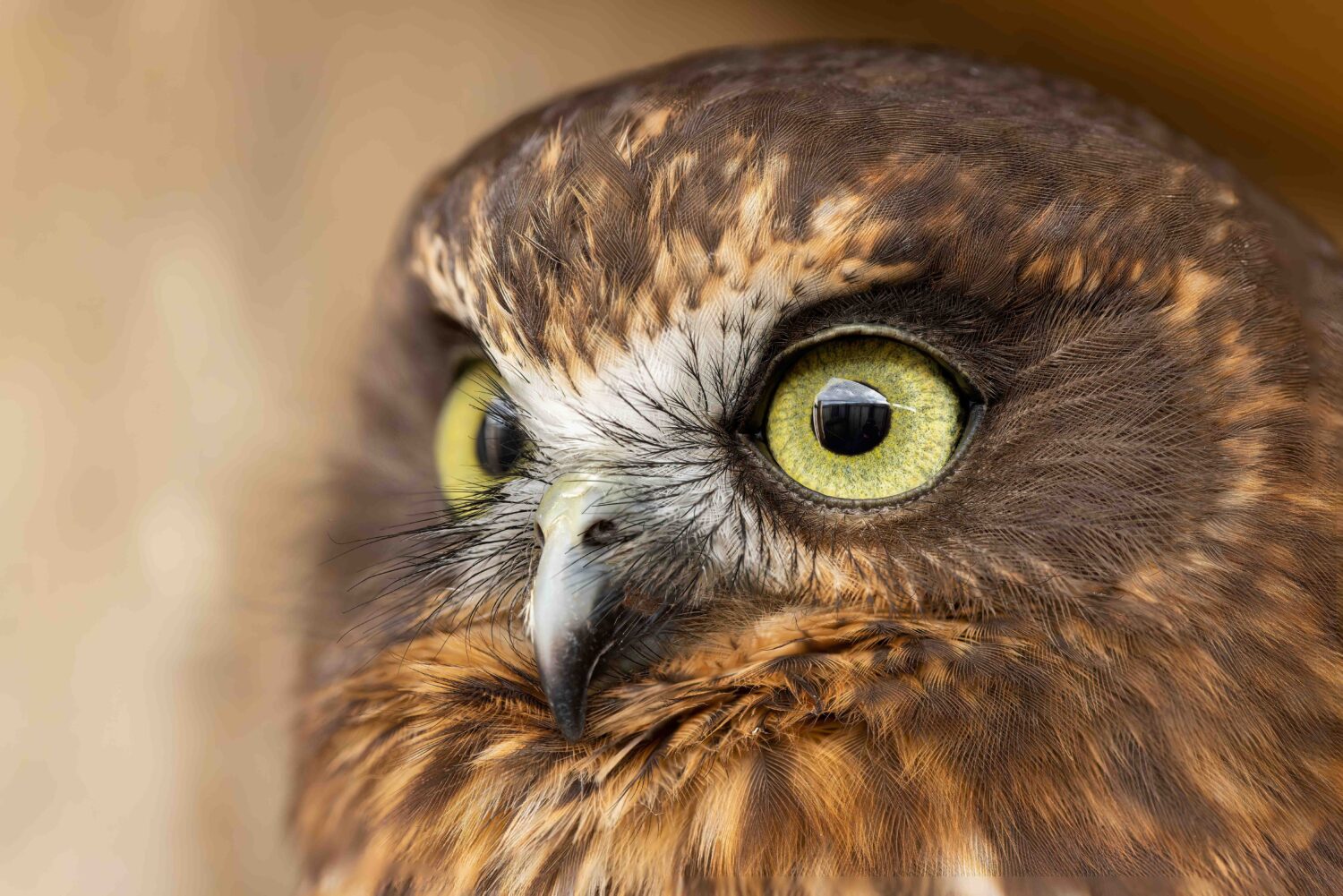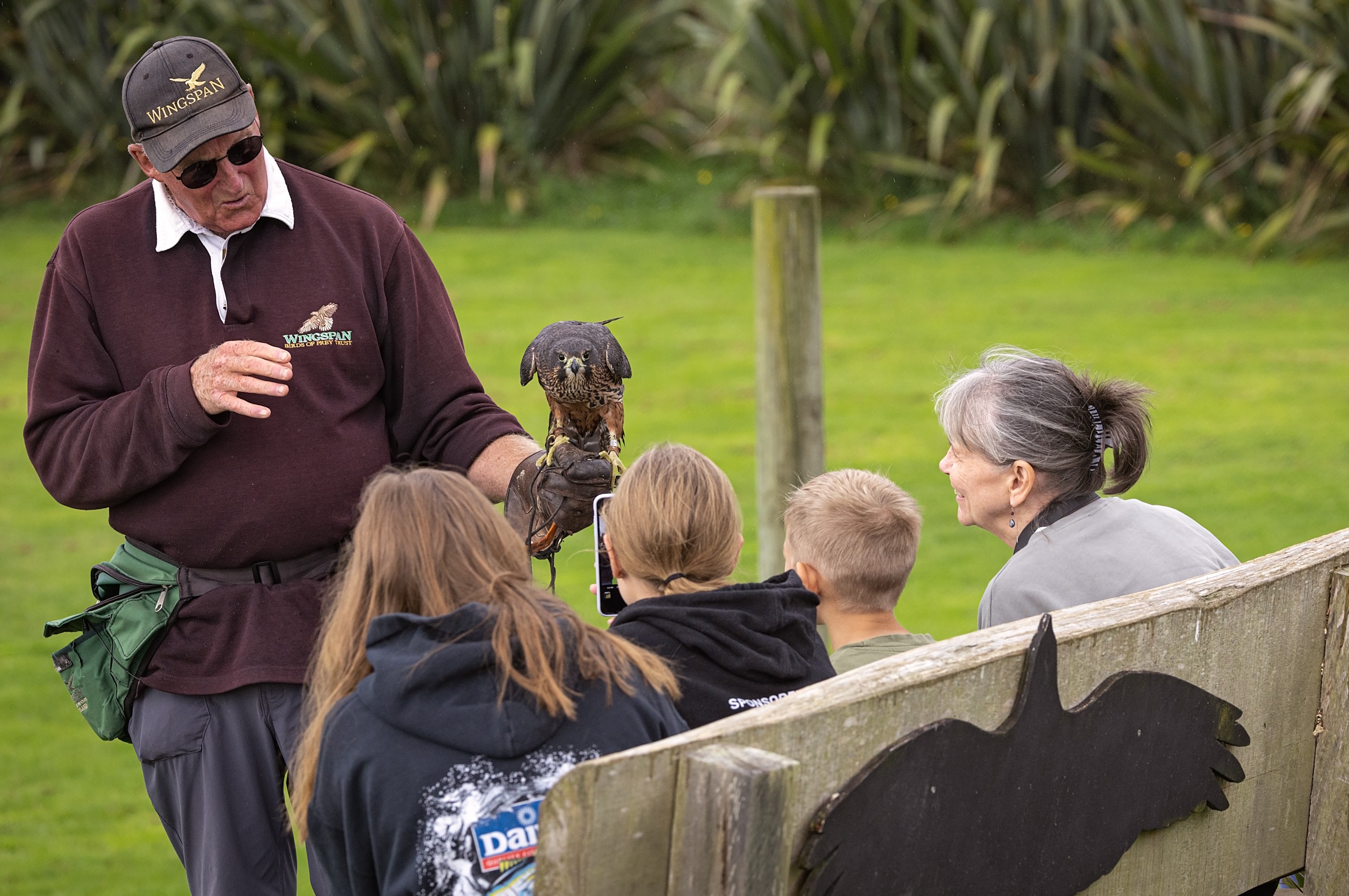
Wingspan National Bird of Prey Centre is New Zealand’s national centre for native birds of prey, in the Paradise Valley at Ngongotahā, just outside Rotorua in the Bay of Plenty. Run by a charitable trust dedicated to the conservation of native raptors, it gives schools a mix of education, wildlife encounters and outdoor learning built around the Flight of the Falcon free-flight display. It is a natural Rotorua school trip or a Bay of Plenty school camp activity, and suits students of all ages, from primary through to secondary.
Why schools choose Wingspan
- Native raptors in free flight: students watch kārearea (New Zealand falcon) fly during the Flight of the Falcon display.
- Falconry explained: the display shows both age-old and modern falconry techniques used to train and rehabilitate birds.
- Time with the experts: students can see birds in the aviaries and talk directly with the people who care for them.
- Hands-on learning: observing feeding, handling falconry equipment and meeting raptors up close.
- Real conservation work: Wingspan breeds, rehabilitates and advocates for native birds of prey, and school visits help support that work.
- Experienced educators: staff share their knowledge in an engaging, accessible way.
- Easy to add to a Rotorua camp: just outside the city, it fits a camp programme or a day trip.
School programmes and activities
Flight of the Falcon
The free-flight demonstration starts at 11.30am and runs for about an hour, from Tuesday to Sunday. It features the kārearea, a threatened species, with falconry demonstrations and sometimes other birds. Students see the birds in spectacular flight and learn how falconers train them and prepare rehabilitated birds for release. Schools can ask for a project focus when booking, such as flight, feathers or conservation.
Aviaries and expert chats
Alongside the display, students can see birds in the aviaries and chat with the Wingspan team about the birds and their care.
Meet and Greet
A behind-the-scenes add-on held after the Flight of the Falcon, with a close encounter with a ruru (morepork), kārearea or barn owl. Visitors can hold a kārearea. Bookings are essential. Gloves are provided for holding birds.
Hands-on opportunities
Visits can include observing feeding, handling falconry equipment and meeting raptors up close, which makes the experience interactive for students.
Learning opportunities
Students learn about biology, ecology and conservation while building a deeper appreciation of Aotearoa’s unique birdlife. They see why threatened species such as the kārearea need protecting, and how breeding, rehabilitation and advocacy help native birds of prey.
Curriculum connections
A visit to Wingspan can support:
- Science: Living World topics such as adaptation, predator and prey relationships, flight, feathers and life cycles.
- Social sciences: people’s impact on native species and the role of community conservation.
- Education for sustainability: protecting threatened species and their habitats.
- Education Outside the Classroom (EOTC): Wingspan’s school visit policy is written for EOTC visits.
- Key competencies: relating to others, managing self and participating and contributing, through respectful behaviour around live animals.
Safety and instruction
Displays are supervised by Wingspan staff, who hold first aid training, and a defibrillator is kept on site. The school must provide its own supervision: at least one adult for every six primary students, or one adult for every ten intermediate or secondary students, not counting Wingspan staff. Wingspan can decline entry if these ratios aren’t met on the day. Students must not touch or provoke the birds, run, feed the birds unless told to by staff, or enter private areas, and teachers shouldn’t use whistles because they are used in bird training. Raptors fly free during displays and may hunt, so students should be told beforehand that these are predators fed raw meat.
What to bring
- Sunblock and hats on fine days.
- Warm layers for cold or windy days and waterproofs for rain.
- Sturdy footwear, as the flying area is outdoors and can be wet and muddy.
- Any medication students need, such as EpiPens, as none are held on site.
- A named list of everyone in the group.
- Food and drinks, as none are available on site.
Adding Wingspan to a school camp
Wingspan sits just outside Rotorua, so it is easy to add to a school camp programme based around the lakes or the city, or to a day trip. A late-morning visit leaves the afternoon free for other Rotorua activities, and several attractions are close by in the Ngongotahā and Paradise Valley area.
About Wingspan
Wingspan is run by the Wingspan Birds of Prey Trust, a registered charitable trust formed in 1992 and funded by visitors, members, donors and sponsors. The trust has bred and released kārearea chicks, rehabilitated injured birds of prey and carried out research since 1992. It was founded by Debbie Stewart MNZM, and its patron is Ruud Kleinpaste MNZM. The centre is developing a new Bird of Prey Centre and new display aviaries on Paradise Valley Road.
Listing photos by Tony Whitehead, Clint Trahan and Bryce McQuillan.
School group rates
Wingspan’s general admission has adult, senior and child (5 to 15 years) rates, with under-fives free and a family pass. School and tour group rates are not published, and bookings are essential for groups of 10 or more. Meet and Greet experiences are an extra. Contact Wingspan National Bird of Prey Centre for current rates.
Example school visit
An example of how a school visit to Wingspan could look (every visit is planned with the provider):
- 11.15am: arrive, check in and settle the group.
- 11.30am: Flight of the Falcon display, with falconry demonstrations and your chosen project focus.
- 12.30pm: Meet and Greet with a ruru, kārearea or barn owl (if booked), and time to look at the aviaries and talk with staff.
- 1pm: depart for lunch and an afternoon activity in Rotorua.
Getting there
Wingspan is on Paradise Valley Road at Ngongotahā, less than 1 km off State Highway 5 and opposite Velocity Valley, on the western edge of Rotorua. Central Rotorua is roughly 15 minutes’ drive away. Arrive by 11.15am so students are seated before the display starts.
Nearby attractions for school groups
- Velocity Valley: adventure park directly opposite Wingspan.
- Paradise Valley Springs Wildlife Park: native and exotic animals in a spring-fed valley along the same road.
- Ngongotahā Trout Hatchery: Eastern Fish and Game’s hatchery, which runs a school programme.
- Skyline Rotorua: gondola, luge and views over Lake Rotorua, with education programmes.
- Rainbow Springs: native wildlife park with a kiwi hatchery.
- Whakarewarewa Forest (the Redwoods): forest walks and mountain biking, and an urban kārearea release site.
- Te Puia: geothermal valley and Māori arts and culture.
Other groups and events
Wingspan also welcomes tour groups, families and individual visitors, and offers memberships, bird sponsorship, volunteering and gift vouchers for the Flight of the Falcon and Meet and Greet.
Good to know
- Bookings: essential for school groups and any group of 10 or more. Email is preferred, ideally a month ahead.
- Opening: Tuesday to Sunday, 11am to 1pm. Outside the display and Meet and Greet, the centre is closed while the new centre is developed.
- Weather: Wingspan runs in all weather, but flying may be postponed in heavy rain or strong winds, with an indoor alternative offered. A limited number of umbrellas are available.
- Access: the site is on a hillside with uneven surfaces and is not yet suitable for wheelchairs. Two toilets are in the car park.
- Supervision: any student leaving the group, including for the toilet, must go with a school adult.
- Medical: bring any required medication, and note that emergency services may take 20 minutes or more to reach the site.
- Payment: tickets are bought on site, and payWave isn’t accepted.
- Incidents: report any injury, illness or near miss to staff before leaving.
Frequently asked questions
What will students see at Wingspan?
The Flight of the Falcon free-flight display with kārearea and other birds of prey, falconry demonstrations, birds in the aviaries and the chance to talk with the Wingspan team.
What time does the Flight of the Falcon start?
It starts at 11.30am, Tuesday to Sunday, and runs for about an hour. Schools should arrive by 11.15am.
Can students hold a bird?
Yes, through a booked Meet and Greet after the display, with a ruru, kārearea or barn owl. Gloves are provided.
What supervision ratios are required?
At least one adult for every six primary students, or one for every ten intermediate or secondary students, not counting Wingspan staff.
What happens if it rains?
Wingspan operates in all weather, but flying may be postponed in heavy rain or strong winds to protect the birds, with an indoor alternative offered.
Is food available on site?
No, so bring lunch and drinks or plan to eat elsewhere in Rotorua after the visit.
Is Wingspan wheelchair accessible?
Not yet. The site is on a hillside with uneven surfaces, so talk to Wingspan when booking about any mobility needs.
How far is Wingspan from Rotorua?
It is just outside Rotorua at Ngongotahā, roughly 15 minutes’ drive from the city centre.