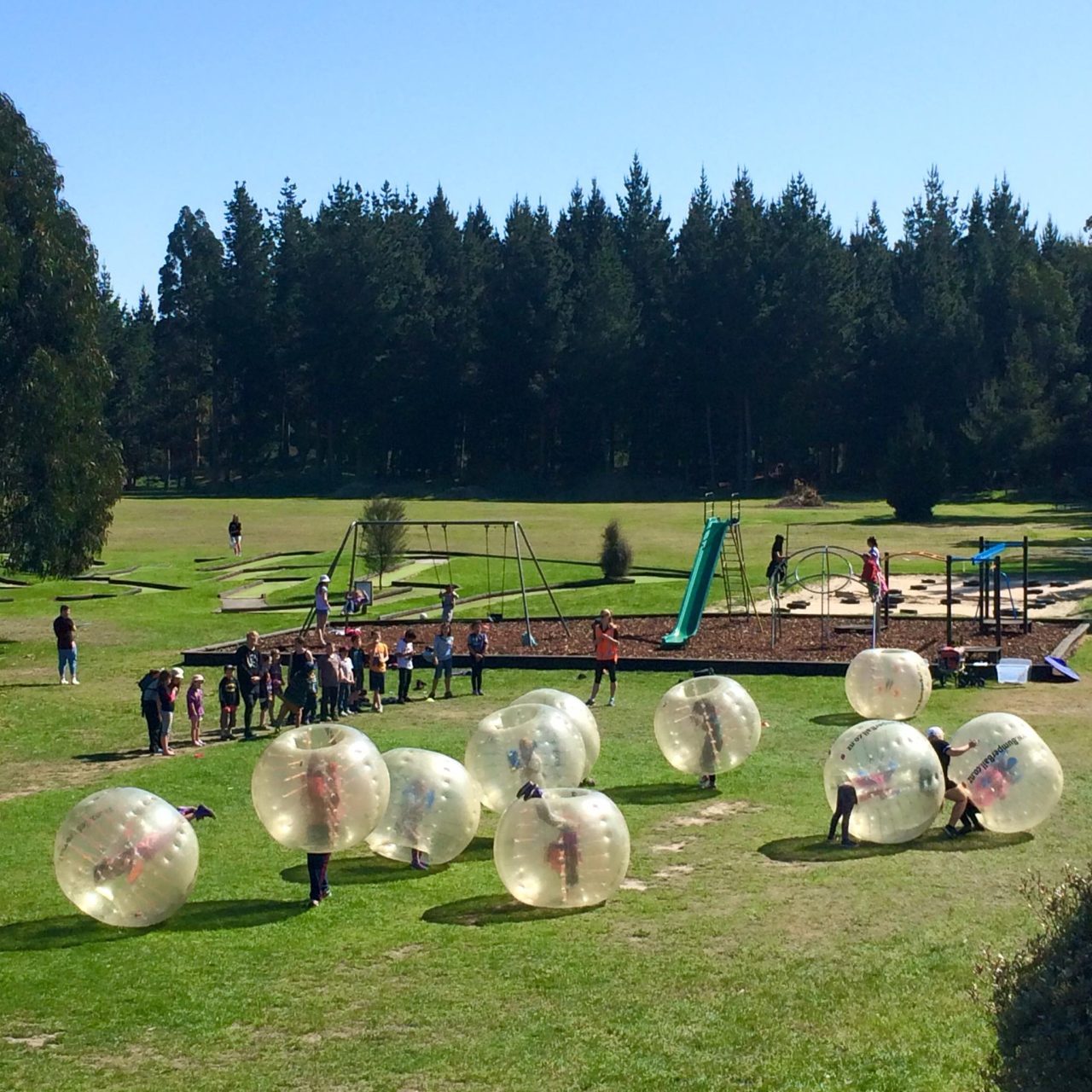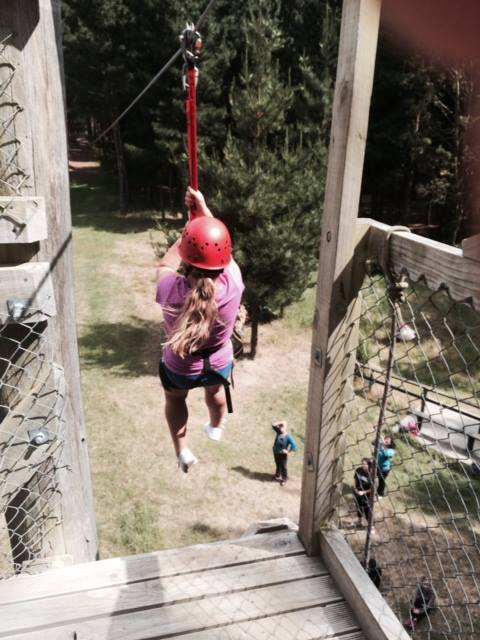

Woodend Christian Camp is a Christian camp on a 10-acre site near Woodend Beach in North Canterbury, surrounded by pine forest about 30 minutes’ drive north of Christchurch. Running since 1957, it’s a well-equipped Canterbury school camp with fully catered camps and a long list of instructor-led activities, including a climbing wall, flying fox, bungee trampolines and go karts. The camp sleeps around 150 across a main building, back cabins and a newer training centre.
Why schools choose Woodend
- Fully catered: the camp’s catering team prepares meals, so teachers aren’t cooking (self-catering is also possible).
- Instructor-led activities: climbing wall, Aerojump bungee trampolines, flying fox and go karts run by camp staff with safety gear provided.
- Plenty to do between sessions: waterslide, archery, air rifles, mini golf, disc golf and a long list of self-run games.
- Room for large groups: around 150 beds, with exclusive use for groups of more than 66.
- Flexible spaces: a main hall, a games room that doubles as a meeting room, and the separate NJF Training Centre for smaller groups.
- Forest and beach on the doorstep: pine forest around the camp, with Woodend Beach and Tūhaitara Coastal Park close by.
- Registered operator: registered with WorkSafe as an Adventure Activity Operator, with an audited safety management system.
School camp accommodation
Woodend sleeps around 150 people across three accommodation areas. Mattresses are foam with washable, waterproof covers.
Main building bunkrooms
Two wings, each with five bunkrooms: three large rooms of 12 beds and two small rooms of 5 to 6 beds, giving about 46 beds per wing. The wings suit splitting a group into boys and girls.
Back cabins
Cabins behind the main building range from twin rooms to family-style units with a mix of singles and bunks, and several have en-suite bathrooms. These suit teachers and parent helpers, and together sleep about 32.
NJF Training Centre
The Nancy Jean Forbes Centre is the camp’s newest building, with six bedrooms and bunkrooms of varying sizes, each with an accessible en-suite bathroom. It sleeps 28, or around 40 when combined with four of the back cabins, and has its own hall, kitchen and lounge, so it works well for a smaller group or a single class.
Pillows and bedding aren’t supplied, so students need a sleeping bag or bedding and a pillow. Groups bring their own first aid supplies.
Facilities for school groups
- Main hall and dining room, the largest indoor space, with tables, chairs, a piano and a data projector.
- Games room with table tennis, Ed’s Alley, foosball and air hockey, surround sound and a projector. The tables pack away to create a second meeting room.
- NJF Training Centre with a meeting and dining hall, data projector, kitchen and a lounge for breakout or quiet time.
- Two kitchens, one in the main building and one in the training centre, used by the catering team or for self-catering.
- Playground, trampolines and maypole for free time.
- Sports areas for beach volleyball, basketball, soccer, touch rugby, cricket and unihockey.
- Surrounding pine forest used for trail activities.
Catering
Woodend’s trained catering team can fully cater a school camp. Catering has a minimum group size of 30, and smaller groups generally self-cater. Special dietary requirements can be accommodated for an extra charge. On catered camps, students take part in duty groups, each with an adult, to run the dishwasher, set and clear tables and keep bathrooms clean, with each duty taking no more than about 30 minutes.
Outdoor education programmes
Schools can combine staff-run activities with self-run ones around the camp grounds, the neighbouring forest and local sites. Camp staff help put together a programme to suit the group, and a sample programme is available from the camp. Groups send their proposed programme at least two weeks before arrival.
Curriculum connections
A camp at Woodend fits well with education outside the classroom (EOTC) and can support learning in:
- Health and Physical Education: climbing, archery, team challenges, field sports and outdoor safety.
- Science: coastal dunes, forest and wetland environments at Tūhaitara Coastal Park.
- Social Sciences: the history of Kaiapoi Pā and Ngāi Tahu in North Canterbury.
- Key competencies: managing self, relating to others, and participating and contributing through duty groups, team games and camp life.
Activities on site and nearby
Instructor-led
- Climbing wall for all ages and abilities.
- Aerojump: four bungee trampolines.
- Flying fox.
- Go karts for students aged 8 and over and at least 120 cm tall.
Leader-supervised
- Waterslide with two parallel slides.
- Archery and air rifles, after a safety briefing.
- Mini golf (18 holes) and disc golf (five baskets).
- Fire pit, outside fire restriction periods.
Self-run games
- Gaga dodgeball, 9 Ball in the Air and tug of war.
- Burma trail, night trail and camp search.
- Giant chess and indoor bowls.
- Field and court sports including beach volleyball, basketball, soccer and touch rugby.
Nearby
- Woodend Beach and Tūhaitara Coastal Park.
- Kaiapoi Pā historic site.
- Pegasus, linked to the camp by a walkway.
About Woodend Christian Camp
The camp began in the late 1950s as Woodend Youth Lodge, from Mr J.M. Paynter’s vision of a Christian campsite supported by local churches. Volunteers cleared a rough site of gorse, broom and sandhills, built a rabbit-proof fence and planted trees, and the main complex was built in 1957. Today it’s run by the Woodend Camp Trust, a registered charity, and hosts churches, schools and community groups with an emphasis on Christian values. The camp is registered with WorkSafe as an Adventure Activity Operator.
School camp rates
Rates are set in a price list that’s reviewed every six months, so confirm pricing at least three months before your camp. Charges are based on confirmed or actual numbers, whichever is higher, and there’s a minimum daily charge when a group of fewer than 66 hires the whole site. Catering, special dietary requirements and some extras are charged on top, and a non-refundable deposit secures the booking. A two-night minimum applies in peak season. Contact Woodend Christian Camp for current rates.
Example three-day camp
An example of how a school camp at Woodend could look (every camp is planned by the school):
- Day 1: Arrive after lunch, welcome and safety briefing, settle into bunkrooms, first activity rotations on the climbing wall and Aerojump, waterslide, dinner, spotlight.
- Day 2: Rotations through archery, air rifles, go karts, flying fox and disc golf, afternoon walk at Woodend Beach or Tūhaitara Coastal Park, night trail.
- Day 3: Burma trail and mini golf, final clean-up, depart in the early afternoon.
Getting there
Woodend Christian Camp is on Woodend Beach Road, between Woodend and Woodend Beach, about 30 minutes’ drive north of Christchurch. Kaiapoi and Pegasus are a short drive away.
Nearby attractions for school groups
- Woodend Beach: a long sandy Pegasus Bay beach close to the camp.
- Tūhaitara Coastal Park: coastal reserve with dunes, wetlands and walking tracks.
- Kaiapoi Pā: the site of a major Ngāi Tahu pā besieged by Te Rauparaha in the early 1830s.
- Pegasus: a planned lakeside town, reached from camp by walkway.
- Kaiapoi: riverside town with a river walkway and shops for supplies.
Other groups and events
- Church and youth groups: weekend and holiday camps.
- Retreats and community groups.
- Team-building and adventure days.
- End-of-year picnics and activity days for school groups of any size.
Good to know
- Woodend offers an optional Kaupapa – Christian Values Chat of up to 30 minutes about the camp’s history and beliefs. The camp states it is opt-in, as required under section 58 of the Education and Training Act 2020.
- The camp’s hire policy notes that school camps normally begin on the first evening with a Gospel presentation, and its sample programme includes a Gospel Programme session. Talk to the camp about which sessions your school opts into.
- Groups of more than 66 get exclusive use. Smaller groups may share the site with another compatible group.
- Supervision ratios are one adult to 10 students overnight and one parent helper to six students for activities, not counting teachers.
- Weekday camps arrive from 1pm and depart by 2pm on the last day.
- Camp staff aren’t available to run activities on Sundays.
- No alcohol, pets or firearms. The site is smoke-free outside designated areas.
- Groups hold a health and safety briefing on day one and keep an accommodation list of who’s sleeping where.
Frequently asked questions
How many students can Woodend Christian Camp accommodate?
Around 150 across the main building bunkrooms, back cabins and NJF Training Centre.
Is Woodend Christian Camp catered?
Yes. The catering team can fully cater camps of 30 or more. Smaller groups generally self-cater.
Are activities run by camp staff?
Yes. The climbing wall, Aerojump, flying fox and go karts are instructor-led, and other activities are supervised by group leaders or self-run.
Is religious content compulsory?
The Kaupapa – Christian Values Chat is opt-in, as stated by the camp. The hire policy also mentions a first-evening Gospel presentation, so confirm with the camp which sessions your school includes.
Do we need to bring bedding?
Yes. Mattresses are provided, but pillows and bedding are not.
Will we have the camp to ourselves?
Groups of more than 66 get exclusive use. Smaller groups may share with another group.
Is there accessible accommodation?
The NJF Training Centre’s bedrooms each have an accessible en-suite bathroom.
Where is Woodend Christian Camp?
Near Woodend Beach in North Canterbury, about 30 minutes’ drive north of Christchurch.