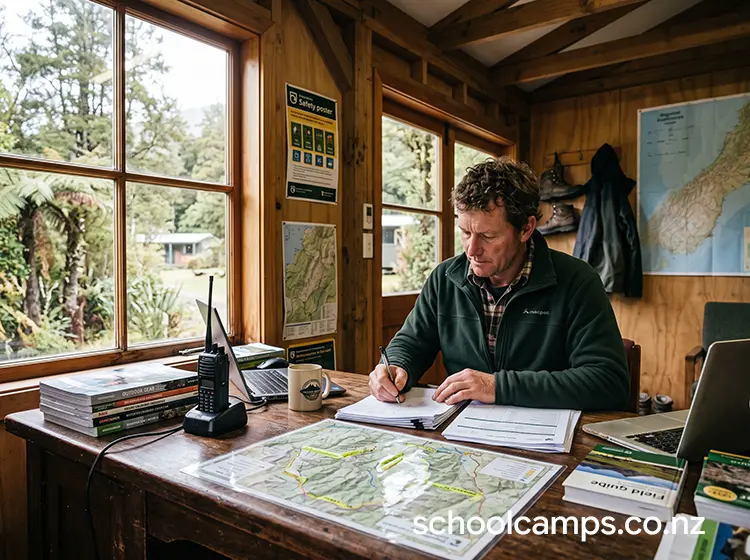
 Teachers researching a provider on School Camps NZ are working through a fairly consistent checklist before they’ll commit: usually the same one we walk them through in our own Working with Outdoor Education Providers guide. Knowing what’s on it means you can have clear, ready answers rather than working them out on the phone.
1. Instructor Qualifications
Schools are told to ask for current, activity-specific qualifications: a Paddle NZ or equivalent water safety qualification for paddling, an NZOIA Rock or Climbing Wall qualification for climbing, an NZOIA Bush or Mountain qualification (or clearly demonstrated leadership experience) for tramping, and current first aid certification for every activity. If your instructors hold these, say so specifically on your listing rather than a general “fully qualified staff” line: naming the actual qualification is what a teacher is scanning for.
2. Weather and Cancellation Policy
Have a clear, specific answer for: what conditions trigger a postponement or cancellation, who makes that call, how you notify schools, and what happens to fees (refund, credit, or reschedule). A vague answer here is one of the “red flags” we specifically tell teachers to watch for.
3. Supervision Ratios
Schools are told ratios should be risk-based, not a single fixed number, so be ready to explain the ratio you’ll run for a specific activity and why, rather than quoting one figure for everything. As a guide, teachers are told to expect roughly 1:8–1:10 for lower-risk activities and 1:6 or tighter for moving water, outdoor lead climbing, or overnight tramping. Also be clear about what you expect teachers to do during the session (supervise from the side, manage medical needs, help with debriefs) versus what your instructors handle.
4. Support for Nervous or Additional-Needs Students
Schools specifically ask how you adapt activities and support anxious or neurodivergent students, and look for a non-punitive approach to a student who wants to opt out partway through. Concrete examples from past groups are more convincing than a general reassurance.
5. What’s Provided vs What Students Bring
Be specific about the technical gear you supply (craft, PFDs and paddles; harnesses, ropes and helmets; horses and tack; bows and safety equipment) versus what students need to bring themselves, and whether you have loan gear (like wetsuits) for those who need it.
6. Emergency Plan and Communications
Have a clear, one-paragraph answer ready covering your emergency communication method (radio, phone, PLB), evacuation procedure, distance to the nearest medical facility, and how parents are contacted if something happens. Schools are told to be cautious of a provider who can’t articulate this clearly.
7. Learning Outcomes and Debriefs
Schools increasingly want more than “a fun day out”: be ready to describe the specific skills students develop and how you facilitate reflection or debriefing, and whether teachers are involved in that process.
Where This Fits on Your Listing
You don’t need to answer all seven points in your listing description, but the stronger your answers to the first three (qualifications, weather policy, ratios), the fewer back-and-forth emails you’ll need before a school is ready to book. If you want a starting point for your own written safety documentation to reference when asked, our free RAMS Safety Management Plan template is built around the same questions schools are told to ask.
See also How to Make Your Listing Strong for the practical side of your listing itself, and How to Get Good Reviews, since a school checking your references is exactly the kind of due diligence this article describes.
Leave a Reply
You must be logged in to post a comment.