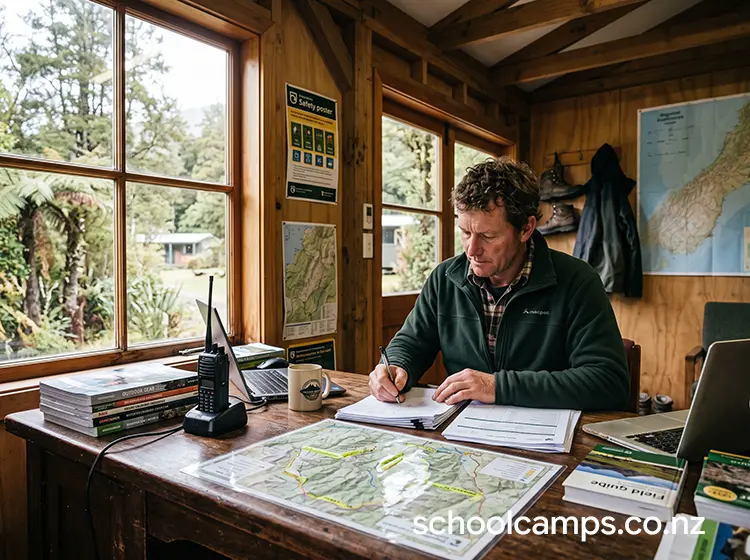
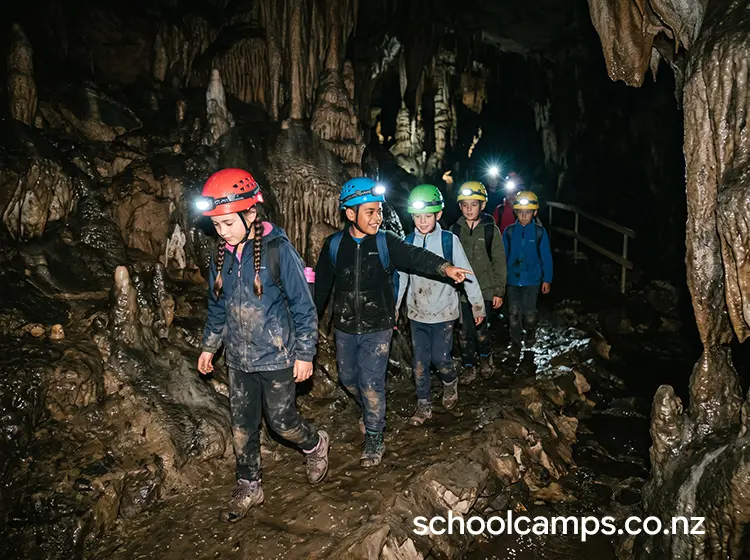
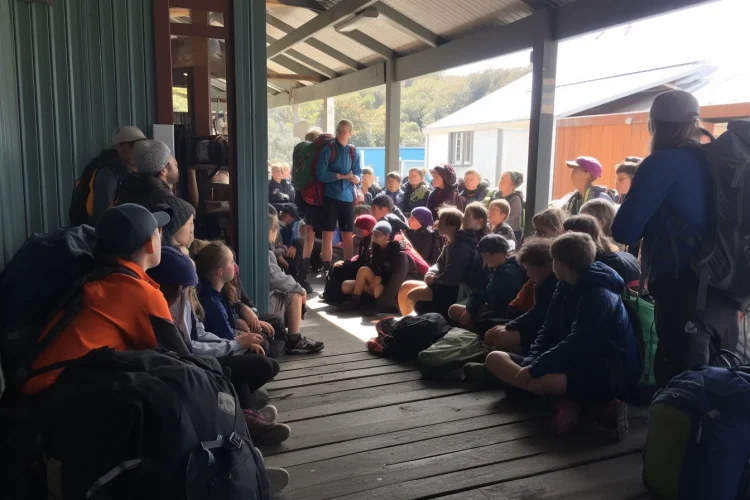
 Health and safety is one of the most important parts of camp planning — and one of the most heavily scrutinised. Schools have a legal responsibility to make sure students, staff, and volunteers are safe during any off-site activity, and that includes planning ahead for anything that could go wrong.
This page walks through what you need to cover, from RAS forms (Risk Assessment and Supervision Form) and emergency planning to supervision ratios and medical info. If you’re unsure what’s required, your EOTC coordinator or school leadership team can help make sure all the right boxes are ticked.
Note: This page provides a practical overview of what to consider when planning for health and safety on school camps. For detailed templates, planning tools, and official guidance, refer to the EOTC Safety Management Plan and Toolkit from Education Outdoors New Zealand (EONZ). This resource is widely used by schools and supports safe, curriculum-aligned education outside the classroom.
Know Your Legal Responsibilities
When you’re planning a school camp, you’re not just organising an excursion — you’re taking on a legal duty to keep students and staff safe. In New Zealand, this duty is set out under the Health and Safety at Work Act 2015, which makes schools responsible for ensuring that all activities are safe and well managed.
Understanding Your Role
Schools are classified as PCBUs (Persons Conducting a Business or Undertaking), and as such must:
- Identify and manage risks associated with off-site activities
- Ensure appropriate supervision and support is in place
- Follow consistent processes for risk assessment, consent, and emergency planning
Teachers, as workers under the Act, must take reasonable care for the safety of themselves and others, and follow the systems and procedures set out by the school.
These responsibilities are further clarified through guidance developed by Education Outdoors New Zealand (EONZ) and supported by the Ministry of Education via the Tāhūrangi platform, which now hosts curriculum-aligned resources for EOTC planning.
Create a Comprehensive RAS Form
A RAS form (Risk Assessment and Supervision form) is one of the most important documents you’ll complete when planning a school camp. It shows that you’ve identified potential hazards, thought through how to manage them, and are prepared to respond if something goes wrong.
What to Include in a RAS Form
A good RAS form should cover:
- Hazards: Anything that could cause harm (e.g. slips on wet tracks, allergic reactions, behaviour issues)
- Risks: The likelihood and severity of harm if the hazard occurs
- Control measures: What you’ll do to reduce or eliminate the risk (e.g. gear checks, supervision, first aid)
- Response plans: How you’ll respond if something goes wrong
Each activity and environment should be assessed separately — a bush walk will have different risks from kayaking or sleeping in shared cabins.
Site-Specific Considerations
No two campsites are the same. It’s best to either visit the site in advance or request a safety briefing and documentation from the provider. Consider:
- Terrain and weather conditions
- Proximity to water or bush
- Wildlife, insects, and local hazards
- Camp rules and boundaries
Most camp providers will also supply their own RAS or safety information, which you can use to support your own planning — but it’s still your responsibility to ensure it’s fit for your group.
When to Review or Update
Your RAS form isn’t a one-off task. You should update it if:
- Activities change or new risks are identified
- Weather forecasts suggest altered conditions
- There’s a medical or behavioural update for a student
- A staff member raises a concern or has a suggestion
A final check the week before camp is always a good idea.
Staff and Supervision Ratios
Supervision on camp isn’t just about having enough adults — it’s about ensuring the right people are in the right roles, with clear responsibilities, based on the risks involved. Rather than prescribing fixed ratios, Education Outdoors New Zealand (EONZ) promotes a context-based approach to supervision planning.
Use Risk-Based Supervision Structures
Instead of following a universal ratio, consider:
- The age and capability of your students
- The nature and risk level of each activity
- The environment you’ll be working in (e.g. remote bush vs. enclosed camp)
- The skill and experience of your staff and volunteers
EONZ’s Safety Management Plan and Toolkit provides a structure for planning effective supervision using activity analysis and staffing tables. These help you:
- Allocate specific roles (e.g. lead teacher, instructor, parent helper)
- Identify the minimum supervision levels based on your group and risk profile
- Ensure clear communication and contingency planning
Briefing Your Team
Once your staffing is sorted, make sure every adult knows:
- Their responsibilities and group assignments
- The behavioural and medical needs of students
- Emergency procedures and how to communicate during the camp
If parent helpers are staying overnight or working closely with students, they must be police vetted. The vetting process can take up to six weeks, so it’s important to identify and submit those checks early in your planning.
Check with your EOTC coordinator or school office for the correct process and forms, and make sure vetting is complete before roles are confirmed.
Important: All school camps are strictly alcohol-free and smoke-free. This applies to all staff, parent helpers, and visitors for the duration of the camp, including evenings. Make sure this is clearly communicated during staff and parent briefings.
Emergency Planning
Even with the best preparation, things can go wrong — weather can change quickly, a student may get sick or lost, or an injury could occur. That’s why a solid emergency plan is a core part of your safety planning. It helps you act quickly, keep everyone calm, and meet your legal responsibilities.
Key Elements of a Camp Emergency Plan
Your emergency plan should cover:
- Who to contact: Include emergency services, camp management, and your school’s designated contact
- How you’ll communicate: Carry reliable communication devices (e.g. mobile phones, radios, PLBs in remote areas) and know where coverage might be limited
- Evacuation procedures: What to do and where to go if the group needs to leave the site
- First aid response: Ensure qualified first aiders are on-site and first aid kits are accessible
- Student health information: Keep up-to-date copies of medical conditions, allergies, and medication plans with staff at all times
- Documentation: Record all incidents, even minor ones, and review your response afterwards
Link to Risk Management Planning
Your emergency plan should work alongside your RAS form. For each identified risk, think through the “what if” and document your response steps. EONZ encourages this integration so that risk and response planning is not treated as separate processes.
Permission Slips and Medical Information
Clear consent and up-to-date health details are essential for any school camp. Not only are they required for student safety — they also ensure families are informed, expectations are clear, and you have the information you need if something goes wrong.
What to Include on Permission Slips
Your permission form should do more than ask for a signature. It should outline:
- The dates and location of the camp
- A summary of activities involved (especially those with higher risk, like water or bush-based activities)
- Transport arrangements and supervision plans
- Costs and payment timelines
- Any gear or clothing students need to bring
- Behaviour expectations and school policies that apply while off-site
- A clear consent section with a parent or caregiver signature
If you’re using the templates from EONZ, Form 10 and Form 12 in the Safety Management Toolkit provide editable examples for parental consent and caregiver communication.
Reference: EONZ Safety Management Plan and Toolkit – Forms 10 & 12
Gathering Medical and Health Information
Make sure you collect the following from every student:
- Medical conditions, allergies, and dietary needs
- Medications (and instructions for administration)
- Emergency contacts
- Any recent illness or injury
- Permission for staff to administer first aid or seek medical treatment if needed
This information should be reviewed before departure and kept accessible to staff during the camp. Some schools create a summary sheet for staff to carry, while storing the full medical forms securely on-site.
Work With Your EOTC Coordinator
You don’t need to plan the camp alone — and when it comes to health and safety, your school’s EOTC coordinator (or designated senior leader) is one of your most important support people. Their role is to make sure your camp planning aligns with school policy, board expectations, and national safety guidelines.
Teachers need to refer to their own school policy and procedures surrounding school camps and EOTC events, as this is where anything unique to your own school requirements will be outlined. Some schools are really specific in terms of timelines for completing documentation, which require board approval for events.
How They Can Help
Your EOTC coordinator can:
- Provide up-to-date school templates and processes for RAS, permission forms, and emergency plans
- Help assess the suitability of a site or activity
- Review your risk assessments and offer feedback
- Ensure the right staff-to-student ratios are in place
- Coordinate board approvals where required
- Advise on vetting and briefing of parent helpers
Even if you’re an experienced camp organiser, running your plans past your coordinator helps ensure nothing is missed and gives the school full oversight.
Keep Good Records
After camp, your documentation may be reviewed — especially if there was an incident or near-miss. Keeping digital or physical records of:
- RAS forms
- Medical info
- Permission slips
- Emergency response notes or incident reports
Having this information on hand helps protect you and supports planning for future camps.
With your safety planning underway and key responsibilities in place, the next step is choosing a camp that suits your class. From matching learning goals to finding the right facilities and activities, our guide to Choosing the Right Camp for Your Class will help you narrow down the best options.
For ready-to-use starting points rather than a blank page, see our free RAMS Safety Management Plan and Parent Consent & Medical Information Form templates.