
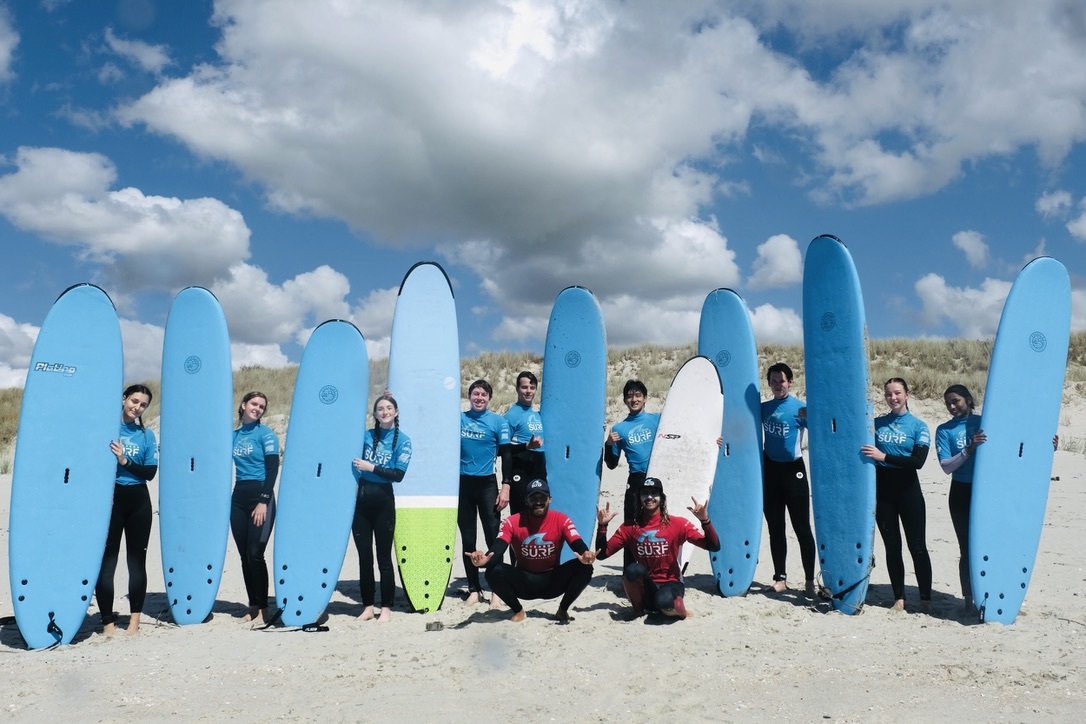
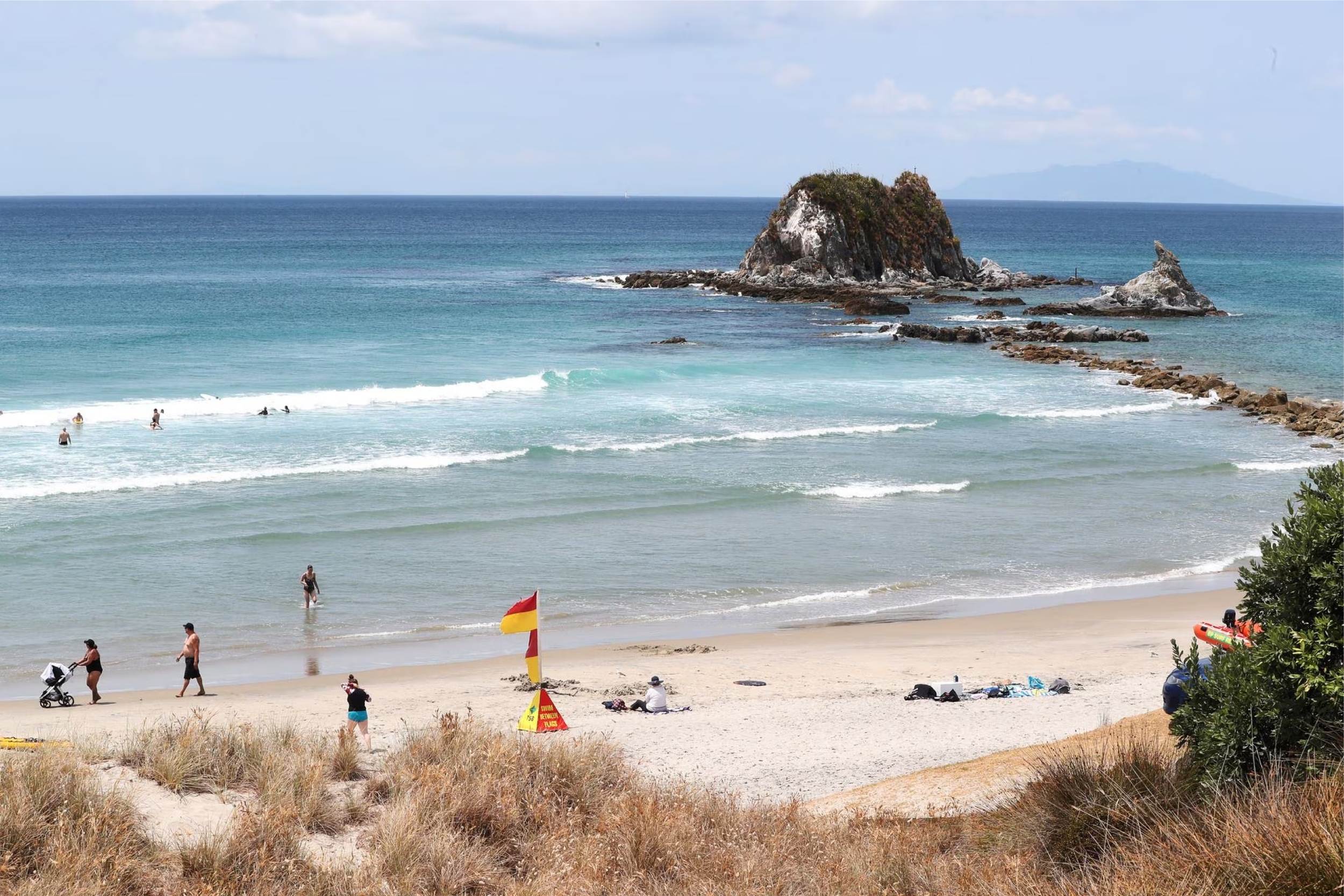
Aotearoa Surf Camp is a fully hosted overnight school surf camp at Mangawhai Heads in the Kaipara District, set on the Mangawhai estuary just over an hour north of Auckland. Run by Aotearoa Surf, which has been teaching surfing since 2002, it’s a Northland school camp where accommodation, meals, activities, equipment and instruction are all included: schools arrive by bus and the camp team runs the programme from wake-up to lights out. Camps suit primary, intermediate and secondary groups of 40 to 120 students.
Why schools choose Aotearoa Surf Camp
- Fully hosted: accommodation, catering, activities, gear and instructors come as one package, so teachers can focus on their students.
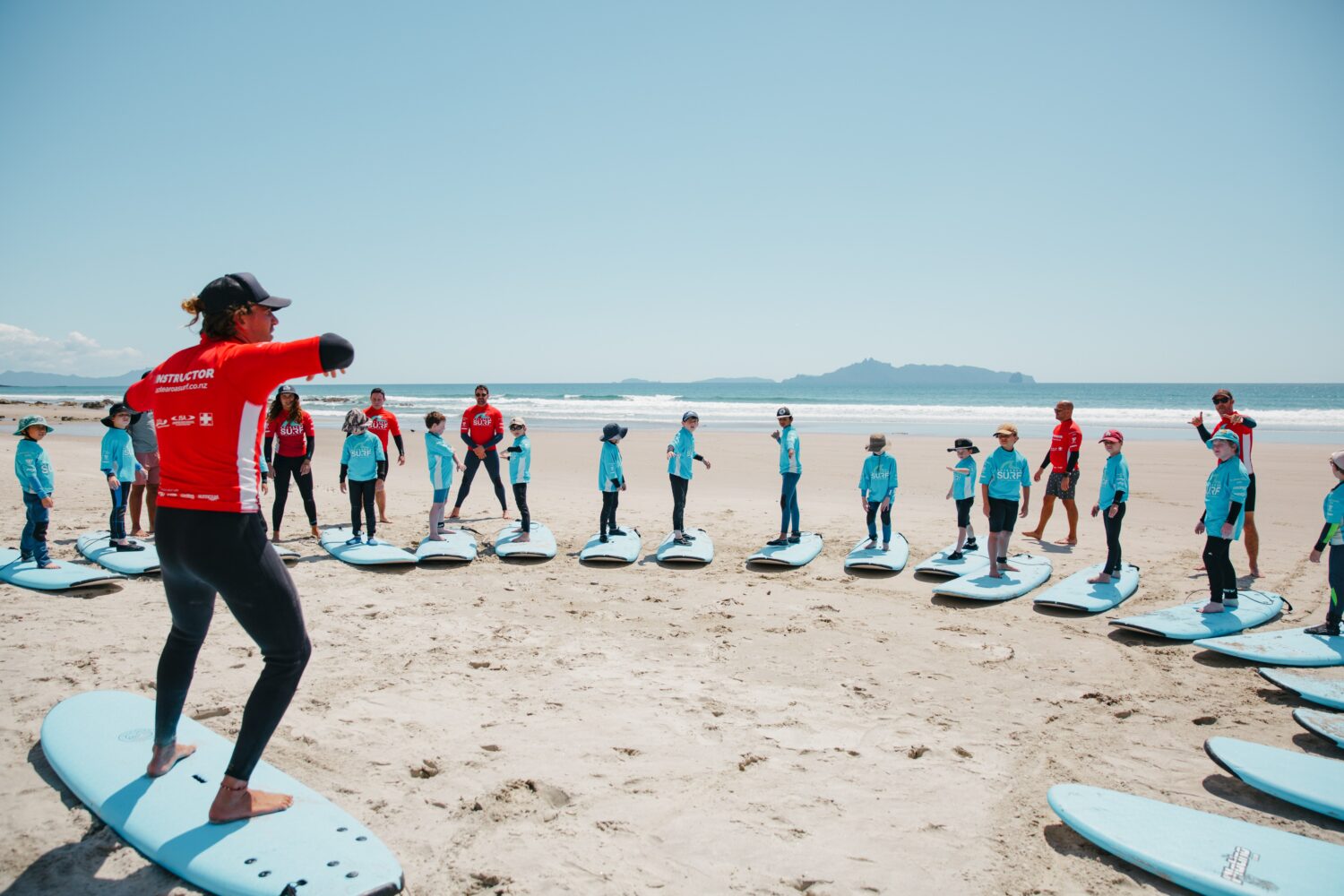
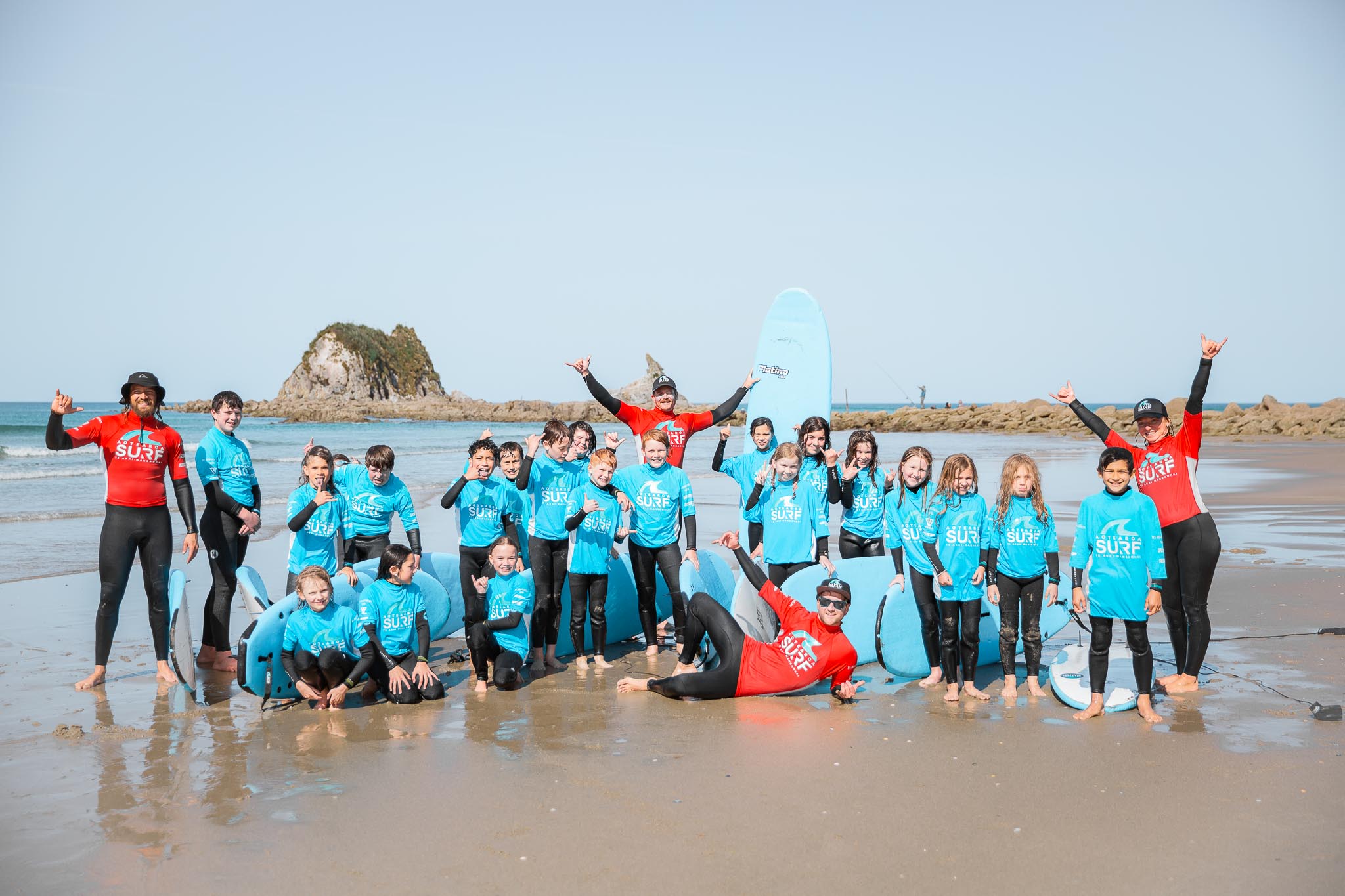
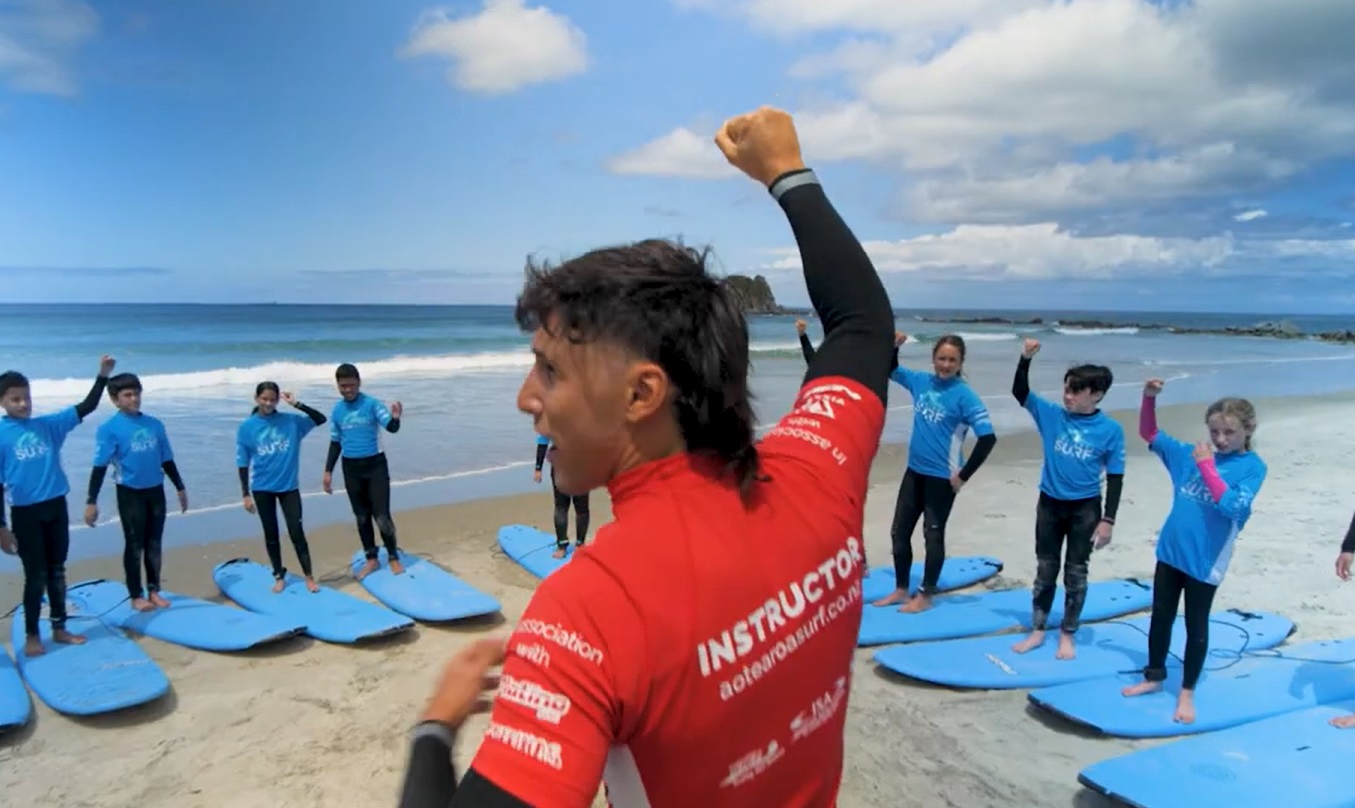
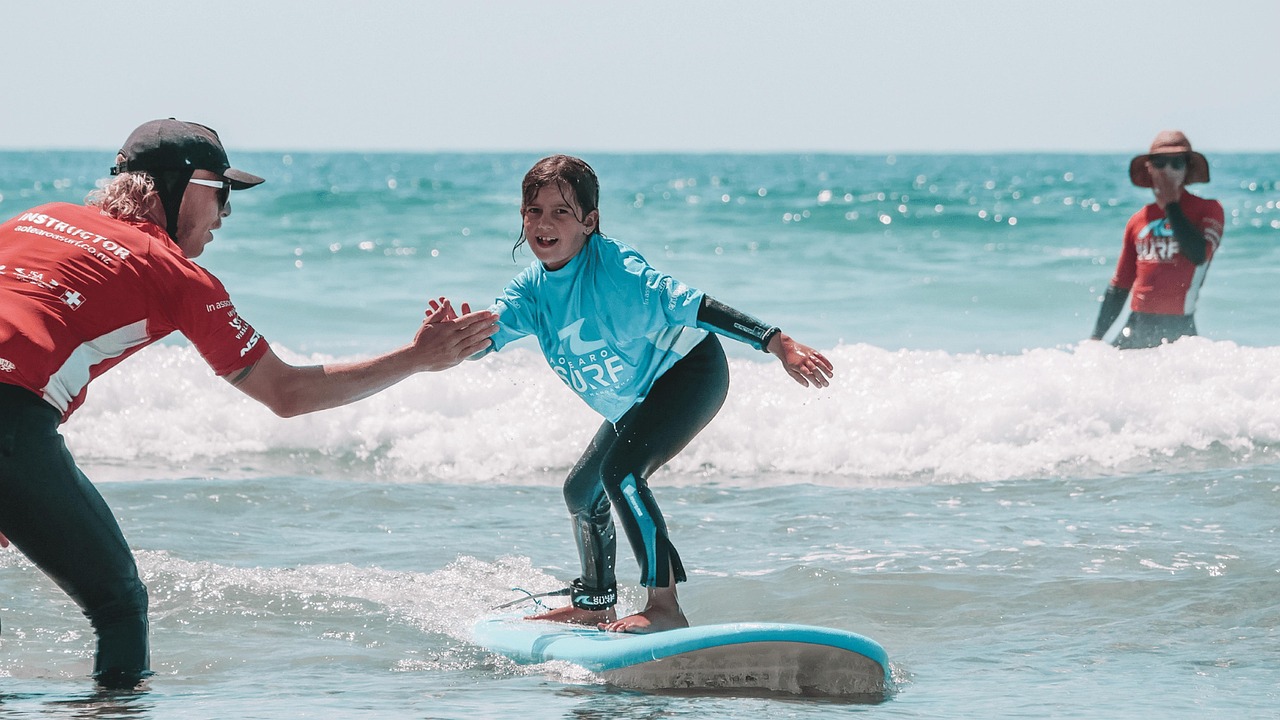
- Surfing every day: levelled surf lessons for every student, whatever their ability, plus paddleboarding, kayaking and sandboarding.
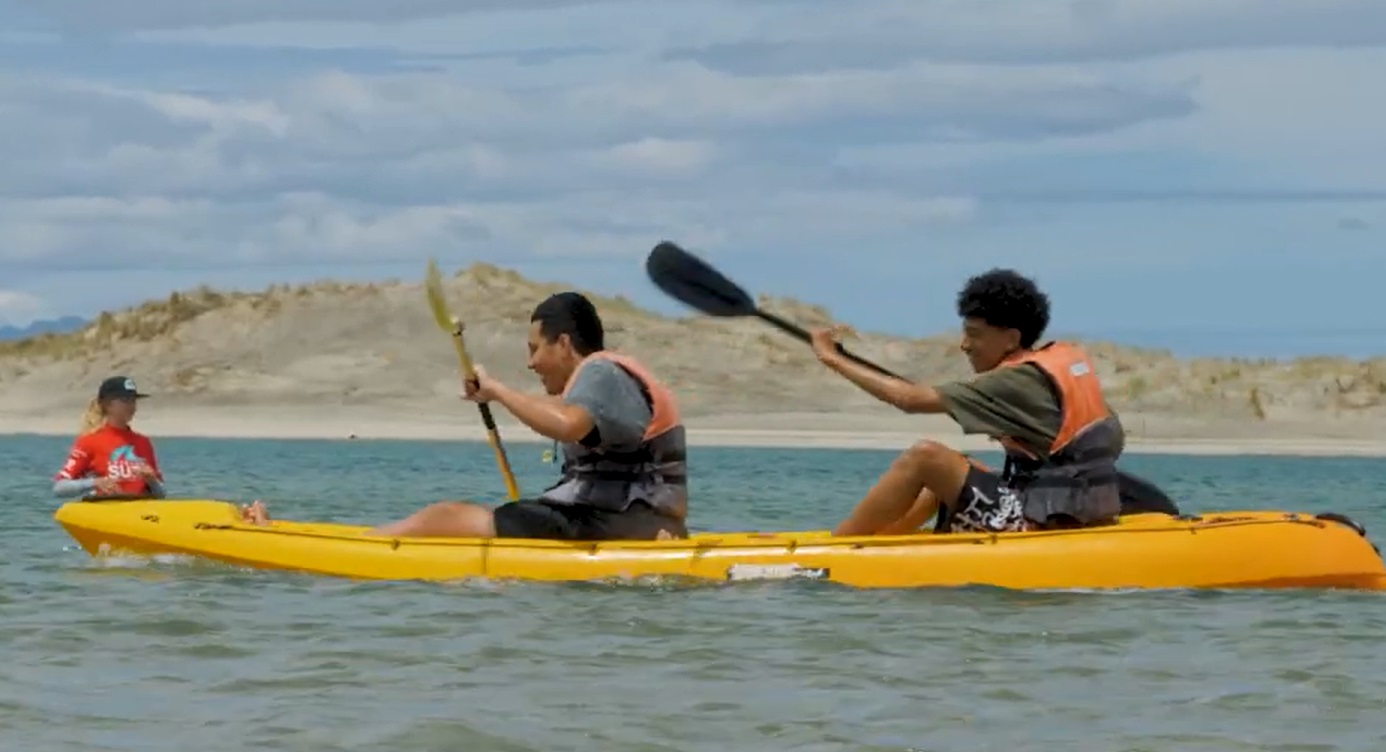
- Surf and sheltered water: an open surf beach for lessons and a calm estuary for kayaking, paddleboarding and raft building.
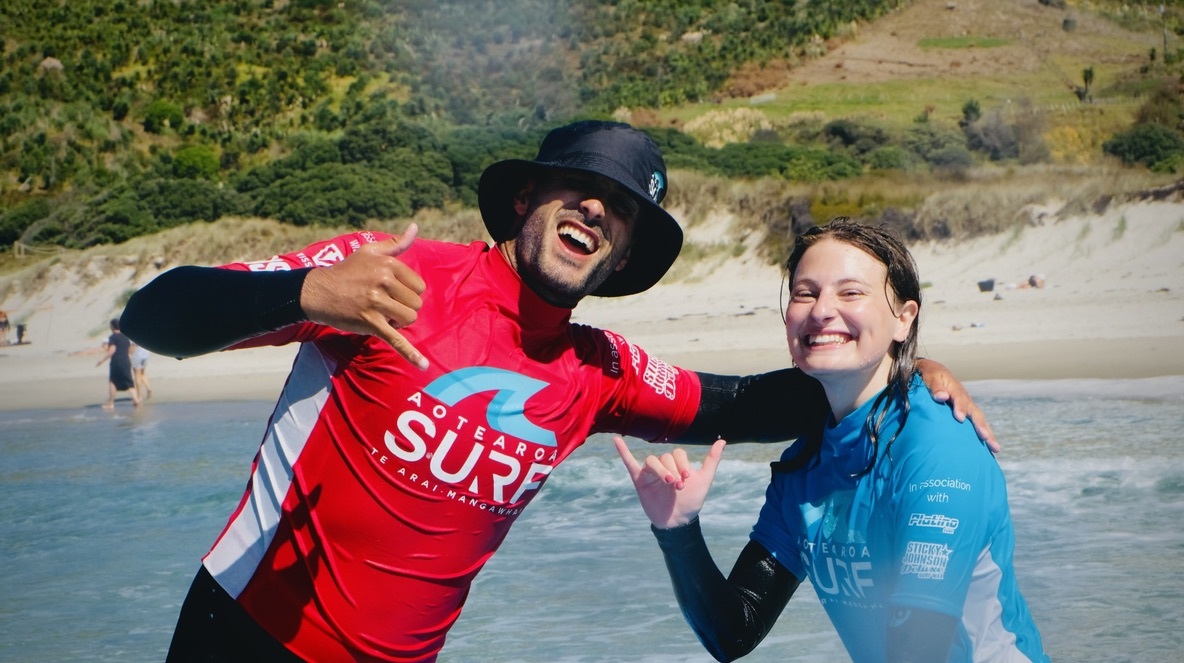
- Qualified team: an accredited Surfing New Zealand surf school with ISA Level 1 and Level 2 instructors, first aid and water safety training, and Police-vetted staff.
- Clear in-water ratios: tighter for younger students, with non-swimmers kept in standing-depth water.
- EOTC paperwork ready: activity-specific RAMS, operating procedures, emergency action plans and hazard registers for the school’s EOTC file.
- Experience: more than 20 years of school camps and outdoor education.
School camp accommodation
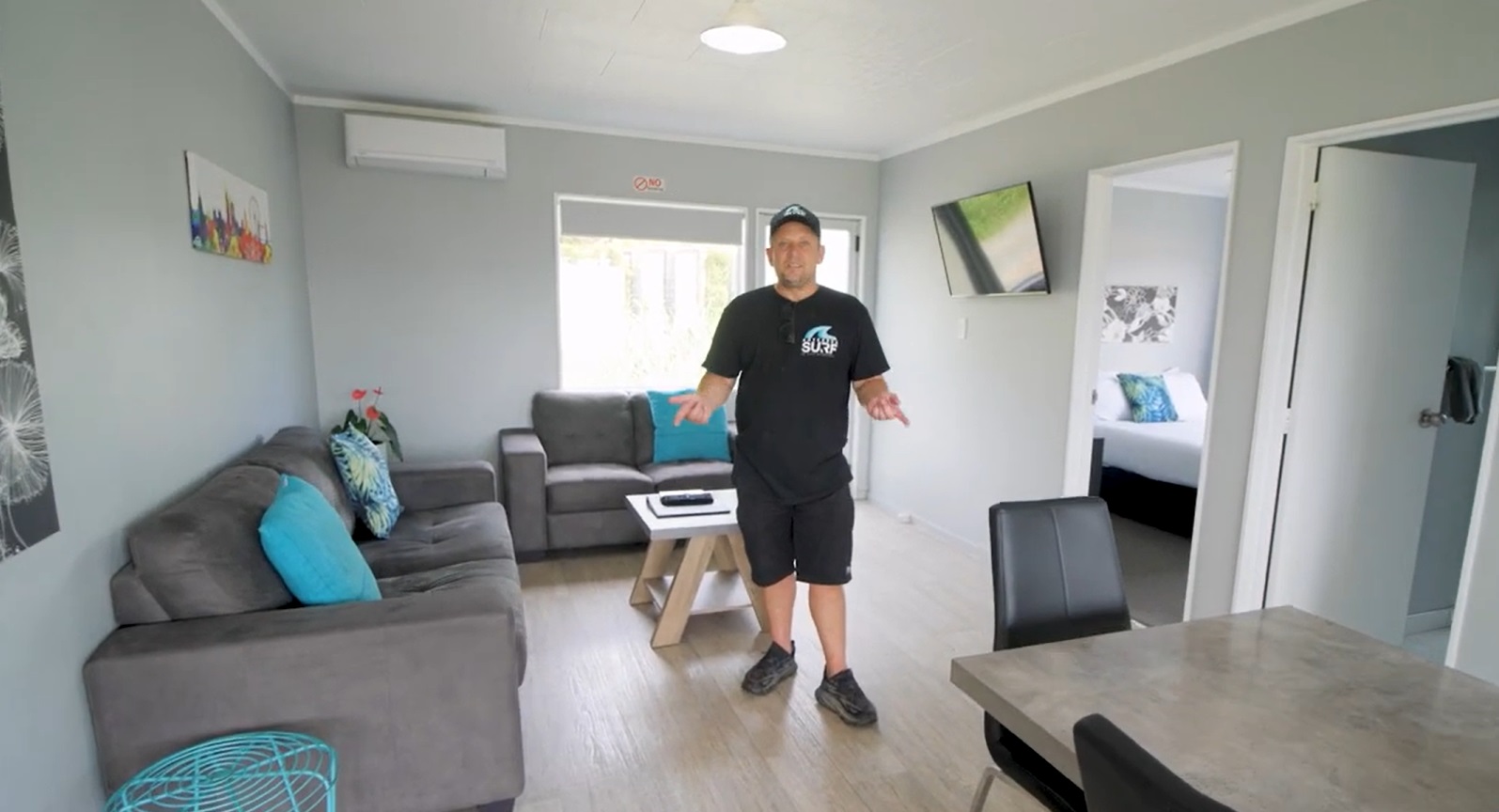
The camp is based at a holiday park on the edge of the Mangawhai estuary, in purpose-built camp accommodation set up for school groups.
Student teepees
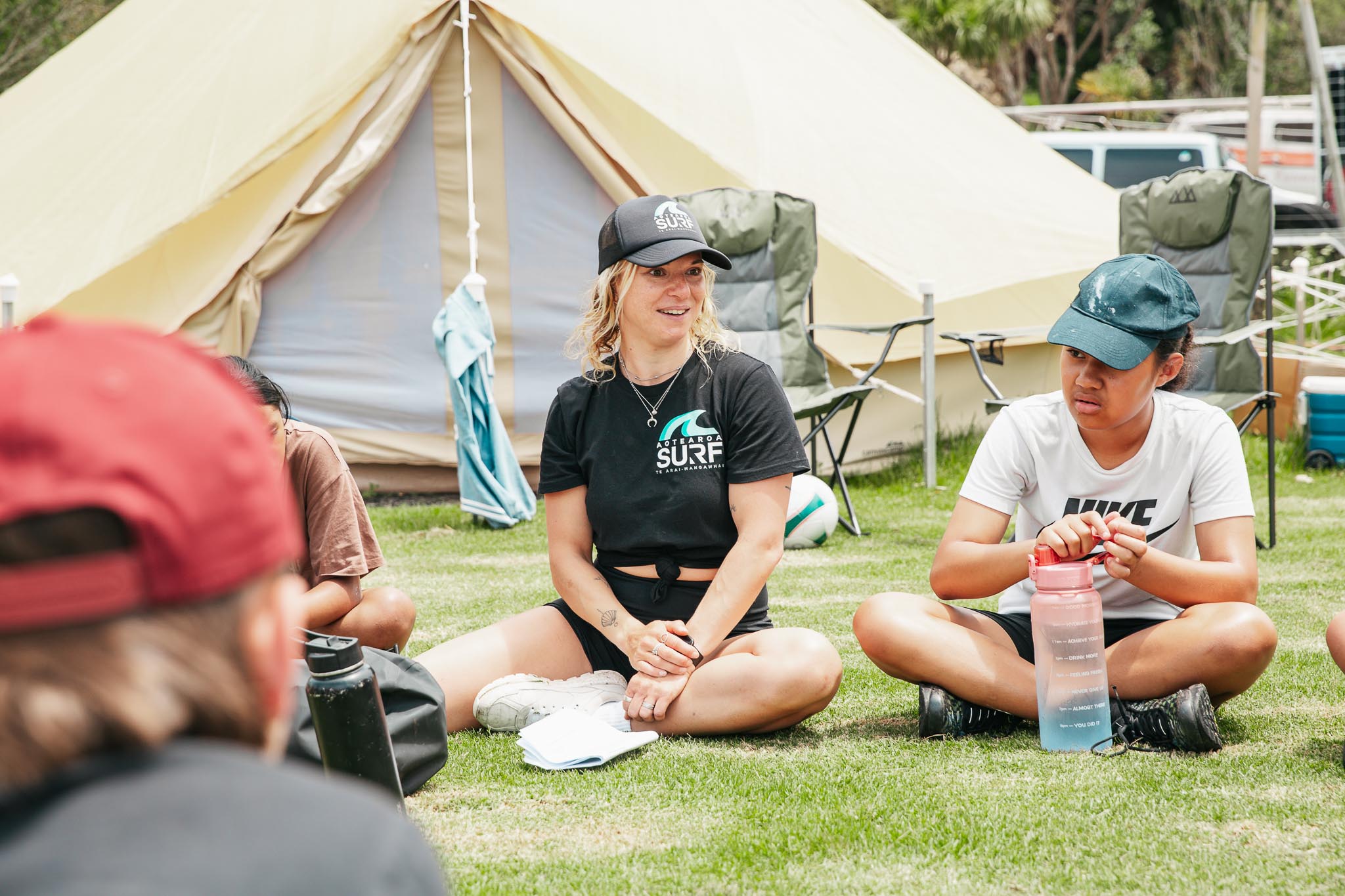
Students sleep in glamping-style teepees, grouped by gender, with bed allocations planned before the camp. The holiday park has separate bathroom blocks for each gender.
Supervisor cabins
Dedicated supervisor cabins are provided, self-contained with their own bathrooms. Teachers keep pastoral care overnight and sleep close to their students.
Dining teepee
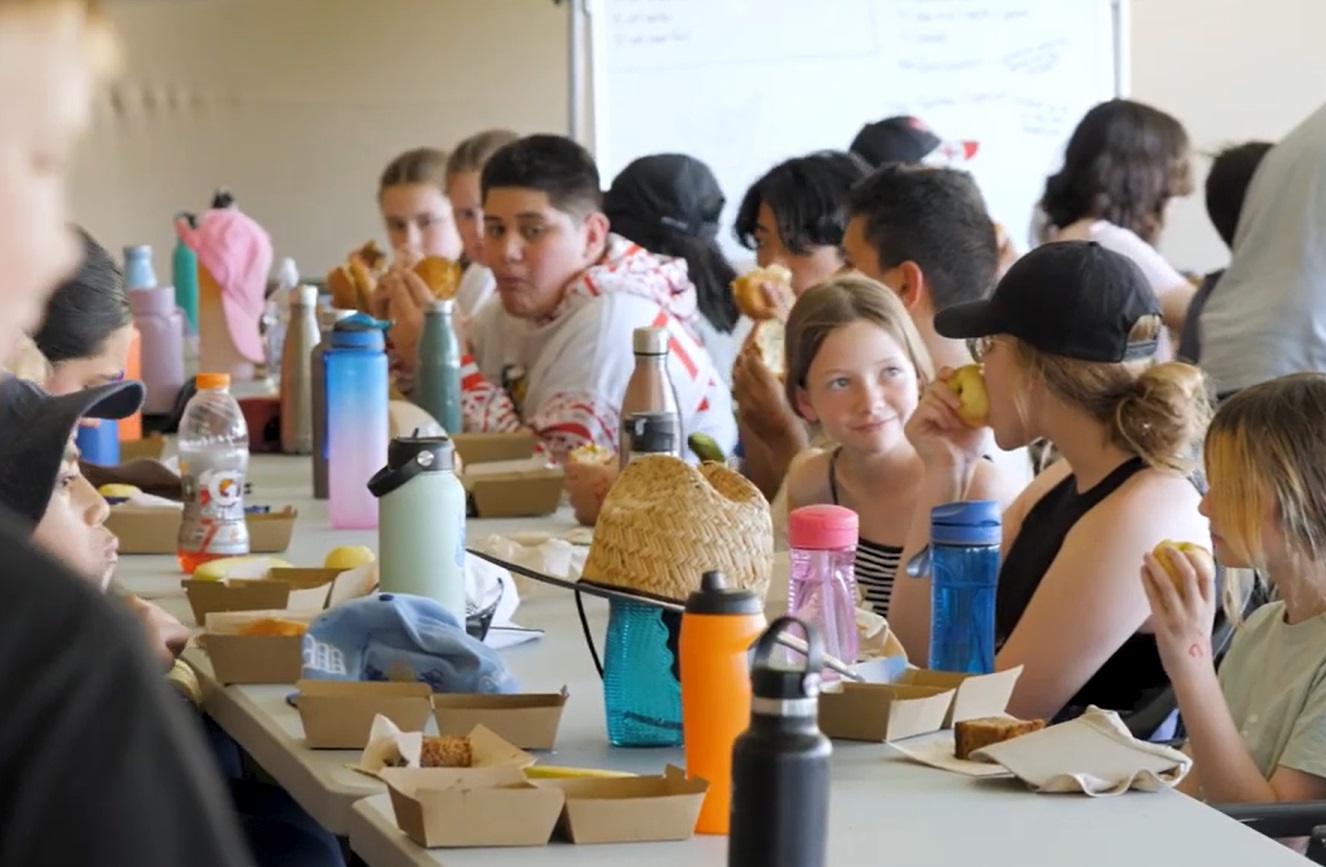
A large dining teepee is used for meals and evening activities.
Students bring a sleeping bag or bedding, three changes of clothes, togs, a towel, a warm jumper, a light rain jacket, sneakers and sandals, a torch, a drink bottle and any personal medication. A full list comes with the camp proposal.
Facilities for school groups
- Teepee accommodation for students, organised by gender.
- Self-contained supervisor cabins with bathrooms.
- Dining teepee for meals and night activities.
- Bathroom blocks separated by gender.
- Playground and grounds beside the lagoon.
- All surf and water equipment: wetsuits in all sizes, soft surfboards, rash shirts, paddleboards, kayaks and safety gear.
- Sunscreen supplied throughout the camp.
Catering
All meals are included and prepared by commercial caterers. Dietary needs such as vegetarian, gluten free, dairy free and allergies are collected on the pre-camp manifest and catered for.
Outdoor education programmes
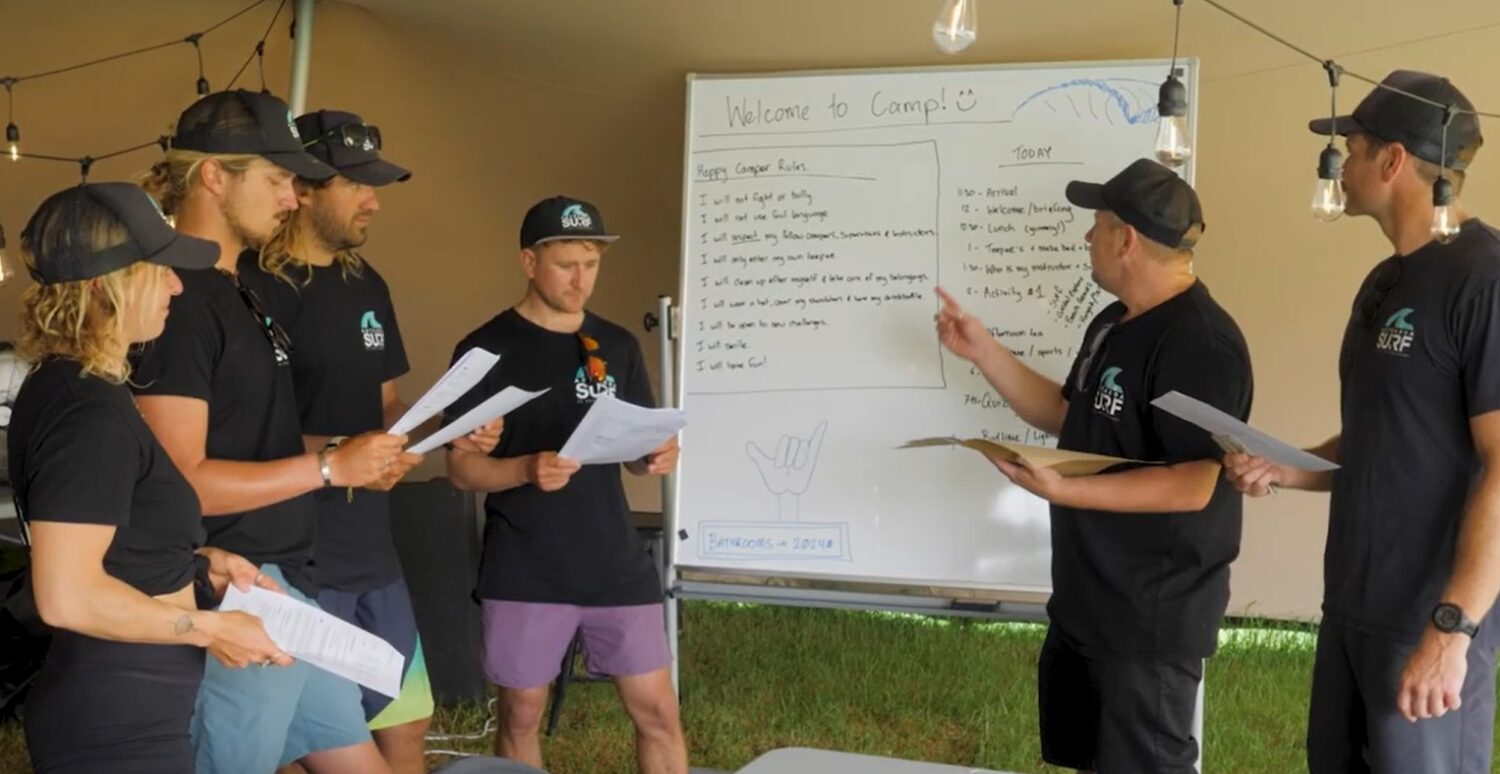
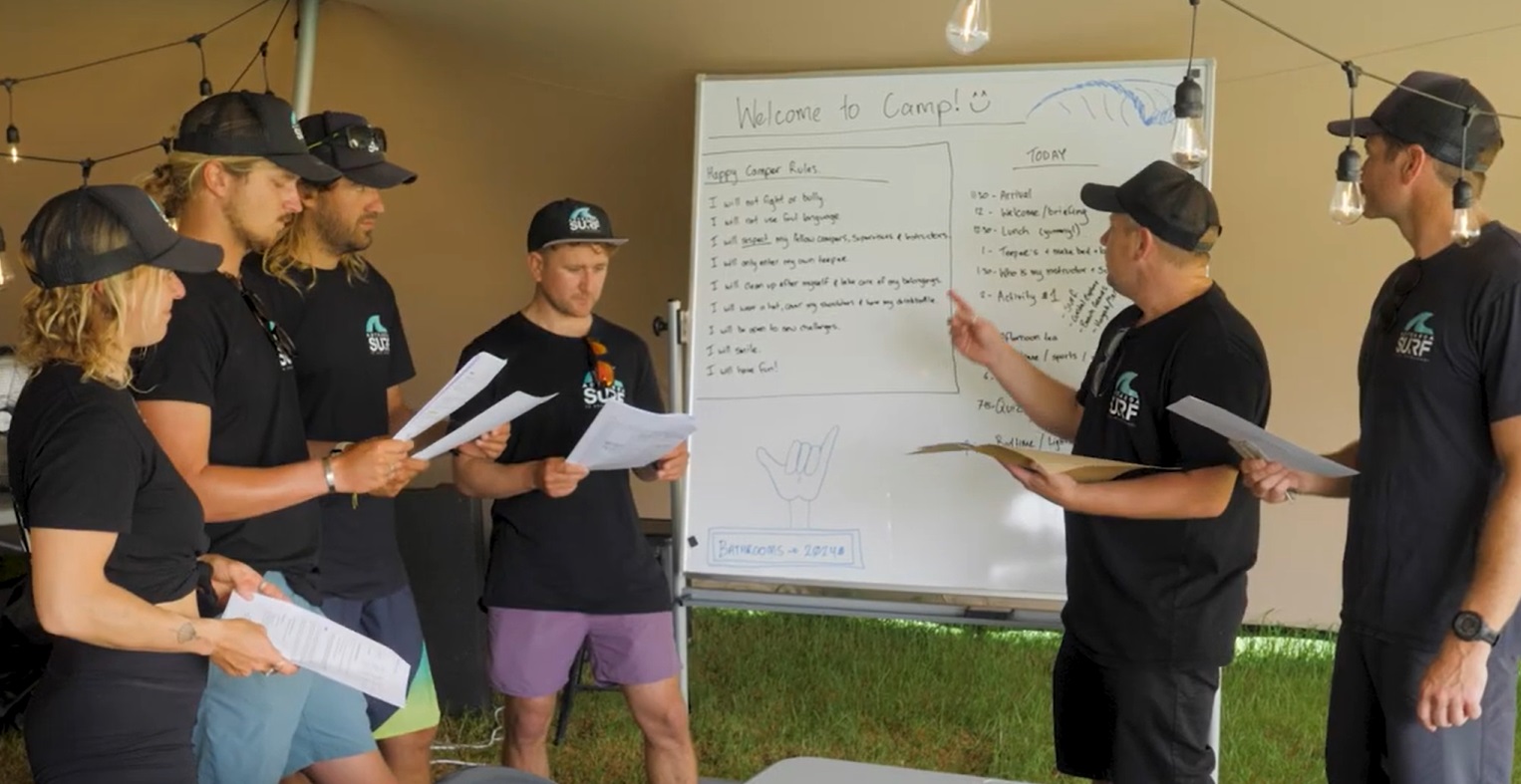
Overnight camps run for two nights and three days or four nights and five days, with programmes pitched to primary, intermediate or secondary students. Each programme focuses on building confidence, teamwork, leadership and a connection with the coast. A dedicated Camp Manager, activity group leaders and water-based support instructors stay on site for the whole camp, working to a structured daily timetable and a clear supervision plan.
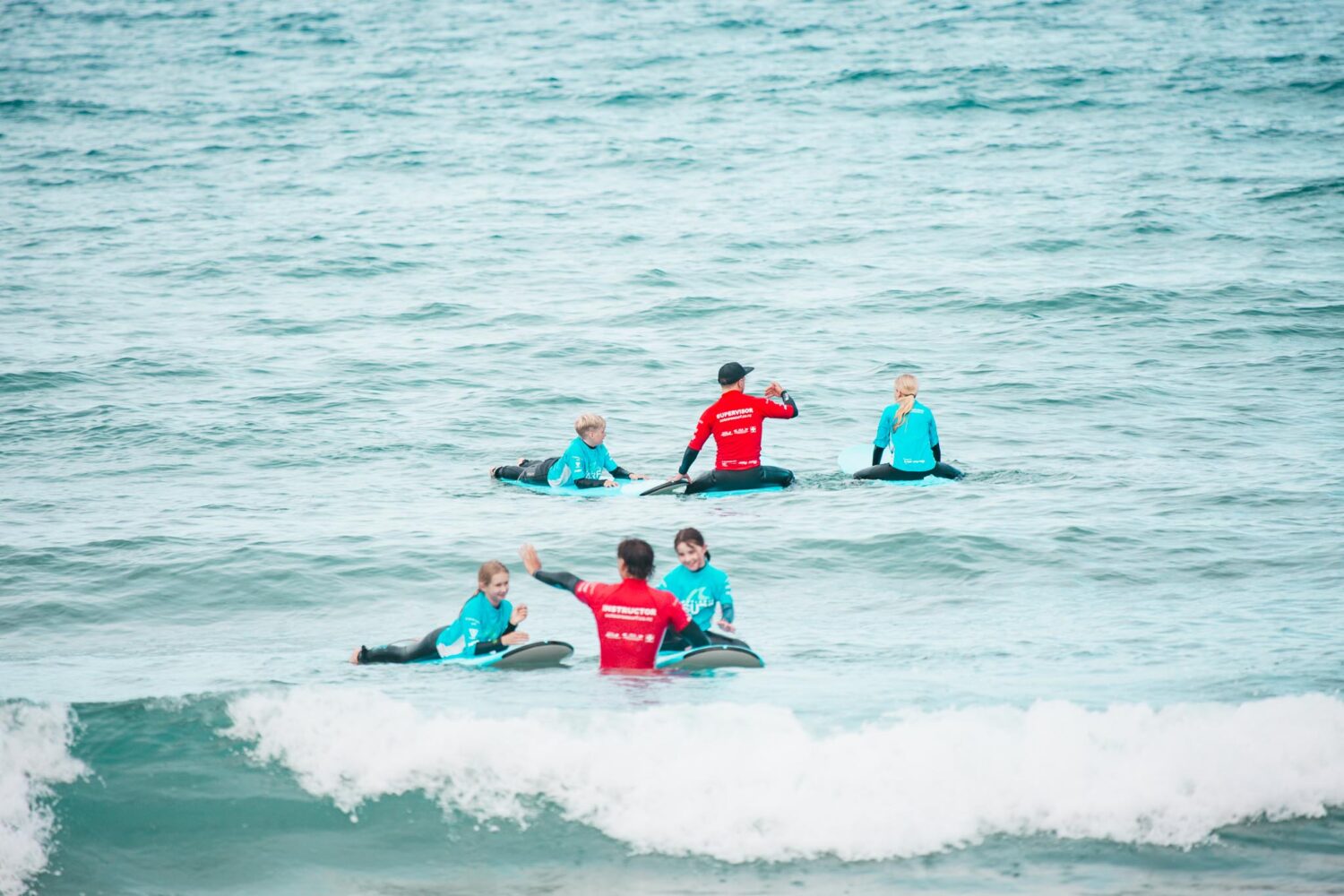
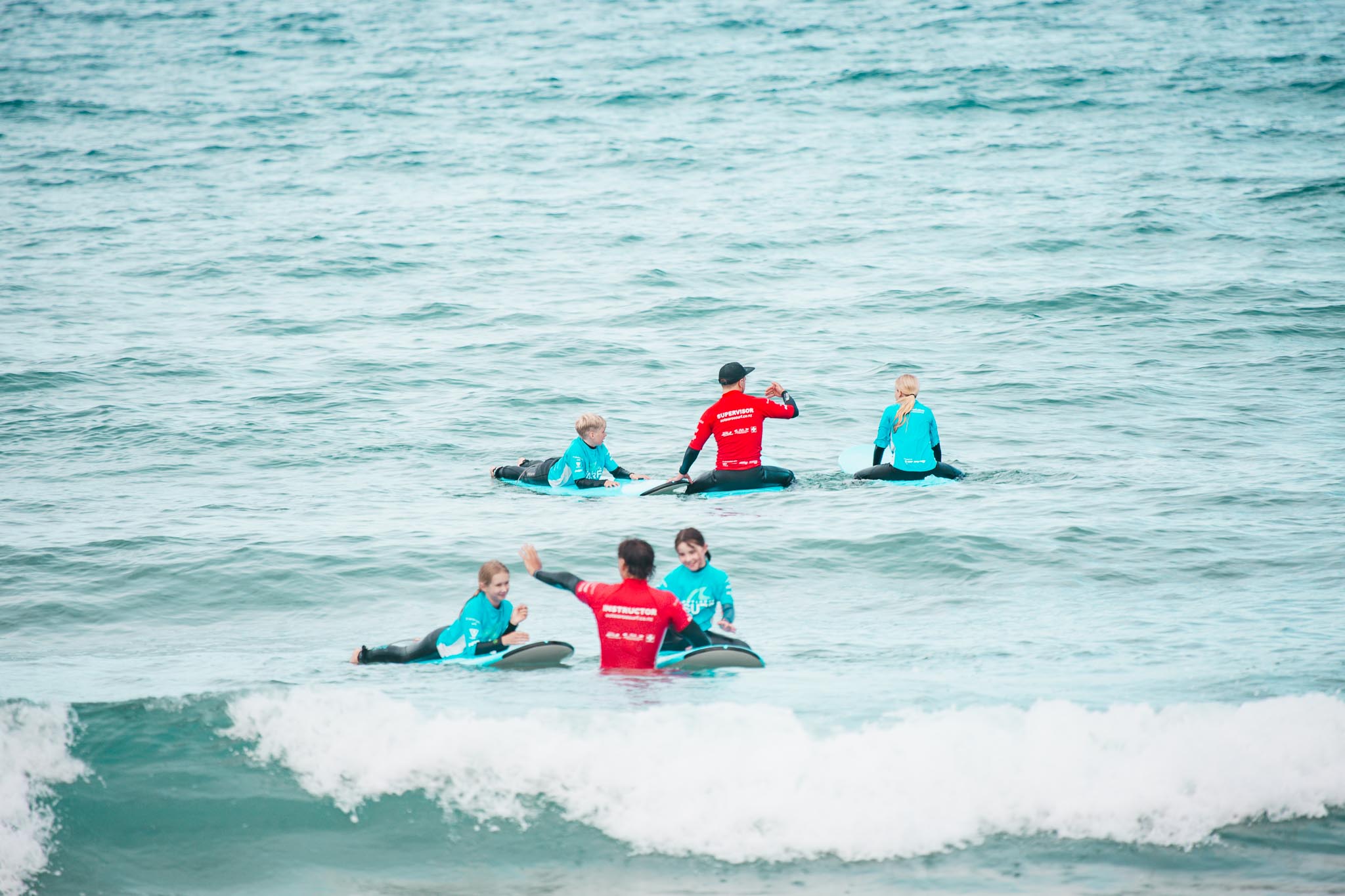
In the water, instructor ratios are about 1:4 for primary students, 1:4 to 1:6 for intermediate and 1:6 to 1:8 for secondary. Students who can’t swim stay in standing-depth water on high-buoyancy boards, and no one is left out because of swimming ability.
Curriculum connections
An Aotearoa Surf Camp fits within education outside the classroom (EOTC) and can support learning in:
- Health and Physical Education: surfing, paddling and movement skills, and outdoor challenge, with sessions mapped to Water Skills for Life.
- Water safety: reading rips and currents, hazard awareness and beach safety.
- Science: coastal environments, wildlife and sustainability.
- Senior students: NCEA Level 2 and 3 credits may be available through the progressive surf programme.
- Key competencies: managing self, relating to others, and participating and contributing through team challenges and camp life.
Activities on site and nearby
In the surf
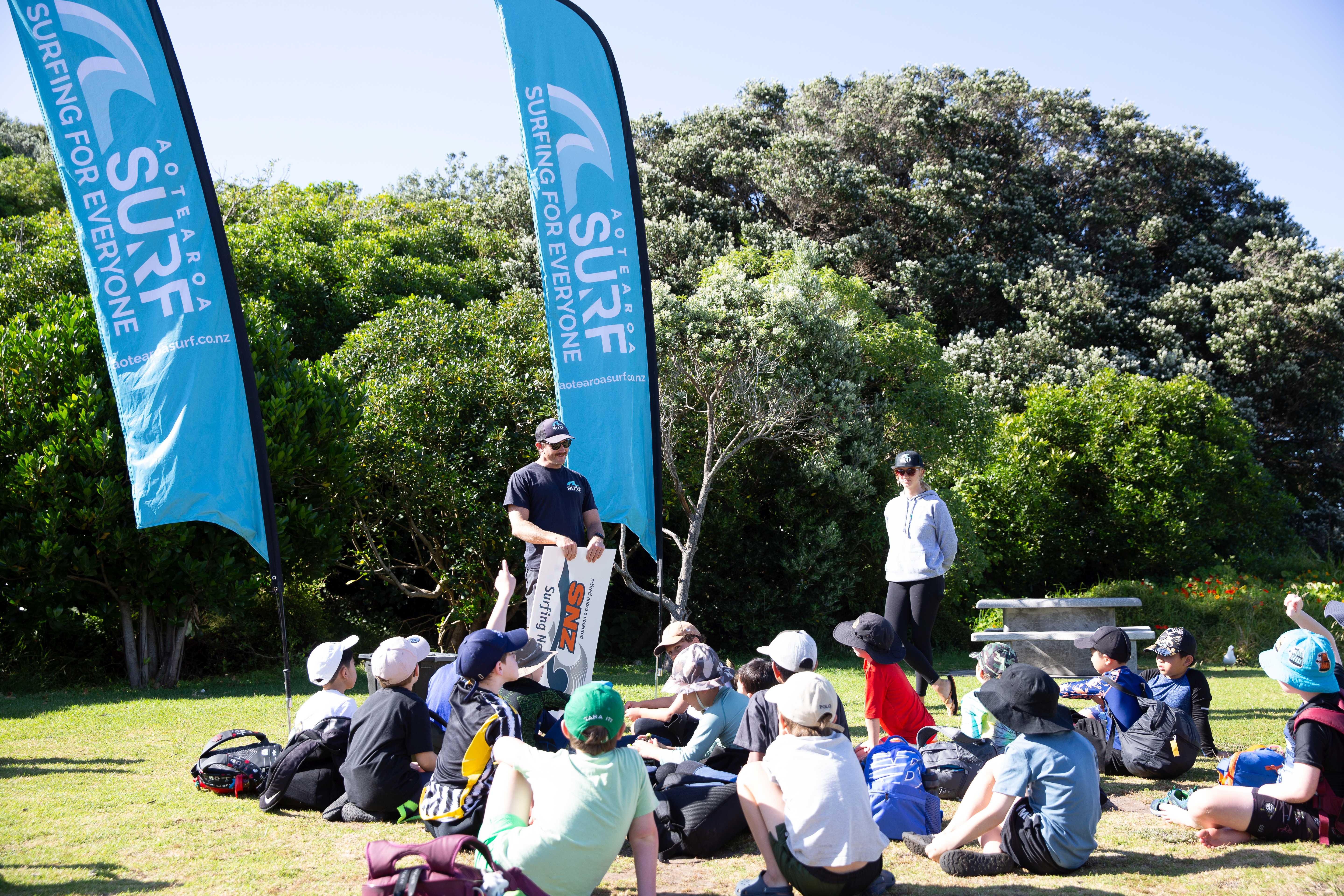
- Surf lessons for all ages and abilities, levelled by confidence and starting on the sand.
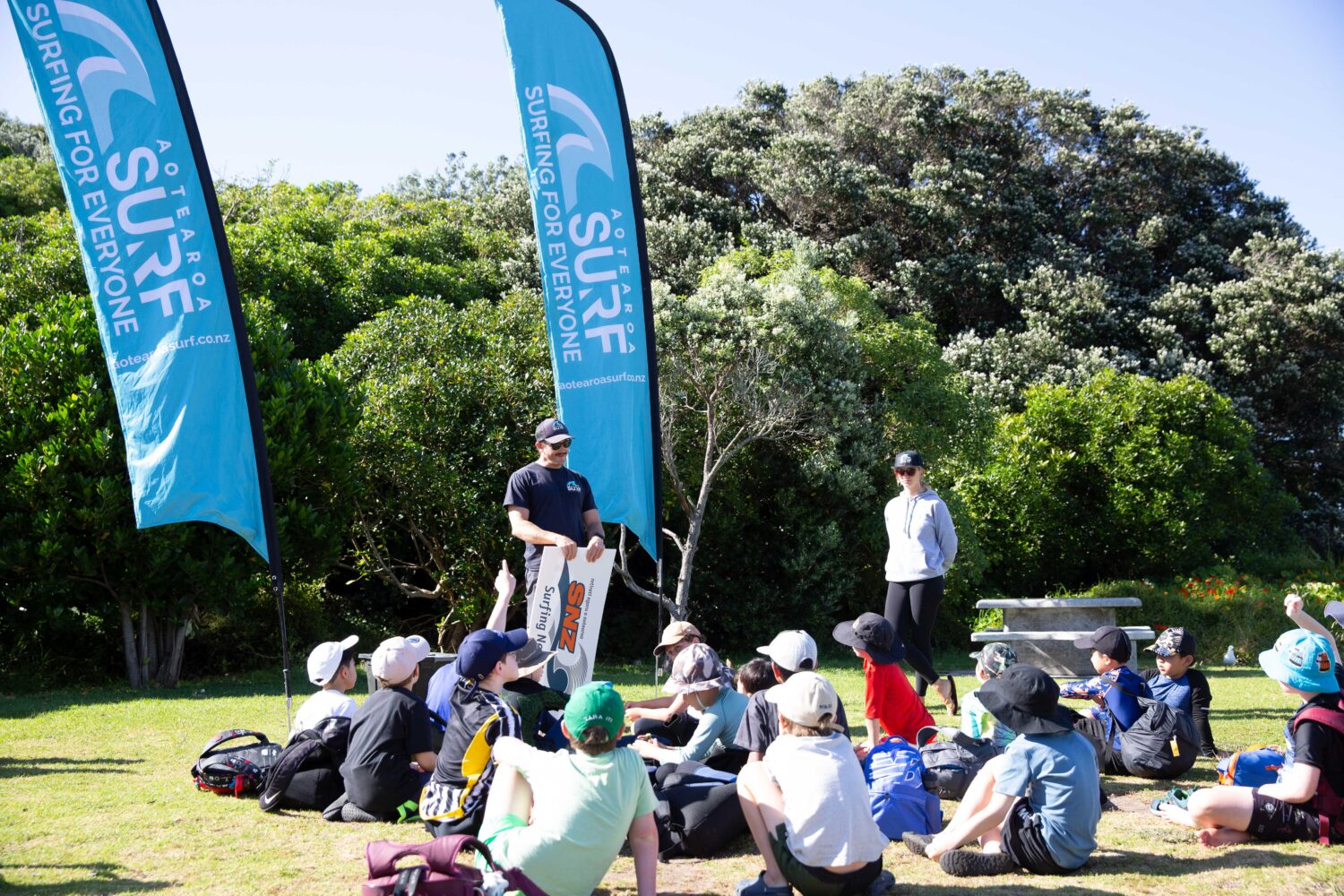
- Beach and ocean education, including rip and current awareness.
- Snorkelling.
On the estuary
- Paddleboarding and kayaking lessons and challenges.
- Raft building on calm water.
On land
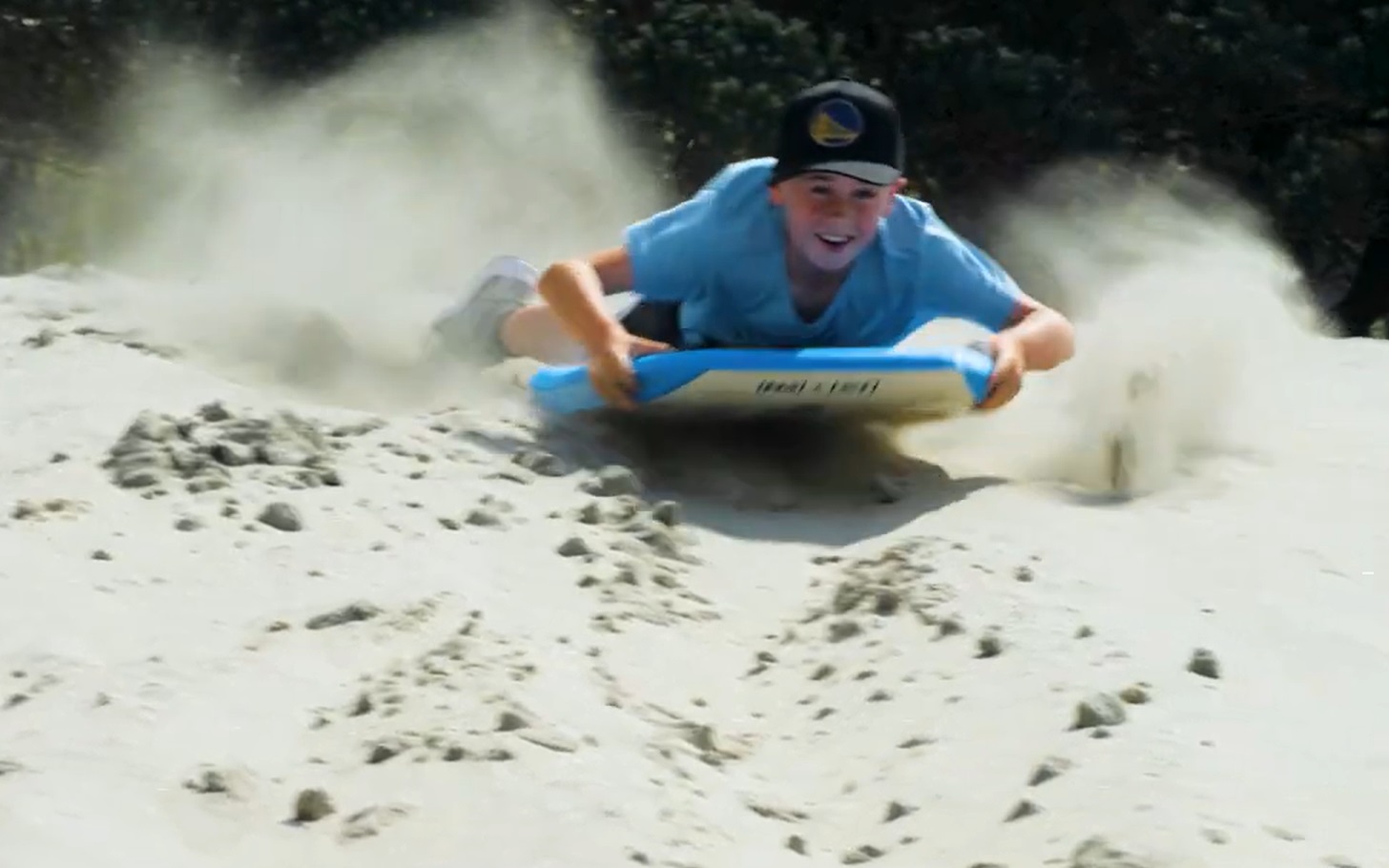
- Sandboarding and dune activities.
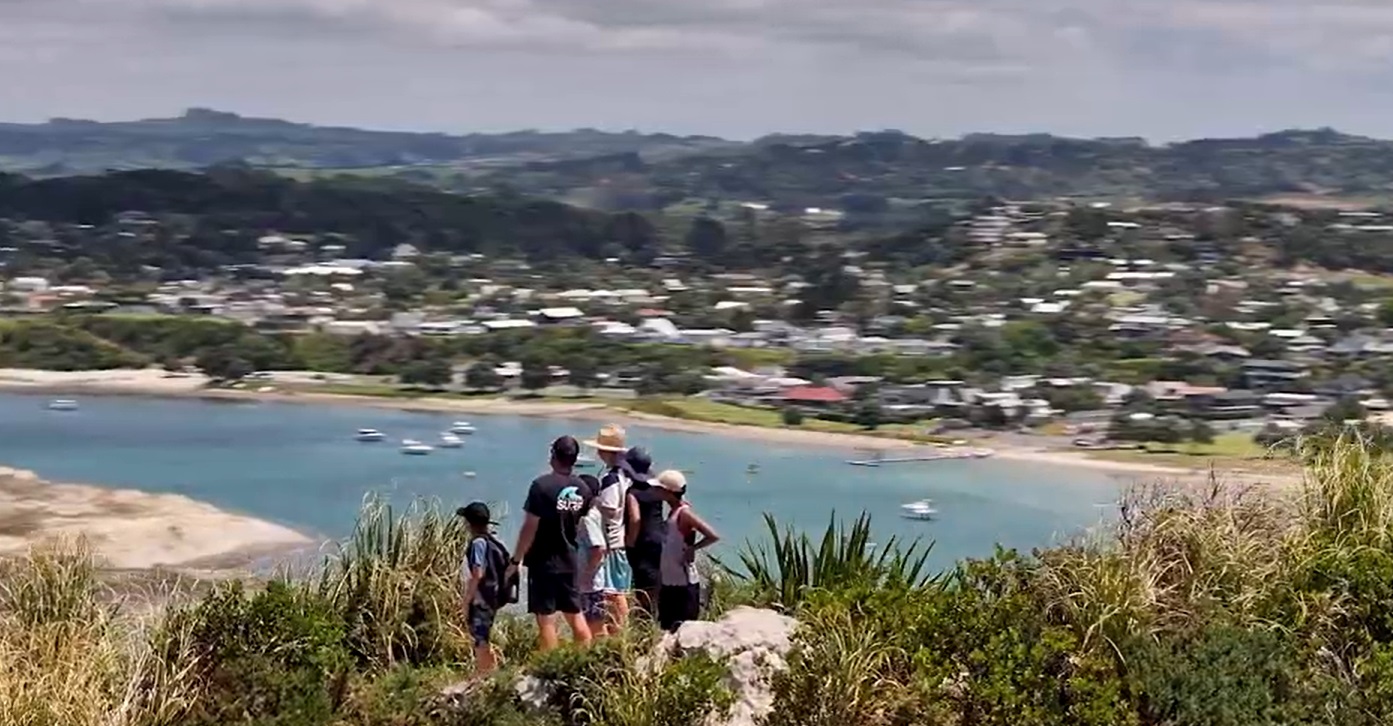
- Coastal hike and environmental learning.
- Team building and leadership challenges, including an Amazing Race and Camp Olympics.
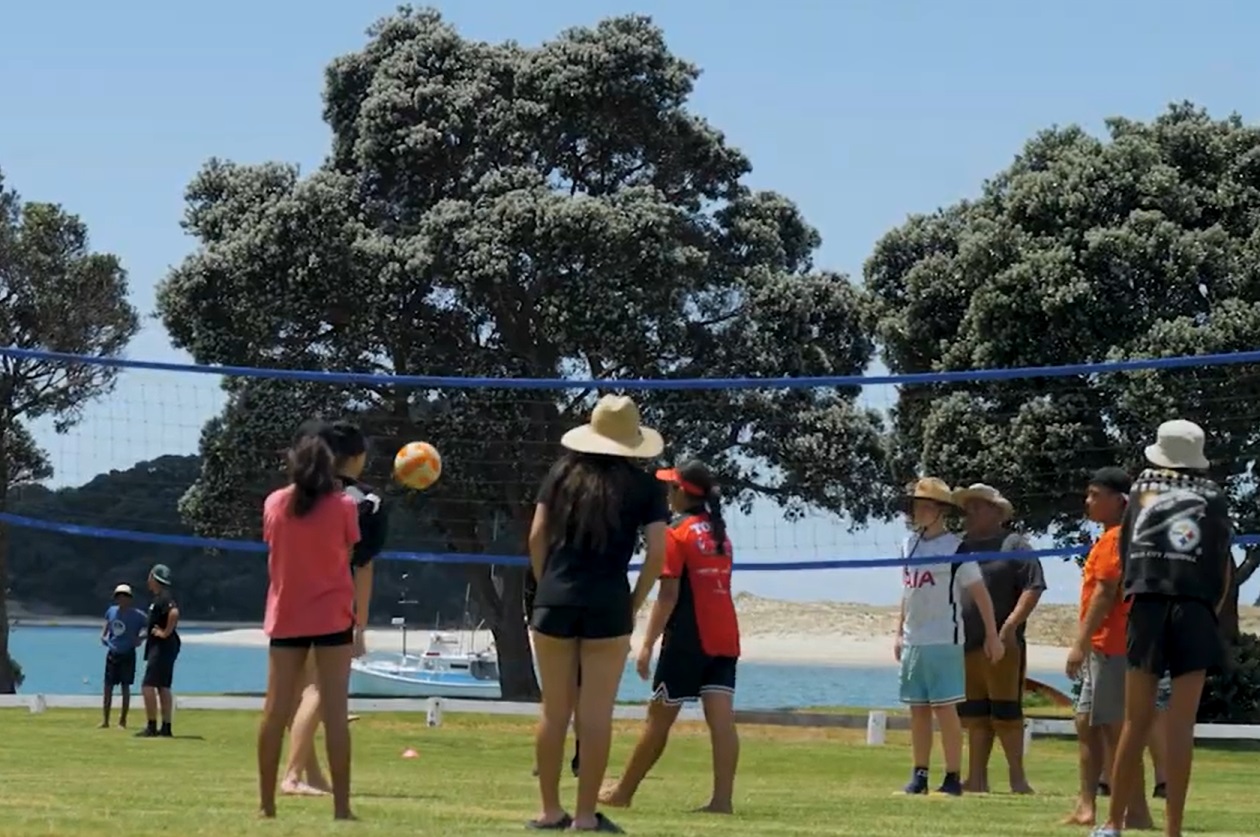
- Beach games, volleyball, rugby and football.
- Energiser yoga before breakfast.
Evenings
- Supervised night activities each evening, such as a movie night and a barbecue.
About Aotearoa Surf
Aotearoa Surf started on a Northland beach in 2002 with the idea that surfing should be open to everyone, and schools have been part of the business from the beginning. The company is based at Te Arai and runs surf schools at Mangawhai, Orewa and Christchurch, along with small group surf camps and an eco pod village behind the Te Arai dunes. It is a Surfing New Zealand accredited surf school, holds Qualmark Gold and carries extensive public liability cover. Staff go through a full induction and ongoing training.
School camp rates
Overnight camps are priced per student, with a separate per-supervisor rate. Both are all-inclusive, covering accommodation, meals, surf lessons, activities, equipment, instruction, supervision and sunscreen. Subsidies are available. Schools receive a no-obligation quote with a proposal and supporting documents for their leadership team, and a deposit confirms the dates. Contact Aotearoa Surf Camp for current rates.
Example three-day camp
An example of how a school camp at Aotearoa Surf Camp could look (every camp is planned by the school):
- Day 1: Arrive late morning, lunch and welcome, a whole-camp activity, Camp Olympics before dinner, night activity.
- Day 2: Energiser yoga and breakfast, surf lesson and kayaking or paddleboarding rotations, sandboarding, free time, barbecue and movie night.
- Day 3: Yoga and breakfast, a final surf or raft building session, early lunch, debrief and depart by midday.
Getting there
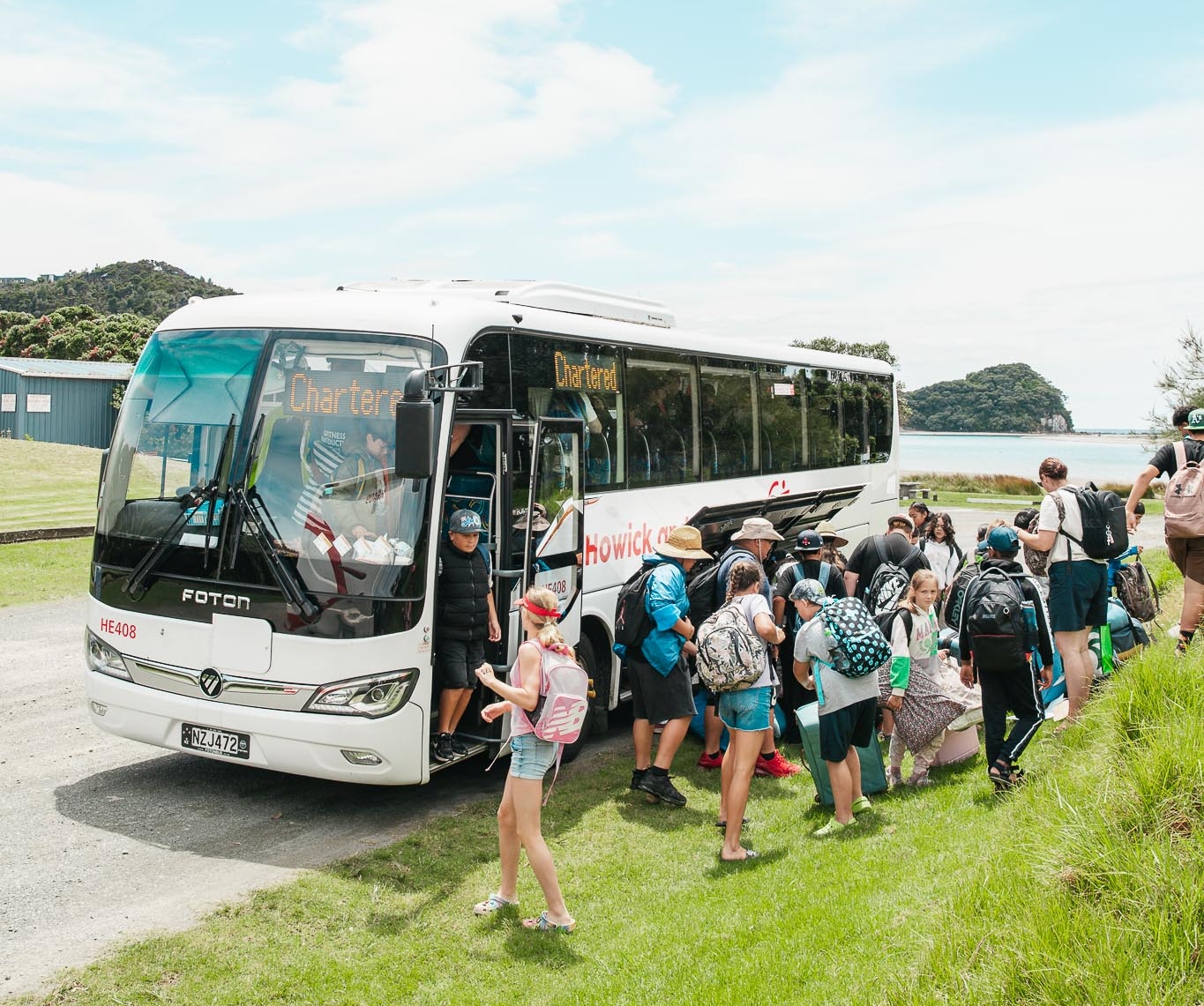
The camp is at Mangawhai Heads on the east coast of Northland, just over an hour’s drive north of Auckland via State Highway 1. Whangārei is roughly an hour to the north. Groups arrive by bus, and the camp team takes over from there.
Nearby attractions for school groups
- Mangawhai Heads Beach: the surf beach used for lessons.
- Mangawhai Cliffs Walkway: a DOC clifftop and beach loop with wide coastal views.
- Mangawhai Wildlife Refuge: the sandspit home of the endangered tara iti (New Zealand fairy tern).
- Mangawhai Museum: local history in Mangawhai village.
- Te Arai Regional Park: dunes, beaches and lakes just south of Mangawhai.
- Langs Beach: a sandy beach a short drive north towards Waipū.
- Waipū Caves: glow-worm caves inland from Waipū.
Other groups and events
- Day programmes for primary, intermediate and secondary schools at beaches across Auckland and Northland.
- Progressive surf programmes of one to five days, run as term electives or as part of a camp.
- Small group surf camps for groups of six to 40, staying in eco pods at Te Arai or the Mangawhai surf lodge.
- Corporate and community groups.
Good to know
- Overnight camps run in Terms 1, 2 and 4. Terms 1 and 4 book up first, so plan four to six months ahead.
- The minimum stay is two nights and three days.
- Rain alone doesn’t cancel activities. If surf or wind is unsafe, a conditions call is made three to five days out, with a sheltered backup site, a beach-based programme or a reschedule as options.
- Students with disabilities can be included through adaptive approaches and extra instructors. Talk to the team early.
- Schools receive a safety pack with RAMS, a provider agreement, consent templates and an itinerary.
- Wetsuits are supplied, so students only need their own togs.
Frequently asked questions
How many students can attend an Aotearoa Surf Camp?
Camps are designed for groups of 40 to 120 students, plus supervisors.
How long are the camps?
Camps run for two nights and three days, or four nights and five days.
Is the camp catered?
Yes. All meals are included and prepared by commercial caterers, and dietary requirements are catered for.
Where do students sleep?
Students sleep in glamping-style teepees grouped by gender, and supervisors have dedicated cabins with bathrooms.
Do students need to know how to swim?
No. Non-swimmers stay in standing-depth water with tighter instructor ratios, and building water confidence is part of the programme.
What equipment is provided?
All surf, water and activity gear, including wetsuits, soft surfboards, rash shirts, kayaks, paddleboards and sunscreen.
Who runs the activities?
A dedicated Camp Manager, activity group leaders and qualified surf instructors with ISA Level 1 and Level 2 qualifications, all Police vetted and first aid trained.
When are camps available?
Overnight camps run in Terms 1, 2 and 4, with Term 2 usually having the most availability.