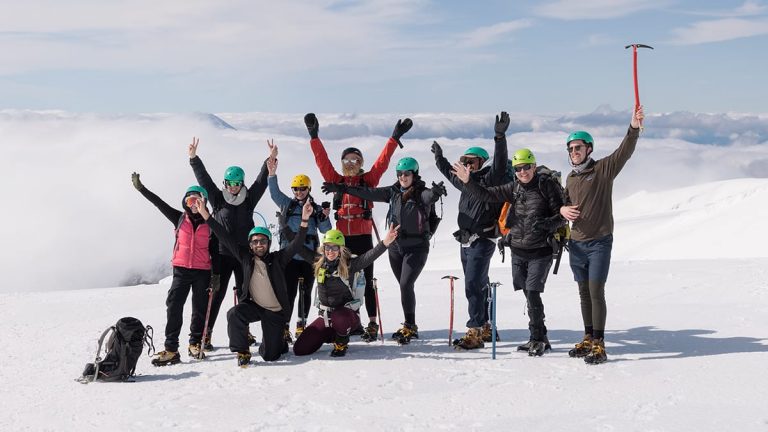

Adrift Tongariro is a guiding company based in National Park Village, on the edge of Tongariro National Park in the Ruapehu District of Manawatū-Whanganui. It leads guided walks in Tongariro National Park, including the Tongariro Alpine Crossing in summer and winter, and guided canoe trips on the upper Whanganui River. For a Central Plateau school trip or a Tongariro school camp activity day, the draw is a guided day on a dual World Heritage landscape with transport, winter equipment and gear hire handled from one base. No previous alpine or canoeing experience is needed.
Why schools choose Adrift
- Local guides with long experience: the company has guided in the area for more than 20 years, and one guide spent 12 years as a Department of Conservation ranger in Tongariro and Whanganui National Parks.
- Registered and audited: Adrift states it is a registered adventure activity operator with independently audited safety systems.
- Qualmark endorsed and a DOC concessioner: approved to guide commercially in Tongariro and Whanganui National Parks.
- Year-round guiding: summer and winter versions of its walks, with crampons, ice axes and helmets supplied when conditions need them.
- Transport from base to track: Adrift vehicles run groups from National Park Village to the start of each walk and back again.
- Gear sorted on the day: boots, clothing, daypacks and walking poles can be hired and fitted at the base on the morning of the trip.
- Walks for different fitness levels: from a half-day walk to Soda Springs through to the full 20.4 km Crossing.
School programmes and activities
Adrift’s website is set up for public and private bookings rather than school programmes, so talk to the team about how a school group would be organised. Most trips start and finish at the Adrift base in National Park Village.
Tongariro Alpine Crossing guided walk
A full-day guided walk over the 20.4 km Crossing, with about 786 m of climbing and 7 to 9 hours on the track at an average pace of around 3 km/h. The route passes between Ngāuruhoe and Tongariro, past craters and the Emerald and Blue Lakes. Guides, transport between the base and the track, and winter equipment are included. It needs a reasonably good level of fitness. The final route is set on the day according to weather, avalanche and ice conditions, so reaching the far end is not guaranteed.
Tongariro Alpine Crossing in winter
Between April and September the Crossing becomes an alpine trip. Guides teach the group how to use crampons and ice axes, and the equipment is supplied. No alpine experience is required, but the clothing and footwear list is longer and an extra stop is built in to fit crampons.
Half-day alpine walk
A guided walk along the first part of the Crossing, following the Mangatepōpō Stream to Soda Springs with a morning tea stop. It covers 10 to 12 km in about 3 to 3.5 hours with gentle gradients and around 280 m of climbing, and needs only a low level of fitness. It runs in summer and winter, finishing around midday.
Tama Lakes guided walk
A private guided walk from Whakapapa Village across tussock and alpine herb fields to viewpoints over the Lower and Upper Tama Lakes, which sit in explosion craters on the saddle between Ruapehu and Ngāuruhoe. It is about 17.6 km return and takes around 5 to 6 hours of walking, with less climbing and alpine exposure than the Crossing. A medium level of fitness is needed.
Whanganui River guided canoe trip
A private one-day guided trip on the upper Whanganui River, paddling about 22 km from Taumarunui to Ohinepane through farmland and native bush in Canadian canoes. Paddling time is 4 to 6 hours, with grade 1 rapids along the way. Canoes, paddles, dry barrels, life jackets, clothing hire and transport from the base are included. It runs from October to May on application. No canoeing experience is needed, but paddlers must be confident in the water as capsizing is possible.
Short pre-sunset walk
Adrift also lists a two-hour guided walk timed before sunset. Unlike its other trips, it doesn’t start from the base, so check the meeting point when booking.
Learning opportunities
A guided day with Adrift puts students in an active volcanic landscape with guides who know the ground well, making it a strong fit for education outside the classroom (EOTC).
Curriculum connections
A trip with Adrift can support learning in:
- Science: volcanic landforms, explosion craters, lava flows, alpine plants and the effect of altitude and weather.
- Social Sciences: the cultural significance of the peaks and waterways to Ngāti Hikairo ki Tongariro, and the Māori and European history of the Whanganui River.
- Health and Physical Education: long-distance tramping, alpine skills, canoeing and managing risk in the outdoors.
- Key competencies: managing self over a long day, relating to others in a guided group, and participating and contributing.
Safety and instruction
All trips are led by Adrift guides, who manage the group’s pace and make the call on whether a trip goes ahead and which route it takes. Adrift states it is a registered adventure activity operator with independently audited safety systems, is Qualmark endorsed and holds Department of Conservation concessions for Tongariro and Whanganui National Parks. Every participant completes an online health declaration and risk disclosure before the trip. Guides can turn a group back at any point for safety, and can withdraw anyone who isn’t fit enough to continue safely.
Winter equipment (crampons, ice axe and helmet if needed) is included on alpine trips, and canoe trips include life jackets, which are worn throughout.
What to bring
Each trip page has a summer and winter gear list. For a summer day on the Crossing this includes lunch, 1.5 to 2 litres of water, personal medication, sun protection, a daypack, hiking boots or shoes, walking trousers, a light layer and two warm layers, and a waterproof raincoat. Winter adds thermals or overtrousers, a third warm layer, a warm hat and gloves. Canoe trips need covered sandals, shorts, warm layers, a raincoat and spare dry clothes for the end of the day. Anything missing can be hired at the base.
Lunch can’t be bought in National Park Village before an early start, so plan it the day before or pre-order a lunch through Adrift.
Adding Adrift to a school camp
Adrift suits a school camp based in or near Tongariro National Park, where a guided Crossing or half-day walk can be the centrepiece of the week. Adrift recommends staying at least one night in National Park Village to cut travel on the day. Whakapapa Holiday Park, with cabins and a lodge, is about 15 minutes away, and there are other lodges and backpackers in National Park Village. Groups with their own transport can park for free outside the base.
About Adrift Tongariro
Adrift Tongariro was founded by Stew, who moved to National Park after mountaineering in the Andes and has since walked the Tongariro Crossing more than 3,000 times. The guiding team includes a former Department of Conservation ranger from the Taumarunui area who has guided with Adrift since 2017. The company has operated for more than 20 years and runs from its own base with a shop and bathrooms in National Park Village.
School group rates
Adrift doesn’t publish school rates. Shared group walks are priced per person, and private trips are priced for a group of up to three, with a surcharge for each extra person. Trips need a minimum of two people, payment is taken in full when booking, and the booking fee is non-refundable. Gear hire is charged per item, and lunches and accommodation transfers are optional extras. Contact Adrift Tongariro for current rates.
Example school visit
An example of how a school visit to Adrift Tongariro could look (every visit is planned with the provider):
Example day
- Evening before: confirm the trip with Adrift and pack lunches.
- 8:00am: meet at the Adrift base in National Park Village for gear checks and any hire fitting.
- Morning: transfer to the track and walk beside the Mangatepōpō Stream to Soda Springs, stopping for morning tea.
- Midday: return to the base, around 12:30pm.
- Afternoon: back to camp, or short walks nearby such as Tawhai Falls.
Getting there
The Adrift base is in National Park Village on State Highway 4, where most trips start and finish. It is about 15 minutes from Whakapapa Village, around 30 minutes from Ohakune, 40 minutes from Tūrangi and Taumarunui, and about 1 hour 20 minutes from Taupō. Accommodation transfers from Whakapapa Village, Tūrangi and Taupō can be added at extra cost.
Nearby attractions for school groups
- Taranaki Falls: a loop walk from Whakapapa Village to a waterfall dropping over an old lava flow.
- Tawhai Falls: a short walk to a waterfall on the Bruce Road, easy for younger students.
- Silica Rapids: a walk from Whakapapa Village through beech forest to cream-coloured mineral terraces.
- Whakapapa ski area and Sky Waka: the gondola on Mt Ruapehu, for alpine views without the long walk.
- Raurimu Spiral: the North Island Main Trunk railway’s famous engineering loop, with a lookout near National Park Village.
- Ohakune Old Coach Road: a historic cycle and walking trail with viaducts and a rail tunnel.
- Tongariro National Trout Centre: a DOC trout hatchery and freshwater ecology centre near Tūrangi.
Other groups and events
Adrift guides individuals, families, private groups and travellers, and works with agents on customised group trips. Solo walkers are matched with other bookings where possible.
Good to know
- Bookings: trips need at least two people and are paid in full when booking. Full refunds (less the booking fee) apply to cancellations made 14 days or more before the trip.
- Weather: Adrift may cancel or change a trip when conditions are too risky, offering a reschedule within 12 months or a refund. Groups must check trip status the day before.
- Ages: children under 12 need approval from Adrift before booking, and a private trip may be recommended. Adults are responsible for making sure anyone under 18 in their care follows instructions.
- Fitness: each trip lists a fitness level, from low for the half-day walk to good for the full Crossing. Guides can return anyone who doesn’t meet it.
- Medical: every participant completes an online health declaration and waiver before the trip, sent by email three days beforehand.
- Water confidence: canoe trips need participants who are confident in the water.
- Cultural respect: the peaks and waterways are sacred to Ngāti Hikairo ki Tongariro, who ask that the peaks are not climbed and the waterways not touched.
Frequently asked questions
Does Adrift Tongariro guide the Tongariro Alpine Crossing in winter?
Yes. Adrift guides the Crossing all year, and supplies crampons, ice axes and helmets when needed in winter, with guides showing the group how to use them.
Do students need alpine or canoeing experience?
No. Adrift’s guided walks and canoe trips don’t need previous experience, though each trip has its own fitness level and canoeists must be confident in the water.
Is there a shorter walk for younger or less fit students?
Yes. The half-day guided walk follows the start of the Crossing to Soda Springs and back in about 3 to 3.5 hours, with gentle gradients and a low fitness requirement.
Is transport included?
Transport between the Adrift base in National Park Village and the start and finish of each walk or canoe trip is included. Transfers from Whakapapa Village, Tūrangi or Taupō cost extra.
What if students don’t have the right gear?
Boots, clothing, daypacks and walking poles can be hired and fitted at the base on the morning of the trip, without booking ahead.
Is Adrift Tongariro a registered adventure activity operator?
Adrift states it is registered with independently audited safety systems, is Qualmark endorsed and is a Department of Conservation concessioner for Tongariro and Whanganui National Parks.
What happens if the weather is bad?
Adrift decides on the day whether a trip goes ahead and which route it takes. If it cancels for weather, the group can reschedule within 12 months or take a refund less the booking fee.
Is there a minimum age?
Children under 12 need approval from Adrift before booking, and alpine trips are not suitable for babies or toddlers.


