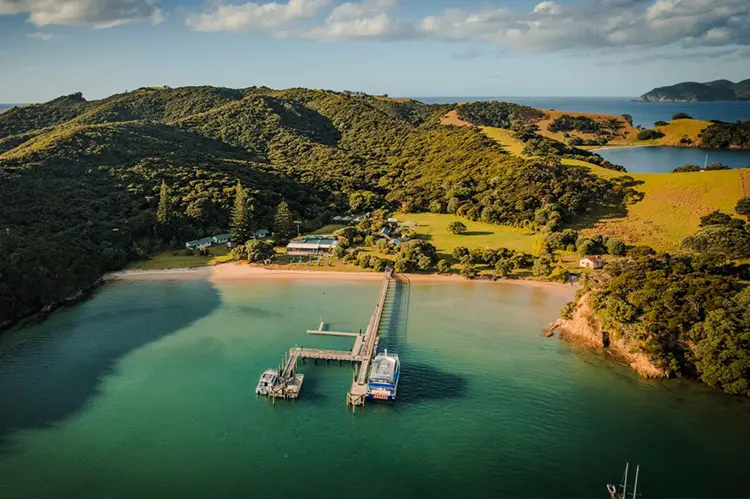
Northland’s coastline, native forest, and mild climate make it one of the strongest regions in the country for water activities in particular, with the Bay of Islands, Whangārei Harbour, and the Hokianga all offering sheltered, reliable paddling water close to a genuine choice of camp venues.
What Northland Suits
Water activities are the region’s clearest strength. The Bay of Islands and Whangārei Harbour both offer calm, sheltered conditions well suited to beginner flatwater kayaking, canoeing and stand-up paddleboarding, and the region’s mild year-round water temperature (by New Zealand standards) makes for a more forgiving beginner environment than many southern regions.
Tramping and bush walks work well through Northland’s native forest reserves: Waipoua Forest (home to Tāne Mahuta and other significant kauri) and the Waitangi and Puketi forests all offer graded tracks suited to our Tramping and Bush Walks guide, though kauri dieback hygiene protocols apply strictly at every entry point.
Horse riding has good coverage across the region’s rural areas, and archery is easy to run at almost any camp venue given how little space it requires.
Multi-day tramping or expedition-style trips are more limited here than in the central North Island or South Island: Northland’s terrain suits strong day walks more than multi-day alpine-style expeditions, so schools building toward the higher levels of the Duke of Edinburgh’s Hillary Award often need to travel further south (see our Multi-Day Tramping and Expedition Skills guide for what that involves).
Seasonality and Weather
Northland has the mildest, most subtropical climate in mainland New Zealand, with genuinely warm water into autumn: a real advantage for water-based camps outside the peak summer crush. Summer (December–March) still brings the most reliable settled weather, but it’s also peak booking season. Northland is more exposed to ex-tropical cyclone remnants in late summer and early autumn than most regions, so build a weather contingency into any coastal itinerary from January through April.
Getting There
Whangārei sits centrally with most Bay of Islands and Hokianga venues within an hour to 90 minutes’ drive; schools travelling up from Auckland should allow 2–3 hours depending on the specific venue and traffic through Auckland itself.
Local Considerations
Kauri dieback disease remains a serious, active concern across Northland’s forest reserves: every school group entering kauri forest should use hygiene stations without exception and stay on formed tracks. Several sites also carry cultural and historical significance to local iwi and hapū; where a provider or venue can connect students to this context as part of the visit, it’s well worth building into the itinerary rather than treating the location as scenery alone.
Find a Provider in Northland
Browse camps, venues and activity providers currently listed for the region: All Places in Northland.
Leave a Reply
You must be logged in to post a comment.