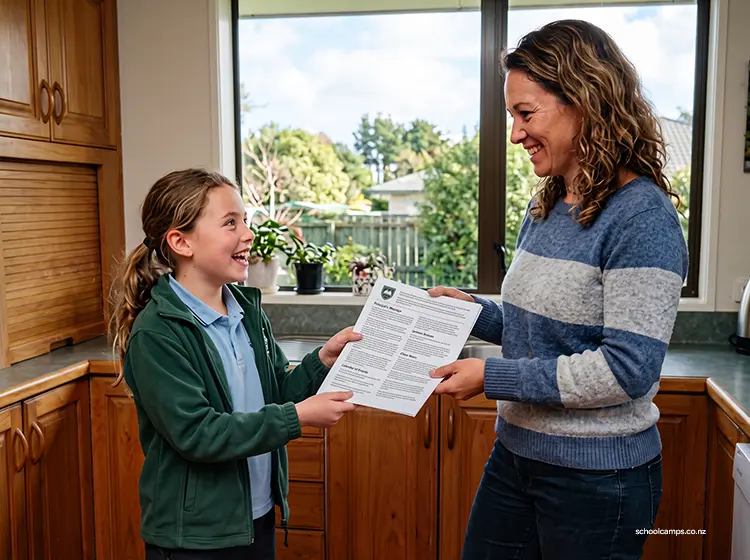
 A Reference Guide for School Camps. This guide provides templates and best practices for communicating with parents about water-based activities during school camp. When parents know what to expect, they’re less anxious, students arrive properly prepared, and everyone’s on the same page.
What to Tell Parents
Parents want to know their children will be safe and what they need to do to prepare. For broader health and safety planning, see Health & Safety Planning for School Camps.
Clear description of activity
Describe the activity in plain language: students will paddle canoes/kayaks/SUPs in pairs or groups on calm water, learning basic strokes and water safety. Specify the water body and conditions (e.g., “sheltered lake bay,” “slow-flowing river,” “pool environment”).
Risks explained plainly
Be honest but balanced:
- Possible to get wet from spray, rain, or capsize
- Exposure to sun and wind
- Physical effort required (paddling is tiring)
- Students will wear PFDs (personal flotation devices) at all times on or near water
Clothing requirements
Be specific about what students need:
- Quick-dry layers (synthetic or merino (no cotton)
- Sun protection: wide-brim hat, sunglasses with strap, high-SPF sunscreen
- Enclosed water shoes (old sneakers, sandals with heel straps) no jandals)
- Complete change of dry clothes in waterproof bag
- Water bottle (minimum 1 litre)
- Towel
Wet-weather plan
Explain clearly: if conditions are unsafe (strong wind, lightning, hypothermia risk, poor visibility), the activity will be postponed or replaced with an alternative land-based activity. Student safety is always the first priority.
Sample Parent Letter Template
Below is a template you can adapt for your school context. Customise the bracketed sections.
Dear Parents and Caregivers,
As part of our upcoming camp at [Location] from [Dates], students will participate in [specific water activity: canoeing/kayaking/stand-up paddleboarding] on [specific water body]. This letter provides important information about what students will do, what to bring, and how we’re ensuring their safety.
What students will do
Students will learn basic paddling skills working in pairs [or individually/groups]. They’ll practice forward strokes, turning, and stopping on calm, sheltered water. The focus is on teamwork, communication, confidence-building, and connection to our local waterways. Sessions will be led by [qualified instructors from X provider / qualified school staff], and students will wear personal flotation devices (PFDs) at all times on or near water.
What success looks like
By the end of the session, students will have developed water confidence, worked collaboratively with partners/groups, problem-solved in real-time, and gained appreciation for outdoor environments. Some students may capsize (which is a normal part of learning) and will be supported to get back in their craft or brought safely to shore.
What to bring
Quick-dry clothing (synthetic layers, not cotton) that can get wet; enclosed water shoes (old sneakers or sandals with heel straps: no jandals); sun protection (wide-brim hat, sunglasses with strap, high-SPF sunscreen); complete change of dry clothes in a waterproof bag; water bottle (minimum 1 litre); towel; snacks for [half-day/full-day] session.
What happens if conditions change
We monitor weather forecasts closely and will adjust or cancel the activity if conditions become unsafe (wind >25 km/h, lightning, very cold water temperatures, heavy rain creating visibility issues). If we cancel on the day, we’ll run an alternative land-based activity. Your child’s safety is always our first priority.
Medical information
Please ensure your child’s medical information and consent forms are up to date. It’s particularly important we know about: asthma, epilepsy, anxiety conditions, and any recent upper body injuries. Please provide any medications your child needs and ensure they know how to use them.
Questions?
Contact [Teacher Name] at [email] or [phone] if you have concerns or need clarification.
We’re looking forward to this fantastic learning experience for our students!
[Teacher Name], [School Name]
Consent and Medical Information Collection
Specific consent for water activities
Make sure consent forms specifically mention water-based activities. A generic camp consent might not cover perceived higher-risk activities like paddling. For guidance on EOTC consent requirements, see EONZ’s Safety Management Toolkit.
Updated medical information
Collect current medical information, particularly: asthma (ensure inhaler available), epilepsy (understand triggers and response protocols), anxiety conditions (discuss support strategies), recent injuries affecting upper body mobility, and allergies (bee stings, sun sensitivity).
Swimming ability and water confidence
Confirm swimming ability and water confidence levels. This information is essential even though PFDs are worn at all times. Knowing which students are nervous around water allows for better support planning.
Addressing Common Parent Concerns
“My child can’t swim: are they safe?”
Response: “All students wear properly fitted PFDs (personal flotation devices) at all times on or near water. PFDs keep students afloat even if they can’t swim. We also maintain close supervision ratios and have rescue-trained staff present. Non-swimmers can participate safely: many of our most confident paddlers started as non-swimmers.”
“What if they capsize?”
Response: “Capsizing is possible and is part of learning. Students are taught what to do: stay calm, stay with the craft, signal for help, and wait for assistance. We practice this procedure on shore before going on the water. Instructors are trained in water rescue and respond immediately.”
“My child is very anxious about water: can they still participate?”
Response: “Yes! We work with nervous students using graduated approaches: they can start by observing, practice on shore, paddle with an adult, or use more stable craft. We never force participation. Please let us know about their anxiety so we can provide appropriate support.”
“What if the weather is bad on the day?”
Response: “We monitor weather forecasts closely and have clear thresholds for safe conditions (wind speed, temperature, visibility). If conditions are unsafe, we’ll postpone or replace with an alternative activity. Safety always comes first: we’d rather disappoint students than take unnecessary risks.”
Communication Timing
Initial information: 4–6 weeks before camp
Send the detailed parent letter, consent forms, and gear list. This gives families time to ask questions and source appropriate clothing.
Reminder: 1 week before camp
Brief reminder about key items (enclosed shoes, spare dry clothes, no cotton) and final consent deadline.
Weather update: day before or morning of
If weather looks marginal, send a quick update confirming the activity is still going ahead or has been modified/cancelled.
Related Resources
For a ready-to-use form covering consent, emergency contacts and medical information, see our free Parent Consent & Medical Information Form template.
Leave a Reply
You must be logged in to post a comment.