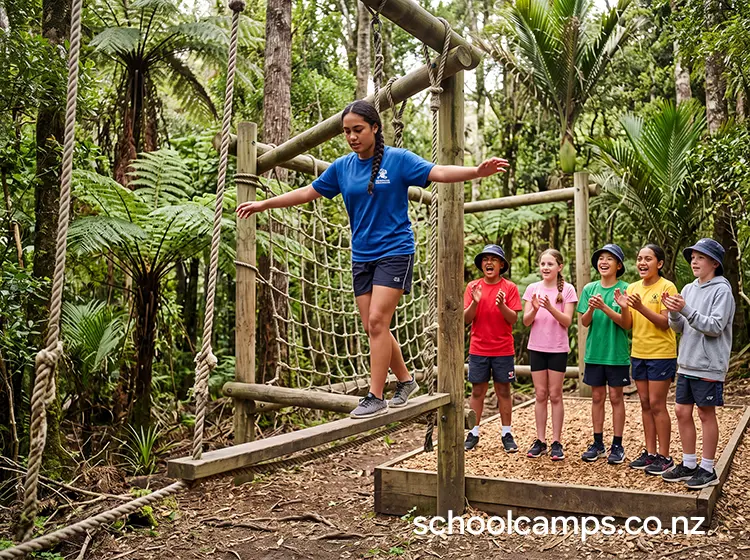
 This reference guide provides short, practical activities for use in the 2–3 weeks leading up to camp. These activities prepare students physically, mentally, and socially for land-based activities (tramping, climbing, archery and horse riding) improving confidence and learning outcomes.
Why Preparation Matters
Students don’t need to be athletes, but a bit of preparation makes a big difference:
- Builds physical readiness (endurance for walking, grip and core strength for climbing)
- Reduces anxiety through familiarity with movements and expectations
- Develops the trust and communication skills climbing and horse riding both depend on
- Increases safety by practising balance, footwork, and following instructions under pressure
- Builds excitement and reduces fear of the unknown
Fitness Activities (10–15 minutes, 2–3 times)
Walking endurance (for tramping)
Build up sustained walking in PE or before/after school: start with 20–30 minutes at a steady pace, gradually increasing duration over 2–3 weeks. Include some uneven ground or stairs if available, since tramping tracks are rarely flat and smooth.
Grip and upper body circuits (for climbing)
Rotate through stations: dead hangs from a bar or beam (10–15 seconds), wall push-ups (30 seconds), plank hold (30 seconds). Focus on building endurance, not strength: climbing is far more about technique and confidence than raw power.
Balance and core practice (for climbing and tramping)
Practise walking heel-to-toe along a line, standing on one foot with eyes closed, and single-leg balance while reaching for an object. These translate directly to careful foot placement on a track or a climbing wall.
Skill Practices (5–10 minutes in classroom or outdoors)
Following multi-step instructions under mild pressure
In pairs or small groups, practise following a sequence of verbal instructions accurately and quickly (a simplified “Simon Says” with movement instructions works well). This mirrors the fast, clear instruction-following needed on a climbing wall or around a horse.
Reading a simple map
Give students a basic map of the school grounds or local area and set a simple navigation task: find three marked points in order. This builds the map awareness that underpins tramping, without needing real terrain.
Trust and communication practice
In pairs, one student blindfolded while the partner gives clear verbal directions to navigate an obstacle course. Switch roles. Debrief: “What made good instructions? How did it feel to trust/be trusted?” This maps directly onto belaying trust in climbing and clear communication on a track.
Confidence and Teamwork Activities
Height and challenge discussion (for climbing)
Circle discussion about what nervousness around heights feels like, and how climbing is entirely voluntary at each step: students always choose how far to go and can stop whenever they want. Normalise that feeling nervous is completely normal and doesn’t mean you can’t try.
Animal safety discussion (for horse riding)
Short discussion or video on how to move calmly and predictably around a large animal, why sudden movements or loud noises are avoided, and what an instructor’s safety instructions will sound like. Reduces surprise and builds confident, careful behaviour on the day.
Build excitement
Show short videos of the activity (ideally at your planned venue or similar New Zealand locations), invite past students to share their experiences, or read aloud a story about the activity. Reduces anxiety through familiarity and builds positive anticipation.
Mental Preparation
Addressing fears
Have an open discussion about common concerns: fear of heights (climbing), fear of the animal (horse riding), worry about fitness or keeping up (tramping), or nerves about handling equipment safely (archery). Normalise these feelings and explain the safety measures in place. Let students know it’s okay to be nervous and that adults will support them.
Visualisation exercise
Guide students through a brief visualisation (3–5 minutes) tailored to the activity: for example, for tramping:
“Close your eyes. Imagine yourself setting off on the track with your pack on your back. Your boots feel secure. The track is a bit uneven, but you’re watching your footing and taking your time. You stop for a rest and a drink of water. You’re moving steadily with your group, chatting and helping each other along the way. You feel strong and capable.”
Timeline for Preparation
- 3 weeks before: Start fitness activities (2–3 sessions per week)
- 2 weeks before: Add skill practices and communication exercises
- 1 week before: Focus on confidence building, address fears, build excitement
- Days before: Final reminder about what to bring, brief visualisation exercise
Expected Outcomes
When students arrive at camp having completed these preparation activities:
- They have better physical readiness for walking, climbing, or a full day of activity
- They feel less anxious because movements and expectations are familiar
- They’re excited rather than fearful about the experience
- Instructors can focus on skill development rather than basic confidence building
- Safety is improved through better balance, coordination, and instruction-following
These activities take minimal class time but make a real difference. Students arrive at camp more confident, better prepared, and ready to get the most out of the experience.
Related Resources
For more on managing student behaviour and running effective debriefs outdoors, see Behaviour Management Outdoors and How to Debrief Outdoor Experiences.
NZ Mountain Safety Council resources on tramping and navigation skills: mountainsafety.org.nz
Leave a Reply
You must be logged in to post a comment.