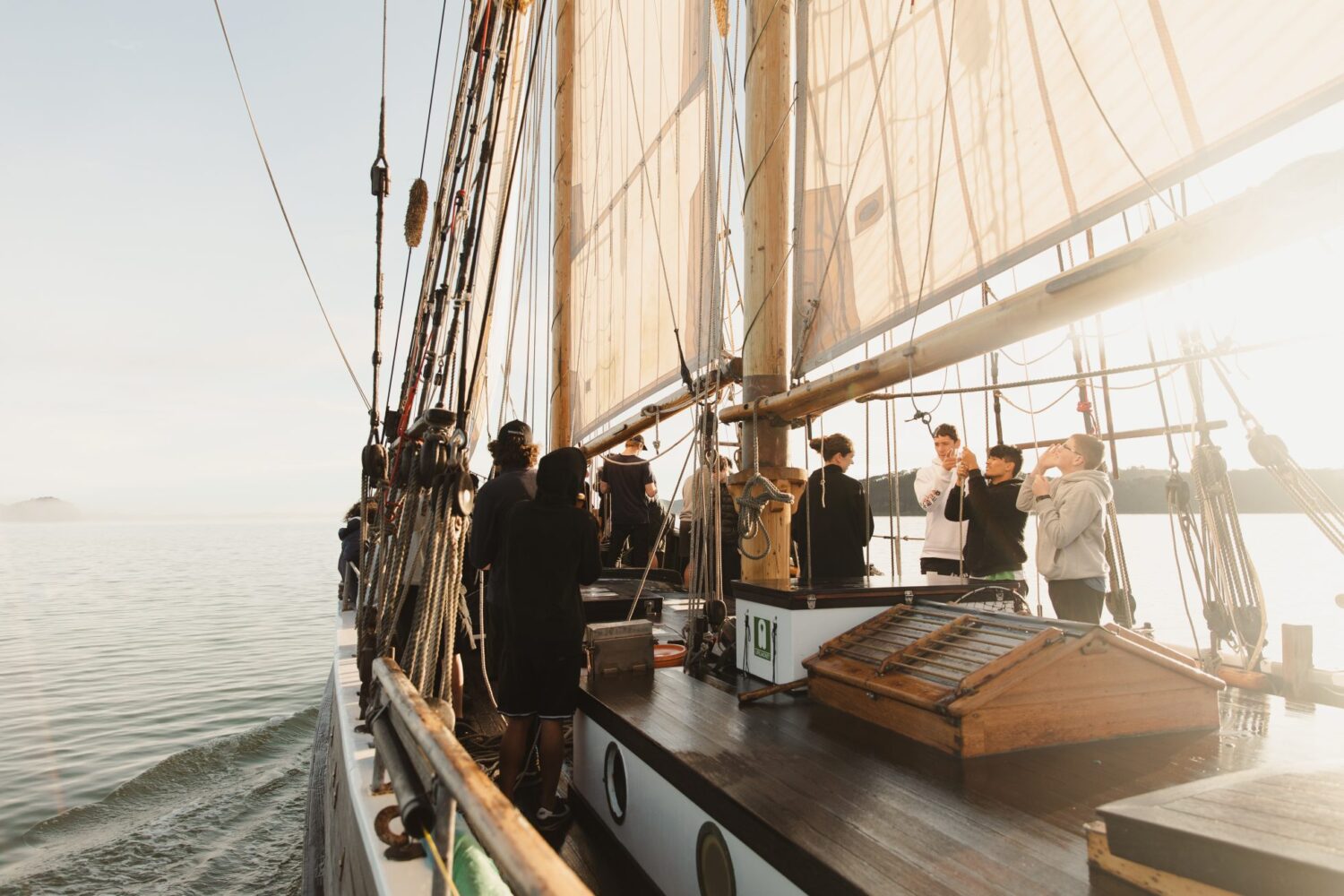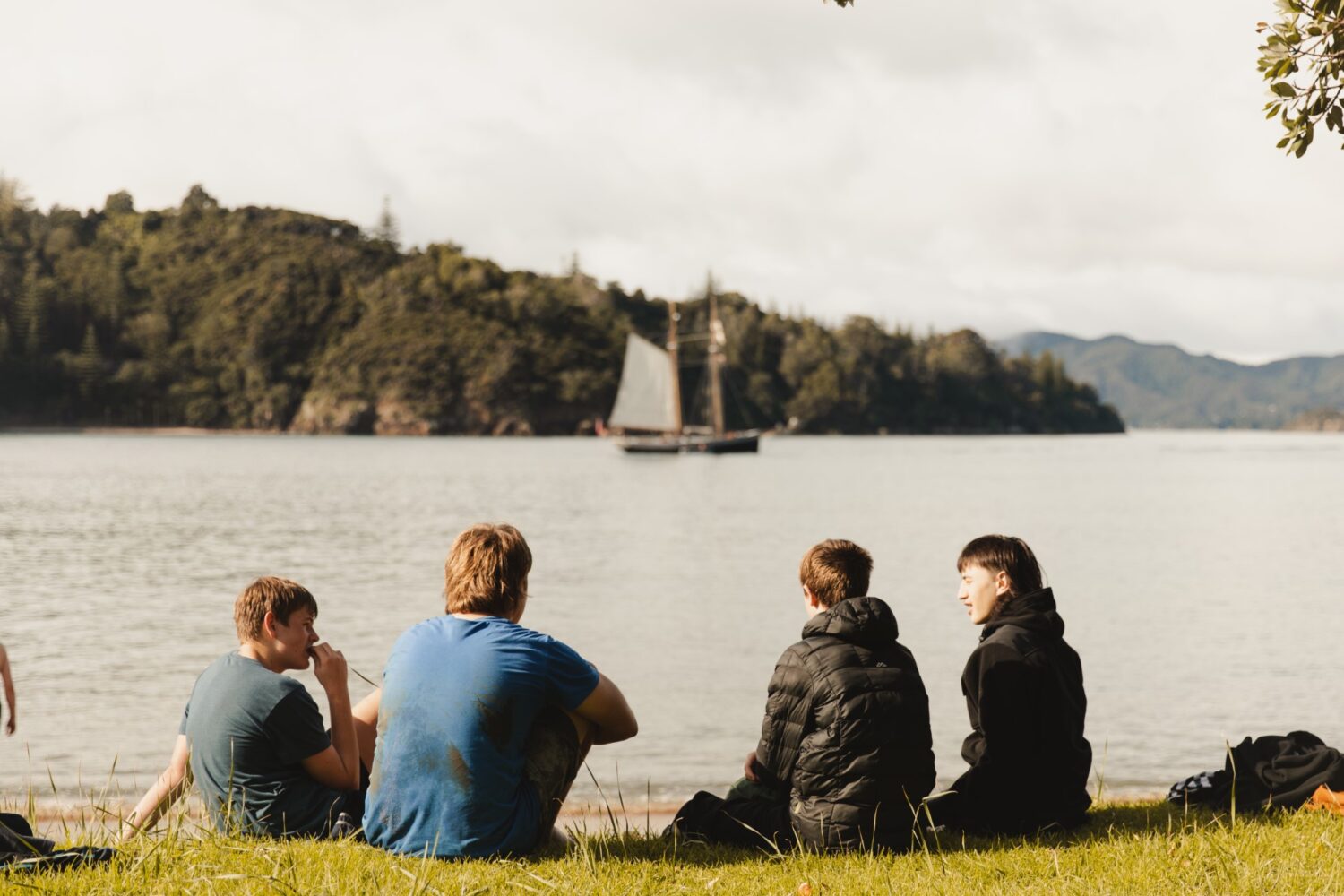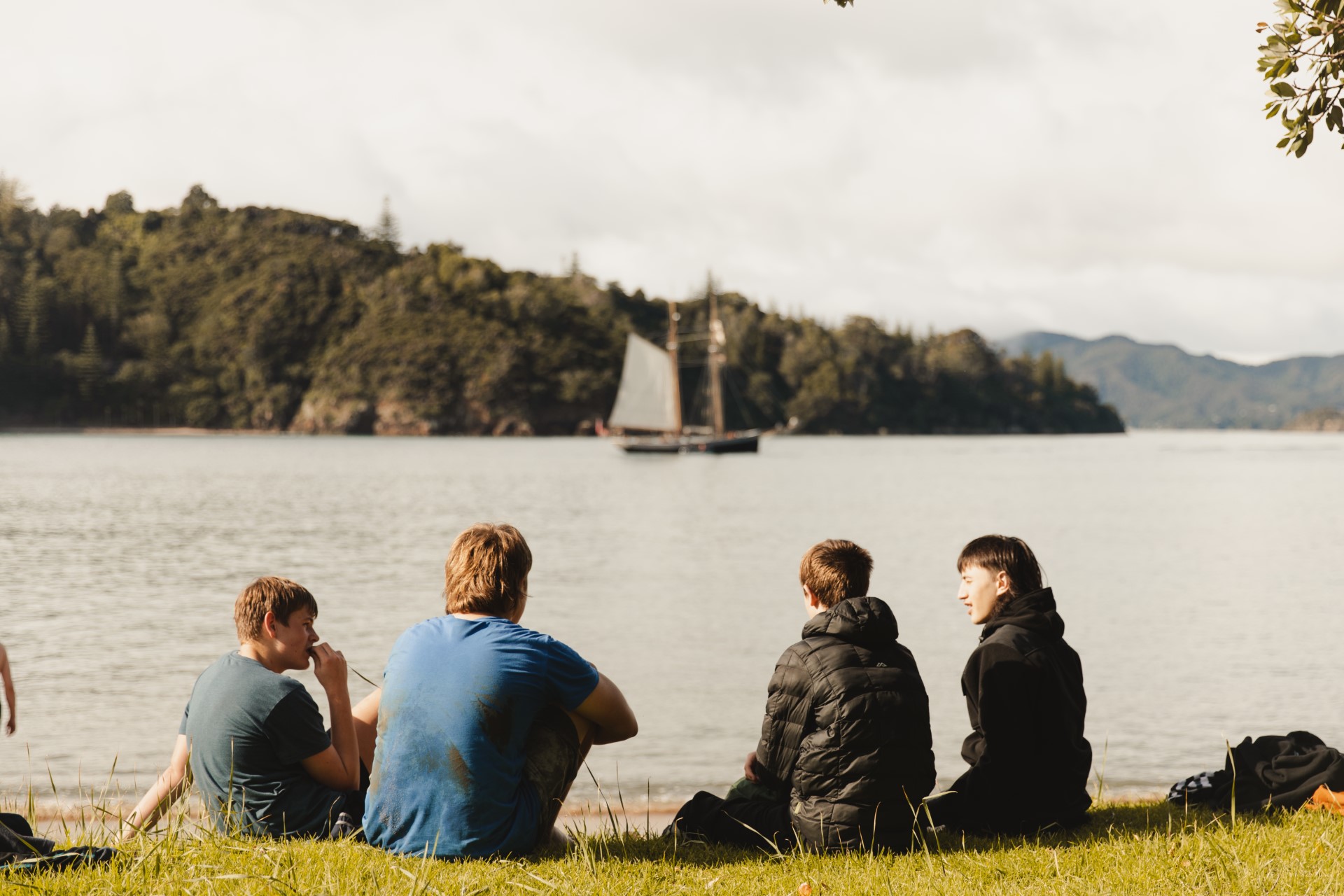

R. Tucker Thompson is a 26 m gaff-rigged tall ship sailing out of Russell in the Bay of Islands, Northland, run by the not-for-profit R. Tucker Thompson Sailing Trust. It offers school sailings for kura kaupapa Māori, primary, intermediate and secondary schools, either a two-hour afternoon sail or a full day on the water. For a Bay of Islands school trip it turns the harbour into an outdoor classroom where students crew the ship themselves, taking the helm and hoisting the sails.
Why schools choose R. Tucker Thompson
- Students as crew: classes take the helm, haul on the lines to hoist sails and work together to sail the ship.
- A real traditional ship: a steel-hulled, gaff-rigged schooner with nine sails, built in Northland and launched in 1985.
- Two lengths of sail: a two-hour late-afternoon sail or a five and a half hour full day.
- Swimming and island time: the full day sail includes time to swim and explore an island in the bay.
- All school types welcome: kura kaupapa Māori, primary, intermediate and secondary schools.
- Room for a big group: the ship is set up for up to 47 people on day sailings.
- A charity with a youth focus: the Trust runs youth development voyages for young people from Te Taitokerau, part-funded by its other sailings.
School programmes and activities
Two-hour sail
A late-afternoon sail from 4pm to 6pm, departing from Russell Wharf. Students get a hands-on introduction to the ship, helping to raise the sails, steering at the helm and working as a crew. Charged per person with a minimum of 25.
Full day sail
A five and a half hour sail from 10am to 3.30pm, also departing from Russell Wharf. As well as sailing the ship, the day includes time ashore on an island and a chance to swim. Charged per person with a minimum of 35.
The Trust says its school programmes are tailored to each group, with a focus on teamwork, local history and traditional sailing skills.
7 day youth voyages
Separate from school sailings, the Trust runs up to 16 week-long youth development voyages a year for 12 trainees aged 14 to 18. Trainees sail and live aboard, climb the mast, swim, snorkel, tramp and gather kaimoana, and learn about Northland history, the marine environment and conservation. Young people apply individually, and grants are available for Northland residents. Teachers and careers staff may want to share this option with older students.
Learning opportunities
A sail on R. Tucker Thompson is a practical EOTC experience built around working together on a moving ship, with the history of the Bay of Islands all around.
Curriculum connections
A school sailing can support learning in:
- Health and Physical Education: teamwork, physical tasks on deck and, on the full day, swimming.
- Social Sciences: local history of the Bay of Islands and Northland’s maritime past.
- Science: wind, tides and the marine environment of the bay.
- Technology: how a traditional rig, sails and lines work.
- Key competencies: relating to others, managing self, and participating and contributing as part of a crew.
Safety and instruction
Sailings are run by the ship’s professional crew, led by a master. The Trust’s crew includes people with outdoor education and naval backgrounds. The ship has a steel hull with three watertight bulkheads, a high-capacity bilge pumping system and a rigid inflatable rescue tender, and carries a loadline certificate.
Some reasonable mobility is needed to move around the ship, go below decks and get into the tender for island landings. Check supervision ratios and lifejacket arrangements with the Trust when booking.
Adding R. Tucker Thompson to a school camp
The Bay of Islands is a popular area for Northland school camps, with camp accommodation around Paihia, Russell and the wider bay. A two-hour afternoon sail slots in neatly at the end of a day of other activities, while the full day sail can be the centrepiece of a camp. Combined with a visit to the Waitangi Treaty Grounds or Russell’s historic sites, it gives classes the bay from both the land and the water.
About R. Tucker Thompson
The ship’s hull was started in the late 1970s at Little Munro Bay on the Whangārei Heads by R. Tucker Thompson. After his death she was finished at Mangawhai by Tod Thompson and Russell Harris, and launched in 1985. Her design is based on the halibut schooners of North America’s north-west coast.
In 2006 the ship was transferred into a charitable trust. The Trust’s kaupapa is learning for life through the sea, with a focus on empowering Northland rangatahi, keeping tall ship traditions alive and celebrating the place, culture and environment of Te Taitokerau. Visitor and charter sailings help fund the youth voyages.
School group rates
School sailings are charged per person. The two-hour sail has a minimum of 25 people and the full day sail a minimum of 35. Contact R. Tucker Thompson for current rates.
Example school visit
An example of how a full day school sailing on R. Tucker Thompson could look (every visit is planned with the provider):
- Morning: meet the crew at Russell Wharf, safety briefing and depart at 10am.
- Late morning: hoist the sails as a team and take turns at the helm.
- Midday: anchor off an island for a swim and time ashore exploring.
- Afternoon: sail back across the bay, learning about the ship and local history along the way.
- 3.30pm: return to Russell Wharf.
Getting there
School sailings depart from Russell Wharf, although the Trust notes school sailings can also leave from Opua, so confirm the meeting point when booking. Russell is a short passenger ferry ride from Paihia, or can be reached by road via the Opua car ferry. Paihia is about an hour’s drive north of Whangārei and around three and a half hours from Auckland.
Nearby attractions for school groups
- Waitangi Treaty Grounds: where Te Tiriti o Waitangi was first signed, with a museum and guided tours.
- Pompallier Mission: a historic printery and tannery in Russell from the 1840s.
- Christ Church, Russell: New Zealand’s oldest surviving church.
- Flagstaff Hill (Maiki): a short climb above Russell with views over the bay and a story tied to the Northern War.
- Russell Museum: local history, including a scale model of Cook’s Endeavour.
- Haruru Falls: a horseshoe waterfall near Paihia, reachable on a walking track from Waitangi.
- Kerikeri Mission Station: the Stone Store and Kemp House, two of the country’s oldest buildings.
Other groups and events
Outside school sailings, R. Tucker Thompson runs summer day sails for visitors, sailings for cruise ship passengers, private charters (day sails, sundowner sails, weddings and leadership programmes) and three or four day discovery voyages for small groups. The 7 day youth voyages run through the year.
Good to know
- Bookings: book directly with the Trust and confirm whether your sail leaves from Russell or Opua.
- Who can come: kura kaupapa Māori, primary, intermediate and secondary schools.
- Minimum numbers: 25 for the two-hour sail and 35 for the full day.
- Mobility: reasonable mobility is needed to move around the ship and into the tender.
- Swimming: swimming is part of the full day sail, so let the crew know about any non-swimmers.
Frequently asked questions
What school sailings does R. Tucker Thompson offer?
A two-hour sail from 4pm to 6pm and a full day sail from 10am to 3.30pm, both tailored to the group.
Where do school sailings leave from?
Russell Wharf in the Bay of Islands. Some school sailings may leave from Opua, so check when booking.
What do students do on board?
They act as crew, taking the helm, hoisting the sails and working together to sail the ship.
Is there swimming on the school day sail?
Yes, the full day sail includes time for swimming and exploring an island.
Which schools can book?
Kura kaupapa Māori, primary, intermediate and secondary schools.
How are school sailings charged?
Per person, with a minimum of 25 for the two-hour sail and 35 for the full day. Contact R. Tucker Thompson for current rates.
How many people does the ship take?
The ship is set up for up to 47 people on day sailings.
Can students go on a longer voyage?
Young people aged 14 to 18 can apply for the Trust’s 7 day youth voyages, with grants available for Northland residents. These are separate from school sailings.