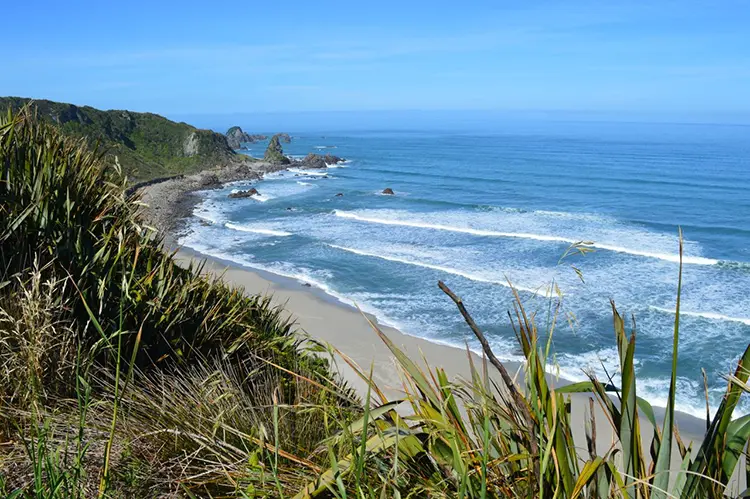
The West Coast’s combination of glaciers, dense rainforest, limestone cave systems and one of New Zealand’s wettest climates makes it a genuinely distinctive (and distinctly land-focused) region for school programmes.
What the West Coast Suits
Tramping and bush walks are a strong regional feature, from accessible walks around Punakaiki and the glacier valleys to the more demanding Paparoa Track, one of New Zealand’s Great Walks: see our Tramping and Bush Walks guide and Multi-Day Tramping and Expedition Skills guide for what a multi-day itinerary here needs.
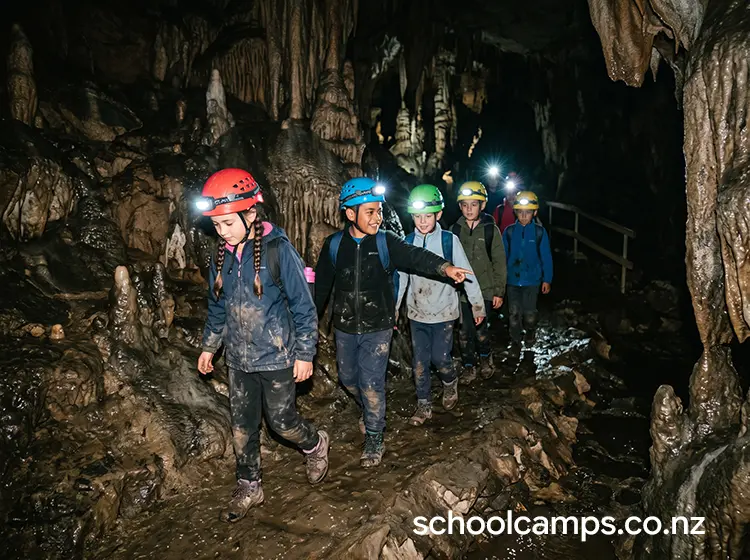
Caving has a genuine regional identity thanks to the West Coast’s extensive limestone systems, particularly around the Oparara Basin near Karamea: a distinctive activity most other regions can’t easily offer, and one that depends entirely on an experienced, well-equipped provider.
Water activities are a different proposition here than in a sheltered region: the Tasman Sea coastline is exposed and often rough, so it suits observation (the Pancake Rocks blowholes at Punakaiki are a well-known stop) rather than swimming or paddling; calmer inland lakes and rivers are a better fit for supervised paddling where a suitable, provider-vetted spot exists.
Seasonality and Weather
The West Coast is one of the wettest regions in New Zealand, and this shapes planning here more than almost anywhere else in the country: build generous weather contingency and indoor/alternative options into any itinerary regardless of season. Summer through autumn (December–April) sees the most settled stretches, but rain and changeable conditions can occur at any time of year, so a flexible, multi-day-buffer approach works better than a tightly scheduled itinerary.
Getting There
Greymouth and Westport both serve as practical bases depending on which part of the Coast a school is targeting, with the region’s narrow, winding state highways meaning travel times between attractions are often longer than the map distance suggests: build extra time into transport planning, particularly over Arthur’s Pass or the Lewis Pass from Canterbury.
Local Considerations
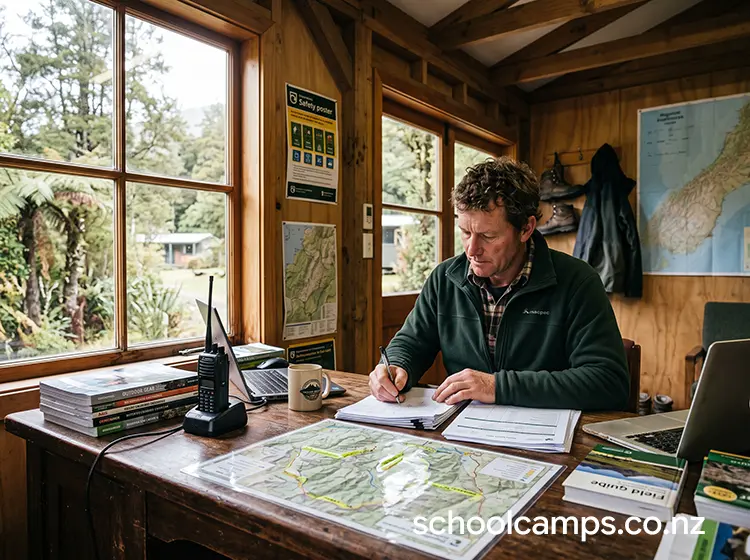
The West Coast’s remoteness and weather mean mobile coverage and emergency response times can both be more limited than in more populated regions: confirm communications planning and the nearest medical facility for your specific itinerary well before departure, per the principles in Land and Bush Safety Foundations.
Find a Provider on the West Coast
Browse camps, venues and activity providers currently listed for the region: All Providers on the West Coast.
Leave a Reply
You must be logged in to post a comment.