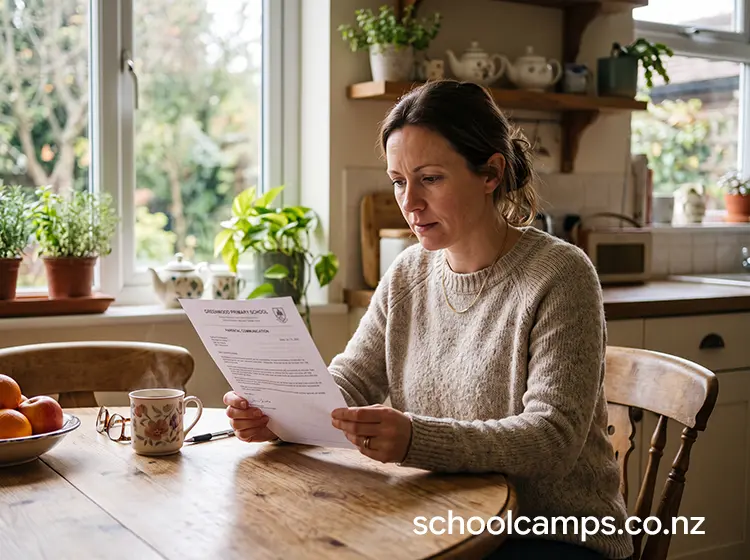
 This reference guide provides templates and best practices for communicating with parents about land-based activities during school camp: tramping and bush walks, climbing, archery, and horse riding. When parents know what to expect, they’re less anxious, students arrive properly prepared, and everyone’s on the same page.
What to Tell Parents
Parents want to know their children will be safe and what they need to do to prepare. For broader health and safety planning, see Health & Safety Planning for School Camps.
Clear description of activity
Describe the activity in plain language and be specific to what’s actually happening: a half-day guided bush walk on a graded track, an afternoon at an indoor or outdoor climbing wall, an archery session on the school field, or a supervised horse riding lesson at a local equestrian centre. Vague descriptions (“outdoor activities”) create more anxiety than specific ones.
Risks explained plainly
Be honest but balanced. For tramping: uneven terrain, weather exposure, and physical effort. For climbing: working at height on a rope system, with falls arrested by harness and belay. For archery: supervised use of bows and arrows under strict range rules. For horse riding: working around a large animal, with the possibility of being bumped, stepped on, or (rarely) thrown or bucked.
Clothing and footwear requirements
Be specific about what students need: this varies more by activity than for water-based sessions:
- Tramping/bush walks: sturdy, broken-in walking shoes or boots (not new on the day), non-cotton layers, a warm layer and raincoat regardless of forecast, a sunhat and sunscreen, a full water bottle
- Climbing: closefitting sports clothing that allows free movement, hair tied back, and enclosed shoes if the provider doesn’t supply climbing shoes
- Archery: closefitting tops (no loose sleeves that can catch the bowstring), enclosed shoes
- Horse riding: long trousers (to avoid chafing from the saddle), enclosed shoes with a small heel (no jandals, sandals, or gumboots), a correctly fitted helmet (usually provided by the venue: confirm this)
Wet-weather plan
Explain clearly: if conditions are unsafe (heavy rain, high wind, lightning, extreme heat), the activity will be postponed or replaced with an indoor alternative. Student safety is always the first priority.
Sample Parent Letter Template
Below is a template you can adapt for your school context and specific activity. Customise the bracketed sections.
Dear Parents and Caregivers,
As part of our upcoming camp at [Location] from [Dates], students will participate in [specific activity: tramping/climbing/archery/horse riding]. This letter provides important information about what students will do, what to bring, and how we’re ensuring their safety.
What students will do
[For tramping] Students will walk a [distance/duration] graded track in groups, led by [qualified instructors from X provider / qualified school staff]. The route is chosen to suit the group’s fitness and experience, with planned rest stops and a focus on teamwork and connection to the outdoors.
[For climbing] Students will climb on a top-rope system set up and supervised by a qualified instructor, wearing a harness and helmet at all times. No prior experience is needed: everyone starts with the basics.
[For archery] Students will learn safe bow handling and shooting technique under close supervision, following strict range rules that are explained and practised before anyone picks up a bow.
[For horse riding] Students will be paired with a horse suited to their size and experience, led or supervised closely by qualified instructors, focusing on basic handling and riding skills in a controlled arena.
What success looks like
By the end of the session, students will have built confidence trying something new, worked collaboratively with instructors and peers, and gained an appreciation for the outdoors or for working safely around equipment and animals.
What to bring
[Insert the relevant clothing/footwear list from above.]
What happens if conditions change
We monitor weather forecasts closely and will adjust or cancel the activity if conditions become unsafe. If we cancel on the day, we’ll run an alternative activity. Your child’s safety is always our first priority.
Medical information
Please ensure your child’s medical information and consent forms are up to date. It’s particularly important we know about: asthma, epilepsy, anxiety conditions, allergies (including to horses/hay, for riding), and any recent injuries affecting mobility, balance, or the ability to grip.
Questions?
Contact [Teacher Name] at [email] or [phone] if you have concerns or need clarification.
We’re looking forward to this fantastic learning experience for our students!
[Teacher Name], [School Name]
Consent and Medical Information Collection
Specific consent for the activity
Make sure consent forms specifically name the activity involved. A generic camp consent may not adequately cover higher-perceived-risk activities like climbing or horse riding. For guidance on EOTC consent requirements, see EONZ’s Safety Management Toolkit.
Updated medical information
Collect current medical information, particularly: asthma (ensure inhaler available on tramps and at the venue), epilepsy (understand triggers and response protocols), anxiety conditions (discuss support strategies, especially for height- or animal-related fears), recent injuries affecting mobility or grip strength, and allergies (including hay fever or animal allergies for horse riding).
Physical readiness
For tramping in particular, confirm whether any student has a condition that would make an extended walk difficult, so an alternative or modified route can be planned rather than discovered on the day.
Addressing Common Parent Concerns
“My child is scared of heights: can they still go climbing?”
Response: “Yes. Climbing is entirely voluntary at each step: students choose how high to go, and can stop or come down at any point. Many students who start nervous end up surprising themselves. We never force a student past their comfort level.”
“Is my child safe around horses? They’ve never ridden before.”
Response: “No experience is needed. Students are matched with a horse suited to complete beginners, and a qualified instructor leads or closely supervises every rider. We also cover ground handling and safety around horses before anyone gets on.”
“What if my child can’t keep up on the walk?”
Response: “Routes are chosen to suit the whole group, with rest stops built in, and we never leave a student behind: the group moves at the pace of its least confident member, with staff positioned front and back.”
“What if the weather is bad on the day?”
Response: “We monitor weather forecasts closely and have clear thresholds for safe conditions. If conditions are unsafe, we’ll postpone or replace with an alternative activity. Safety always comes first.”
Communication Timing
Initial information: 4–6 weeks before camp
Send the detailed parent letter, consent forms, and gear list. This gives families time to ask questions and source appropriate footwear and clothing: broken-in walking shoes in particular need time before the day.
Reminder: 1 week before camp
Brief reminder about key items (footwear, layers, no loose clothing for archery/climbing) and final consent deadline.
Weather update: day before or morning of
If weather looks marginal, send a quick update confirming the activity is still going ahead or has been modified/cancelled.
Related Resources
For behaviour management and debrief guidance that applies across all outdoor activities, see Behaviour Management Outdoors and How to Debrief Outdoor Experiences.
For a ready-to-use form covering consent, emergency contacts and medical information, see our free Parent Consent & Medical Information Form template.
Leave a Reply
You must be logged in to post a comment.